


More news on this day
Cross-border rail passengers in western Europe are being urged to avoid non-essential journeys as an early-summer heatwave strains tracks, overhead wires and rolling stock, prompting widespread cancellations and severe delays on international routes.
Get the latest news straight to your inbox!
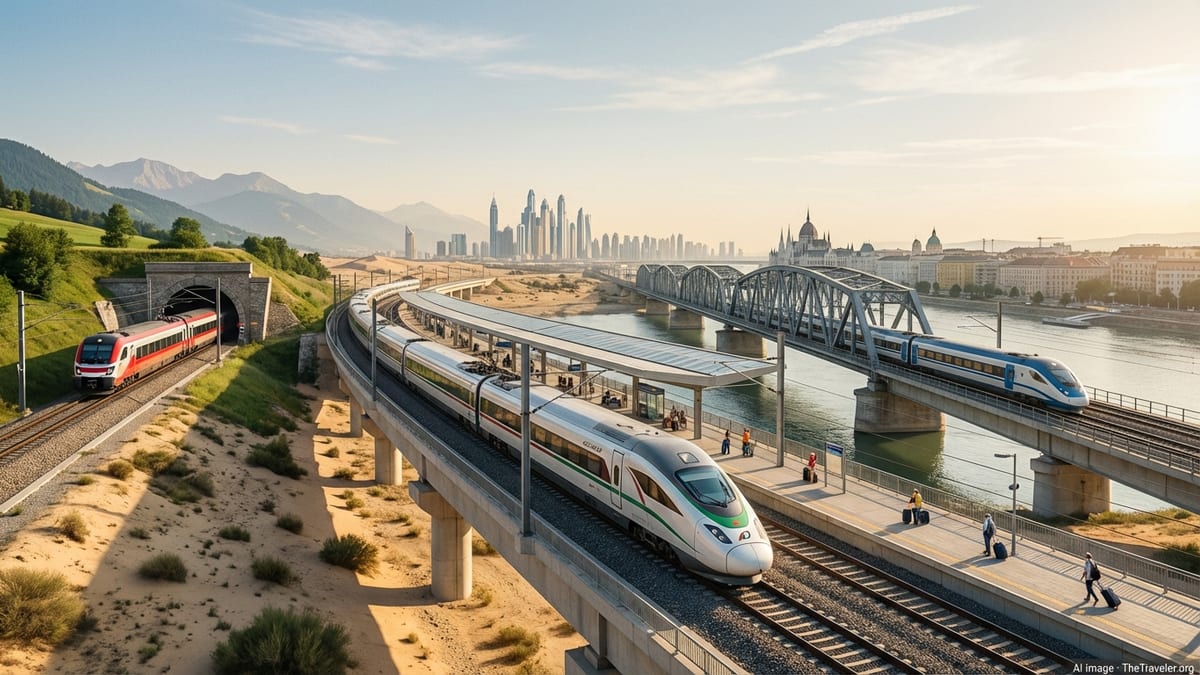
Cross-border services cut as temperatures soar
Western Europe is experiencing one of its most intense June heatwaves on record, with temperatures approaching or exceeding 40 degrees Celsius in parts of France, Spain, Belgium and Germany. Publicly available information shows that the extreme conditions are already disrupting rail operations that connect major cities and countries across the region.
Reports indicate that international high-speed links between the United Kingdom, France and Belgium have been among the hardest hit, with operators cancelling services and warning of last-minute disruption as tracks and power systems are exposed to prolonged heat. In some cases, operators are advising passengers not to travel unless their journey is essential, reviving language previously associated with exceptional weather or major infrastructure incidents.
Domestic networks in France, Belgium and Spain are also reducing long-distance and intercity frequencies, a move that has knock-on effects for cross-border journeys relying on timed connections. As a result, passengers attempting to move between countries by rail are experiencing longer travel times, missed links and crowding on the reduced number of trains still running.
Forecasts suggest the heatwave could persist through the week, raising concerns that disruption to international rail might escalate further if critical infrastructure continues to overheat.
Eurostar and other international routes under pressure
According to recent coverage of the situation, cross-Channel services between London, Paris and Brussels have already seen multiple cancellations and speed restrictions introduced in response to the heat. These trains run on high-speed lines where track temperatures can climb well above the air temperature, increasing the risk of rail buckling and signalling faults.
Published reports from European media note that Eurostar has pre-emptively thinned its timetable and warned of potential delays, while also highlighting the risk of short-notice cancellations if infrastructure managers identify safety issues. Passengers are being encouraged to rebook for later dates or to accept ticket changes without additional fees, a policy that aims to reduce crowding on services that remain in operation.
International trains linking France with Belgium, the Netherlands, Germany and Spain are also facing constraints. Operators of cross-border high-speed services have introduced slower running on certain sections, particularly in areas where older track and overhead equipment are known to be vulnerable to heat. These measures lengthen journey times and can force the cancellation of some services to prevent congestion on busy corridors.
Information shared by rail forums and passenger groups indicates that some travellers are abandoning rail plans altogether, seeking last-minute flights or rental cars, while others are choosing to delay trips until conditions stabilise.
Why rail systems struggle in extreme heat
Technical documentation from rail infrastructure managers explains that steel rails expand as temperatures rise, which can create dangerous buckles if the expansion is not carefully managed. Even modern continuously welded rail is stressed to operate within a particular temperature range, and heat far above seasonal norms can push it beyond those limits.
Overhead power lines that supply electricity to many European trains can also sag in high temperatures, increasing the risk of entanglement with pantographs. In combination with expanding rails and stressed track beds, this creates a complex safety challenge that is particularly acute on high-speed lines, where any infrastructure fault has more severe consequences.
Passenger comfort and safety on board are another concern. Air-conditioning systems must work significantly harder during heatwaves, and past incidents have shown that older carriages can suffer from failures that leave coaches uncomfortably hot. As a precaution, some operators are withdrawing older rolling stock from service when extreme heat is forecast, which further reduces capacity.
Recent studies on transport resilience in Europe highlight that many rail networks were designed around historical climate conditions that no longer apply. Engineers and planners are now reassessing standards for track, power systems and station design to cope with more frequent and intense heat events.
Historic context and new climate realities
The current disruption is unfolding against a backdrop of increasingly frequent heatwaves across the continent. Historical data assembled by climate researchers show that the number of significant European heat events has risen sharply over the past two decades, with several recent summers breaking national and regional temperature records.
During previous extreme heat episodes, including 2019 and 2022, parts of the United Kingdom’s network issued “do not travel” advisories, suspended services on key main lines and imposed blanket speed restrictions on remaining trains. Those experiences prompted a series of reviews into how rail systems should communicate with passengers and manage risk during severe weather.
Transport and climate policy analysts now describe the present heatwave as another test of how quickly rail infrastructure and operations can adapt to a warming world. Publicly available briefings from European agencies stress that rail remains a low-emission mode of travel, but also acknowledge that its physical assets must be upgraded if it is to remain reliable under more volatile conditions.
Proposals range from using different rail steel specifications and improved ballast to retrofitting overhead lines and investing in station cooling systems. However, many of these projects require long lead times and substantial funding, leaving current networks exposed when record-breaking temperatures arrive earlier than expected.
What travellers can expect in the coming days
For now, passengers planning cross-border journeys in the affected areas are being advised by operators and national rail information services to check timetables repeatedly on the day of travel and to prepare for last-minute changes. Many companies have relaxed exchange and refund rules, allowing customers to move trips to cooler days without penalties.
Travel industry observers say that those who must travel should build in extra time for connections, carry sufficient water and be ready for crowded trains where air-conditioning may be under strain. With some stations and platforms offering limited shade, waiting conditions can also be challenging, particularly for older people, young children and those with health conditions.
Tourism bodies in countries affected by the heatwave are closely watching how prolonged disruption could influence summer visitor flows. While rail is often marketed as the most sustainable way to move between major European cities, recurring weather-related breakdowns risk undermining that message if passengers perceive the system as unreliable during peak holiday periods.
Analysts suggest that the current “do not travel” and “only travel if necessary” messages, while driven by safety considerations, may become more common as climate extremes intensify. For travellers, that could mean a future in which timing, route choice and flexibility become as important as price when planning European rail journeys during the hottest months of the year.