


More news on this day
Rail passengers on one of Britain’s busiest intercity corridors are facing severe disruption after damage to overhead electric wires near Northallerton prompted operators to issue a rare “do not travel” warning.
Get the latest news straight to your inbox!
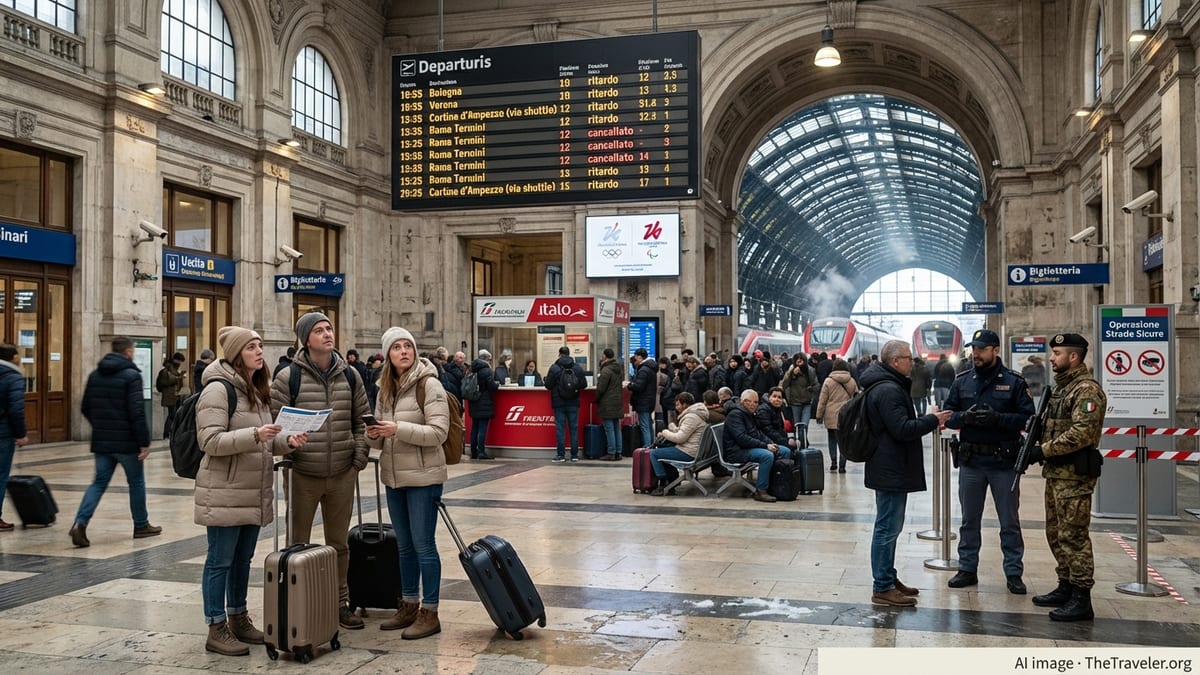
Major disruption on the East Coast Main Line
Services on the East Coast Main Line through Northallerton in North Yorkshire were heavily disrupted on Tuesday 10 November 2026 after damage to overhead electric wires led to multiple line blockages and extensive delays. The incident affected journeys between key hubs including York, Darlington, Middlesbrough and London King’s Cross, with knock-on impacts for routes further north towards Newcastle and Scotland.
According to publicly available travel updates and live disruption feeds, the damaged equipment created signalling problems in the Northallerton area, forcing a significant reduction in the number of trains able to operate. A number of services were cancelled outright, short‑formed or diverted away from the affected stretch of track, leaving some stations with a limited or suspended service for periods during the evening peak.
The disruption was significant enough that National Rail information channels described severe delays and widespread cancellations on services passing through Northallerton. Coverage from regional news outlets reported long queues building at London King’s Cross and other major stations as passengers sought alternative ways to travel or waited for clarity on whether their trains would run.
Northallerton sits on a busy section of the electrified East Coast Main Line, which carries a mix of long‑distance intercity services and regional trains. Any infrastructure failure at this point in the network tends to have a rapid and wide‑ranging impact, as trains must be re‑routed, held outside congestion hotspots or withdrawn from service altogether.
‘Do not travel’ advice issued to passengers
As the scale of the disruption became clear on Tuesday afternoon, London North Eastern Railway (LNER) issued a strong message across its information channels advising customers not to travel. Publicly available social media updates from the operator stated that route‑wide disruption was being experienced due to overhead line damage in the Northallerton area, and that customers were being advised not to start their journeys.
Reports indicate that LNER also acknowledged it could not guarantee getting passengers to their destinations, noting that any trains that were able to run were expected to be extremely busy. This level of warning is reserved for the most serious operational problems, when operators judge that delays, cancellations and overcrowding are likely to leave many travellers stranded or significantly delayed.
The disruption did not only affect LNER services. Information from live journey tools for TransPennine Express showed that some lines through Northallerton were blocked and that disruption from the overhead wire damage was expected to continue until the end of the day. Grand Central and other operators using the corridor were also impacted, with timetables altered and stopping patterns revised at very short notice.
To give passengers more flexibility, LNER confirmed through its public updates that tickets dated Tuesday 10 November would be valid for use on Wednesday 11 November 2026. This allowed those who had postponed journeys in response to the “do not travel” message to complete their trips once more trains were running and conditions on the line had stabilised.
Service changes, ticket acceptance and replacement options
Journey‑planning tools and operator disruption pages on Wednesday 11 November showed the network still in a recovery phase, with some trains continuing to start or terminate short of their normal destinations. For example, one early‑morning LNER service from Newcastle to London King’s Cross was listed as starting from York instead, missing intermediate calls at Newcastle, Durham, Darlington and Northallerton because of the earlier overhead wire damage.
To help passengers complete essential journeys, operators activated a range of ticket‑acceptance arrangements. LNER information indicated that affected tickets could be used on a selection of other train companies, including Great Northern, Thameslink, Northern, TransPennine Express, CrossCountry and Avanti West Coast on appropriate alternative routes. This allowed some long‑distance travellers to route via different main lines where capacity permitted.
For local and regional journeys around Teesside and North Yorkshire, TransPennine Express disruption pages described replacement road transport and work‑around options. Passengers travelling to destinations such as Eaglescliffe, Thornaby, Middlesbrough or Redcar Central were advised to use rail‑replacement buses to Darlington and then connect with Northern services towards Saltburn once lines were available, illustrating the level of contingency planning required when key infrastructure is taken out of use.
Meanwhile, standard delay‑compensation policies remained in place. TransPennine Express guidance reminded customers that those who experienced qualifying delays might be entitled to claim compensation under existing “Delay Repay” schemes. Northern and other operators maintained similar arrangements, with further details available on their official customer‑service pages.
Why overhead line failures cause such wide disruption
The incident near Northallerton has once again highlighted the vulnerability of busy electrified rail corridors to problems with overhead line equipment. Network Rail’s own information on overhead line failures explains that the system of masts, wires, insulators and power‑control equipment that supplies electricity to trains is complex, and that any damage can require services to be stopped or slowed while inspections and repairs take place.
On intensively used main lines such as the East Coast route through Northallerton, overhead wires are energised at high voltage and must be made fully safe before engineers can begin work. Once on site, teams typically need to isolate sections of the system, secure or remove damaged components, and then test the equipment before trains are allowed to run at normal speeds again. This process can take many hours, particularly if the damage is extensive or weather and access conditions are challenging.
Rail industry learning documents and previous case studies underline that overhead wires are subject to a range of stresses, including high winds, temperature changes and occasional contact with passing trains or foreign objects. When wires come down or become entangled with a train, infrastructure managers must balance the need to restore services quickly with strict safety requirements designed to protect staff and passengers from electrical and mechanical hazards.
The double‑edged nature of electrification is a recurring theme in technical material about the East Coast Main Line. While overhead power allows faster, quieter and lower‑emission services, it also introduces a layer of complexity that can amplify the effects of individual failures. Incidents at key nodes such as Northallerton therefore tend to have a cascading impact, affecting services many miles away as timetable planners and control staff attempt to re‑thread trains through a constrained network.
Practical advice for affected and future travellers
For passengers caught up in the disruption around Northallerton, the most immediate advice from operators has been to check live updates before setting out and to consider postponing non‑essential trips where “do not travel” messages are in place. Publicly available guidance from LNER and other operators stresses that live journey planners and official travel‑information pages carry the most up‑to‑date details of cancellations, revised stopping patterns and ticket‑acceptance arrangements.
Where travel is unavoidable during a major incident, rail users are encouraged to allow additional time, prepare for the possibility of standing on busy trains, and carry essentials such as water and phone chargers in case of extended delays. Official disruption‑management plans used by train companies also envisage stepped‑up staffing at key stations to assist with crowd management, platform dispatch and wayfinding, although the availability of staff at smaller stations may be more limited.
Once services begin to recover, passengers holding tickets for the day of the incident may have several options. These can include travelling later on the same day if space becomes available, using their ticket on the following day where operators have relaxed validity, or seeking a refund if they choose not to travel at all. In addition, those whose journeys were significantly delayed can usually submit claims for partial or full compensation, subject to the thresholds set out in each operator’s published policy.
Travel‑industry analyses of previous “do not travel” episodes note that such strong messages are used sparingly, precisely because of the disruption they cause to people’s plans. Their use in connection with the overhead wire damage near Northallerton underlines the seriousness of the incident and the priority given to safety when critical infrastructure is compromised on one of the United Kingdom’s most important intercity rail corridors.