


More news on this day
Air and rail passengers bound for London Stansted Airport on Friday 23 October 2026 faced severe disruption after a fallen tree blocked the main rail line, triggering a rare "do not travel" warning between Broxbourne and the airport.
Get the latest news straight to your inbox!
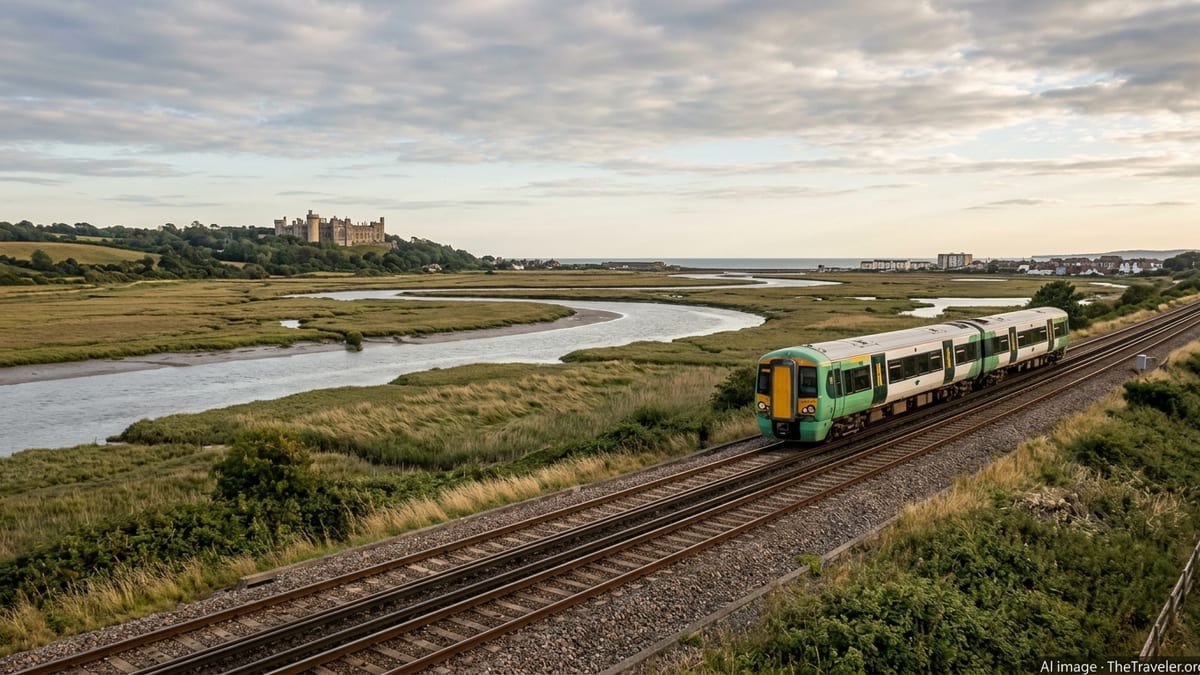
Tree brings West Anglia Main Line to a standstill
According to live service updates from Greater Anglia and National Rail, a tree fell onto the railway in the Stansted Mountfitchet area early on Friday evening, blocking all lines on the West Anglia Main Line section that serves London Stansted Airport. The obstruction also damaged overhead electric wires, cutting power to trains and forcing an immediate halt to services through the station.
Published disruption reports state that trains between Broxbourne and Stansted Airport have been cancelled, delayed by up to an hour, or heavily revised, with no through services able to operate on that stretch of line. The incident was first logged shortly before 18:00, and by early evening the disruption window had been extended to the end of the operating day as response teams assessed the scale of the damage.
The affected corridor is a key section of the route linking London Liverpool Street with Stansted Airport, Cambridge North, Hertford East, Ely and intermediate towns including Harlow and Bishop’s Stortford. With the railway blocked at Stansted Mountfitchet, both airport-bound express services and regional trains have been unable to pass, creating knock-on disruption well beyond the immediate area.
Do not travel advice and ticket flexibility
Greater Anglia’s customer information channels are carrying clear guidance advising passengers not to travel between Broxbourne and Stansted Airport for the remainder of Friday. National Rail’s disruption summary repeats the same message, urging customers to avoid journeys on the affected section until further notice due to the blocked line and overhead line damage.
Published information indicates that ticket restrictions on Greater Anglia services have been lifted for Friday 23 October, with tickets dated for that day being accepted on Saturday 24 October 2026. This measure is intended to give passengers heading to or from Stansted Airport the option to postpone their journey without penalty, a relatively unusual step that underscores the severity and duration of the incident.
Stansted Express, which normally runs dedicated airport services between London Liverpool Street, Tottenham Hale and Stansted Airport, is also heavily affected. Live departure boards list multiple cancellations and delays attributed to the fallen tree and overhead line problems, removing one of the most important public transport links for the airport at the start of a busy autumn travel weekend.
Alternative routes for airport and commuter travel
To keep some connectivity between London and the corridor north of the capital, operators have arranged a series of ticket acceptance agreements on other rail and underground services. Publicly available guidance shows that passengers may use Circle, Hammersmith & City and Metropolitan line services between London Liverpool Street and King’s Cross St Pancras at no extra cost, as well as the Victoria line between Tottenham Hale, Finsbury Park and King’s Cross St Pancras.
For longer-distance journeys, tickets are being accepted on Great Northern services between London King’s Cross and Cambridge. From Cambridge, passengers can connect to trains running to and from Stansted Airport where services are available, although journey times are estimated to extend to around two and a half hours between central London and the airport compared with the usual 45 to 50 minutes on the direct Stansted Express.
Information published by Stansted Express outlines suggested routings in both directions. Travellers from London Liverpool Street are advised to use London Underground lines to reach King’s Cross St Pancras, continue by Great Northern to Cambridge, then board the first available train to Stansted Airport. In the opposite direction, airport passengers are being guided to travel first to Cambridge and then transfer to Great Northern services back to London King’s Cross.
Replacement buses have not been widely highlighted in the latest online updates, indicating that rail operators are currently relying on existing mainline and underground capacity to absorb displaced passengers. Given the extended journey times and need to change trains, travellers are being encouraged through public information channels to allow significantly more time if travel cannot be avoided.
Impact on Friday evening flights and weekend travel plans
The rail disruption has arrived at a particularly sensitive time of day for Stansted Airport, which handles a high volume of evening departures to European destinations, many of them serving leisure travel and short city breaks. While airport operations have not reported any direct impact from the fallen tree, the effective loss of the primary rail link from central London is likely to complicate access for passengers relying on public transport.
Recent coverage focusing on the incident notes that travellers heading to Stansted for late flights have been urged to check both rail and airline updates closely and to consider alternative ways of reaching the airport where possible. For those already holding tickets on the Stansted Express or Greater Anglia services through Broxbourne, the broad ticket acceptance on other routes provides a fallback, but capacity constraints and extended journey times remain a concern for the evening peak.
The disruption also raises questions for passengers planning to use the Stansted rail link over the weekend. National Rail’s latest incident summary frames the blockage and overhead line damage as an issue expected to last until the end of Friday’s service, but notes that further updates will follow as engineers complete inspections and any necessary repairs. Travellers with early Saturday flights are being advised in online guidance to recheck journey planners and live departure boards before setting off.
Weather conditions and resilience of key airport links
While full details of the local weather at the time of the incident have not been set out in early summaries, the blockage at Stansted Mountfitchet comes amid a period of unsettled conditions in parts of England, with strong winds and heavy rain mentioned by forecasters in recent days. National rail and aviation coverage in recent seasons has highlighted how storms and high winds can bring down trees onto tracks, severing power lines and forcing operators to issue widespread do not travel warnings.
The episode underlines the vulnerability of single-corridor airport rail links such as the Stansted route, which depend on a relatively narrow section of infrastructure with limited diversionary options once a blockage occurs. Planning documents and rail industry commentary have previously flagged the importance of resilience on the West Anglia Main Line, given its dual role as a commuter artery and the main heavy rail connection to one of London’s busiest airports.
For travellers, the current disruption serves as a reminder of the value of checking live rail information before committing to time-critical journeys to airports, particularly during periods of unsettled weather. Publicly available advice from rail operators and travel forums alike consistently recommends building in additional contingency time and considering back-up options such as coach services, shared taxis or overnight stays near airports when rail is the primary means of access.