


More news on this day
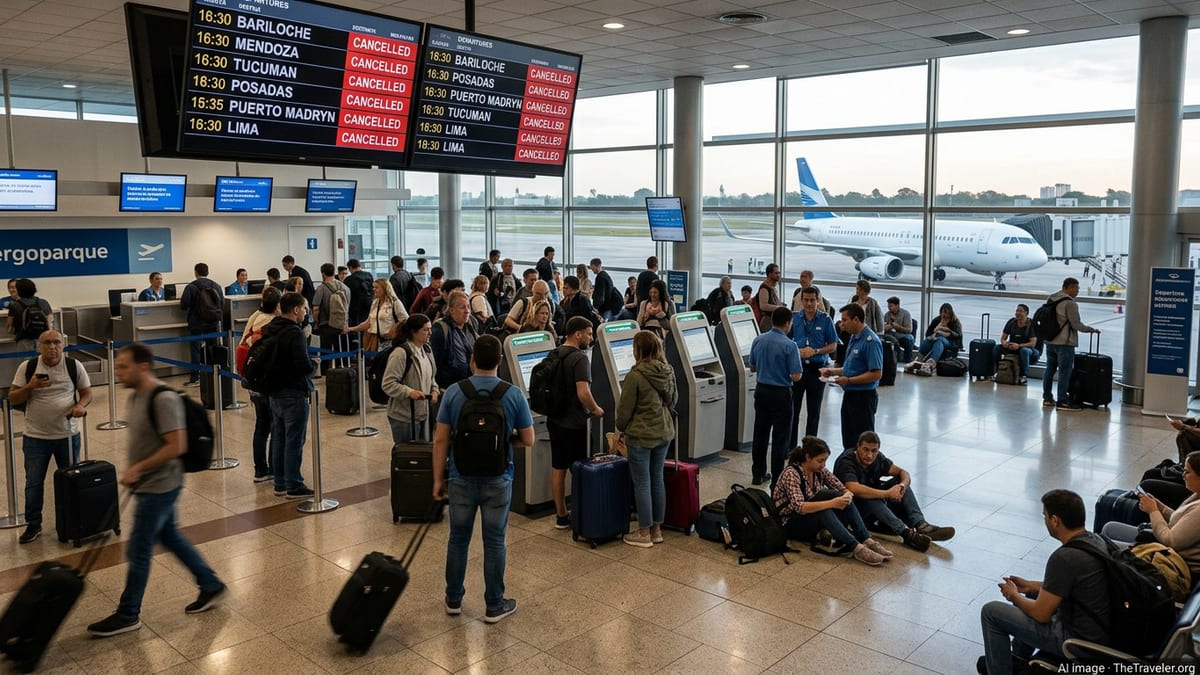
Travelers at Buenos Aires’ Aeroparque Jorge Newbery faced hours of uncertainty as at least 44 flights were delayed and 3 canceled, disrupting domestic and regional services operated by Aerolíneas Argentinas, JetSMART, Flybondi and other carriers.
Get the latest news straight to your inbox!
Operational Disruptions Hit Key Domestic Hub
The latest wave of irregular operations at Aeroparque Jorge Newbery, the main domestic and regional airport serving the Buenos Aires metropolitan area, unfolded across Monday and Tuesday local time, according to published coverage from Argentine media and live flight-tracking boards. Publicly available data show a pattern of delays rippling through afternoon and evening bank departures, particularly on high-frequency routes linking the capital with Córdoba, Mendoza, Bariloche, Neuquén, Salta and regional points such as Montevideo and Asunción.
Reports indicate that at least 44 flights were classified as delayed and 3 as canceled during the peak of the disruption, affecting services marketed or operated by Aerolíneas Argentinas, JetSMART, Flybondi and several regional partners. The issues primarily involved domestic cabotage routes, though a handful of near‑regional flights to neighboring countries were also impacted.
While the precise mix of causes varied by flight, Argentine outlets and airport operations summaries point to a combination of congestion linked to ongoing infrastructure works, tight aircraft rotations, and weather variability over the River Plate basin. The uneven flow of arrivals and departures translated into extended ground times, late inbound aircraft and cascading knock‑on effects through the schedule.
The disruption comes at a moment when Aeroparque is operating near or at capacity on many days, following several years of growth in low‑cost and regional operations and regulatory changes that opened additional slots for domestic and international services. Aviation analysts in local coverage note that this leaves airlines with less resilience when irregular operations occur, concentrating the impact on passengers in already busy terminals.
Passengers Face Long Waits and Missed Connections
As delays stretched beyond standard buffers, social media posts and local television segments showed crowded boarding areas, long lines at customer service desks and passengers resting on the floor near departure gates. Travelers reported waiting several hours beyond scheduled departure times, with some flights repeatedly pushed back in 30‑ to 60‑minute increments before eventually leaving or being canceled.
According to public comments gathered across Argentine news sites and open social platforms, many affected passengers were leisure travelers heading toward winter tourist destinations in Patagonia and Cuyo, along with business travelers shuttling between Buenos Aires and provincial capitals. Missed onward connections within Argentina and to international long‑haul flights from the separate Ezeiza airport were a recurring concern.
Several travelers described difficulties rebooking when flights were canceled or excessively delayed, particularly on low‑cost carriers with lean staffing and limited same‑day capacity. In some cases, the next available seats on alternative departures were reported to be one or two days later, forcing passengers to choose between extended airport waits, last‑minute hotel stays or expensive walk‑up fares on competing airlines.
Openly shared images from the terminal depicted departure boards dominated by red and orange status markers, with “demorado” appearing across multiple consecutive time slots. For visitors unfamiliar with the airport’s layout and transportation links to downtown Buenos Aires, the uncertainty added stress to an already crowded travel environment.
Airlines Adjust Schedules as Aeroparque Prepares for Works
The latest disruptions are unfolding against a broader backdrop of operational strain and upcoming infrastructure interventions at Aeroparque. According to widely reported notices from the airport operator and transportation authorities, the facility is scheduled to undergo a 55‑hour closure later in August to enable runway and systems works, with estimates of more than 900 flights and over 100,000 passengers affected across those days.
In anticipation of that closure and in response to a general rise in traffic, airlines including Aerolíneas Argentinas, JetSMART and Flybondi have already been reshaping their schedules, shifting some operations to the larger Ezeiza airport and spreading frequencies across off‑peak hours. Industry observers quoted in local business and travel coverage argue that these adjustments, while necessary, have reduced schedule flexibility during irregular operations at Aeroparque.
Low‑cost operators in particular have drawn scrutiny over reliability after a string of high‑profile cancellations earlier in the year originating from Aeroparque and other Argentine airports. Publicly accessible statistics cited in recent consumer reports highlight a concentration of cancellations around peak holiday periods, when aircraft utilization is highest and spare capacity is minimal.
For flag carrier Aerolíneas Argentinas, Aeroparque remains the core domestic hub, feeding both internal routes and international services via connections. Any sustained pattern of delays and cancellations at the airport therefore has implications for the wider network, including long‑haul itineraries that depend on punctual arrivals from the provinces.
Domestic and Regional Routes Most Affected
The disruptions primarily hit short‑ and medium‑haul services, the backbone of Aeroparque’s daily operations. Flight‑tracking snapshots reviewed during the incident period showed delayed or canceled departures to destinations including Córdoba, Mendoza, Salta, Bariloche, Neuquén, Iguazú and Comodoro Rivadavia, as well as regional flights serving Montevideo, Asunción and other neighboring cities.
Aerolíneas Argentinas bore a significant share of the impact due to its larger network and number of daily movements at Aeroparque, but flights operated by JetSMART and Flybondi also appeared among the delayed and canceled services. Public timetables and day‑of‑operation boards suggested that some flights experienced delays of more than two hours, while others were scrubbed outright.
Analysts who follow Argentina’s aviation market note in published commentary that Aeroparque’s tight slot structure and single‑runway configuration increase sensitivity to even short interruptions, whether caused by localized weather, ground handling bottlenecks or aircraft maintenance checks. When a queue forms for takeoffs and landings, shorter domestic sectors are often prioritized or combined in ways that can leave certain routes more vulnerable to cancellation.
For travelers relying on Aeroparque for point‑to‑point domestic journeys, the effect can be especially disruptive, since alternatives such as long‑distance buses or last‑minute fares from Ezeiza may add significant time and cost. Regional travelers connecting onward to Brazil, Chile or Uruguay can face similar constraints, particularly when seats on later flights are already heavily booked.
What Travelers Should Know Before Flying From Aeroparque
Travel advisories shared by consumer organizations and travel industry commentators in Argentina emphasize that passengers flying from Aeroparque in the coming weeks should build additional buffer time into their plans and remain alert to potential schedule changes. Guidance circulating across travel forums and news columns recommends arriving at the airport earlier than usual and verifying flight status directly through airline channels and official airport information before setting out.
Publicly available passenger rights information in Argentina specifies that airlines have defined obligations to assist in cases of significant delays and cancellations, depending on the length of the disruption and the cause. Consumer advocates frequently encourage travelers to document communications, keep receipts for essential expenses such as meals or accommodation, and pursue formal claims or complaints if they believe assistance or refunds were insufficient.
For itineraries involving separate tickets between Aeroparque and international departures from Ezeiza, travel planners suggest allowing wide connection windows or considering through‑tickets on a single carrier where possible. The latest disruptions illustrate how even short domestic hops can become critical points of failure when operations are strained at a busy single‑runway airport.
With Aeroparque facing both immediate operational challenges and an upcoming multi‑day closure for works, observers expect further instances of schedule adjustments and potential crowding during peak travel periods. For now, the episode of 44 delays and 3 cancellations serves as another reminder that travelers using Buenos Aires’ city airport may need extra flexibility and preparation to navigate an increasingly complex air travel landscape.