


Staying online abroad is no longer a luxury but a basic travel need. Yet the choice between using a global provider like Drimsim and buying local SIM cards on arrival can be confusing, especially as eSIMs, roaming deals and country rules keep changing. This guide looks at how Drimsim actually works in 2026, compares it to typical local prepaid SIM offers in popular destinations and helps you decide which option makes the most sense for your style of travel.
Get the latest updates straight to your inbox!
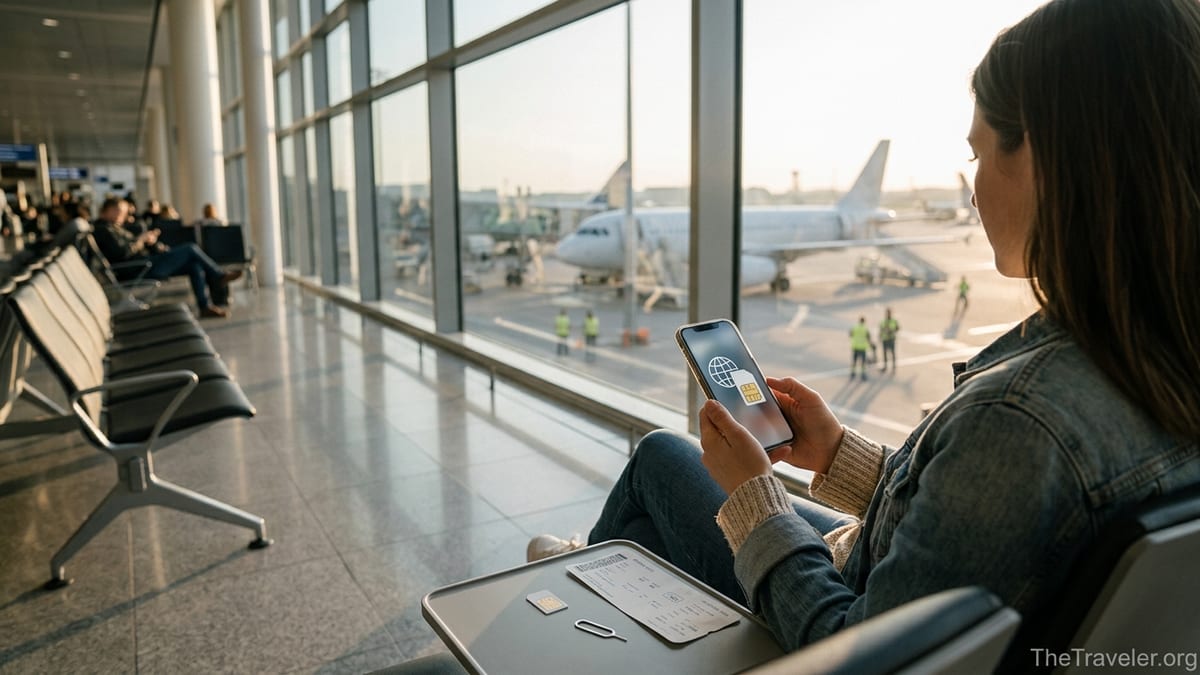
How Drimsim Works in 2026
Drimsim is a global mobile service that gives travelers data access in many countries through a single account. Originally built around a physical SIM, it now also offers eSIM profiles for compatible phones, which is especially useful for newer devices sold in the United States that no longer include a physical SIM slot. You top up a balance in the Drimsim app and pay per megabyte or per package, depending on the country and tariff currently available. There are no long contracts or credit checks, and you can keep the same number and balance from trip to trip.
Unlike many app-based eSIM brands that sell fixed data bundles such as 5 GB for 30 days in one country, Drimsim still leans heavily on pay-as-you-go pricing that varies by destination. In practice, this can be convenient if you hop quickly across borders. For example, a traveler going from Spain to Morocco and then to France can keep using the same Drimsim profile instead of swapping multiple local SIMs. However, the convenience is offset by rates that are often higher per gigabyte than the newest regional eSIMs aimed at budget travelers.
Independent reviews published in 2025 and early 2026 generally describe Drimsim as reliable in terms of connectivity, with coverage across much of Europe and substantial parts of Asia, North America and other regions. At the same time, several user reports criticize its pricing as less competitive than newer eSIM-only services and local tourist SIM cards, especially for heavy data users. The service still appeals most to travelers who value simplicity and are willing to pay a premium for not having to compare and manage many separate local plans.
It is also important to note that Drimsim’s terms of service restrict use or purchasing from certain countries and that its customer support hours are limited compared with some 24/7 chat-based rivals. For most mainstream leisure travelers this will not be a deal-breaker, but business travelers operating across time zones or digital nomads relying on instant help may find this constraint frustrating.
What Local SIM Cards Typically Offer
Local prepaid SIM cards, sold by domestic mobile operators or their sub-brands, tend to offer the best value in terms of data per dollar in a specific country. For instance, guides updated for 2025 and 2026 show that in the United States, prepaid brands like Mint Mobile and others regularly promote introductory offers equivalent to around 40 to 50 GB of high-speed data per month for about 15 to 25 US dollars for new customers who prepay several months. Tourists can access similar short-term prepaid packs in physical stores at higher but still competitive prices compared with international roaming or global SIMs.
In Europe, local operators in countries such as Spain, Italy and Germany often sell tourist or standard prepaid SIMs that include between 20 and 100 GB of data for roughly 10 to 30 euros, sometimes with unlimited domestic calls and texts for 28 to 30 days. Visitors landing in Barcelona, for example, routinely find such packages at airport kiosks, high-street mobile shops and even convenience stores. These plans are designed to compete with each other rather than with international roaming offers, which is why they are usually much cheaper than pay-per-megabyte global services.
Across parts of Asia, particularly in travel hubs like Thailand, Singapore and Japan, local tourist SIMs have become almost a default purchase. A traveler arriving in Bangkok can typically pick up a week-long package with several dozen gigabytes of data at the airport for the equivalent of 8 to 15 US dollars. In places like Hong Kong and the Greater Bay Area of southern China, specialized prepaid cards offer bundled roaming across neighboring regions at local-market prices, which can be very attractive for regional trips.
The main trade-off with local SIMs is logistical rather than technical. You need an unlocked device that supports the local network bands, you may be asked for passport identification at purchase, and you have to physically insert the card or configure an eSIM profile. For travelers visiting many countries in rapid succession, this process can feel repetitive and time-consuming, particularly where language barriers or complicated registration rules apply.
Pricing: Drimsim vs Local SIMs in Real Trips
Although precise Drimsim rates vary by country and are subject to periodic updates, its core model remains more expensive per gigabyte than typical local prepaid offers in most popular destinations. For example, recent comparisons by independent telecom bloggers show that in Western Europe, Drimsim’s effective rate per gigabyte can be several times higher than buying a 20 to 40 GB local SIM from a domestic operator. In the United States in 2026, third-party analyses suggest that new-generation travel eSIMs targeting visitors already undercut Drimsim’s per-gigabyte cost, and local prepaid plans are generally cheaper still.
Consider a two-week trip to Italy for a couple from Chicago. If each person expects to use around 10 GB of data for navigation, social media and light streaming, a pair of local prepaid SIMs with 20 to 30 GB each might cost roughly 40 to 60 euros total, depending on the promotions available. Using a global pay-as-you-go service such as Drimsim for the same amount of data can come out noticeably higher, especially if any background apps consume data unexpectedly. For light users who only check maps and messages, the gap narrows, but for anything more than a few gigabytes the local SIM usually wins on price.
On a multi-country trip, the equation becomes more nuanced. Picture a month-long itinerary that includes a few days in Portugal, a week in Spain, several days in Morocco and then a final week in France. Buying four separate local SIMs or eSIMs can still be inexpensive in total, but it involves research and time in each place. Using a single Drimsim profile across all these borders may cost more overall yet avoids repeated purchases and setup. Travelers need to decide whether the time saved is worth the extra money, especially if their data usage is modest.
In less competitive markets, such as some island nations or countries with high mobile taxes, the difference can shrink, and occasionally a global SIM can even be temporarily cheaper than the only tourist SIM available at airports or hotels. This is not the norm, however, and it is safer to assume that in most urban and tourist-friendly areas, a local SIM or modern regional eSIM will remain the most economical choice for anyone using several gigabytes of data.
Coverage, Performance and Reliability Abroad
Both Drimsim and local SIM cards rely on existing mobile networks in your destination. Drimsim does not own physical infrastructure in most countries; instead it partners with established carriers and roams on their networks. In practice this means that when coverage is strong for the local operator, Drimsim will likely also perform well. Independent testing across more than 20 countries in Europe and Asia in 2025 found that Drimsim generally provided stable 4G or 5G speeds comparable to local prepaid SIMs in cities and tourist corridors.
That said, coverage can be more nuanced outside major hubs. Local operators sometimes prioritize their own prepaid or postpaid subscribers on congested towers, which can leave roaming SIMs slightly lower in the queue when networks are busy, such as during big events or rush hours. Travelers occasionally report that at the edge of coverage, such as rural highways or mountain villages, the local SIM of the primary domestic carrier holds a stronger signal than roaming profiles like Drimsim using secondary partner networks. These differences are usually small but matter for travelers relying on maps or ride-hailing during day trips outside cities.
Local SIMs, especially from top-tier domestic networks in each country, usually offer the most predictable performance because they are provisioned directly on the main network rather than via roaming agreements. For example, a prepaid SIM bought directly from a major US or European operator will almost always match or exceed the speeds of a roaming service in that country. However, cheap local sub-brands or resellers can vary widely, and some discount SIMs throttle speeds during peak times to manage congestion.
For most city-focused itineraries in 2026, the performance gap between a reputable global option like Drimsim and a mainstream local SIM is narrowing as roaming technology improves. The more critical question is redundancy. Travelers who absolutely must stay online for work often prefer carrying both a local SIM or eSIM and a global backup like Drimsim, so if one network has issues they can quickly switch to the other in their phone settings or via a second device.
Practical Factors: Setup, Phone Compatibility and Red Tape
One of Drimsim’s biggest selling points is convenience. You can set up an account, order a physical SIM or download an eSIM profile before leaving home, then land and connect without searching for a kiosk. For American travelers whose newer smartphones support only eSIM, having something pre-installed avoids the physical SIM issue altogether. The activation process is handled through Drimsim’s own app, which lets you monitor remaining balance, see approximate tariffs and add funds with common payment methods.
Local SIMs, by contrast, usually require an in-person transaction unless you buy a digital eSIM in advance from a travel marketplace or the operator’s own app. In many countries, especially in Europe and Asia, sellers must scan a passport or ID and register your details with regulators. The process itself is generally quick, but queues at arrival airports can be long during peak travel seasons. Travelers landing late at night may find some shops closed, which is where a preconfigured global service like Drimsim offers peace of mind for at least the first 24 hours.
Phone compatibility is less of a problem than it was a few years ago, but it still matters. Some budget Android phones sold in one region lack bands used in another, and a few countries maintain restrictions on foreign eSIM activations. In these edge cases a physical Drimsim card can be a useful fallback. On the other hand, in destinations that are rolling out eSIM-only offers or phasing down physical SIM stock, having a device that supports eSIM and being comfortable scanning QR codes or using activation apps becomes increasingly important.
Another practical difference is the ability to receive local calls and SMS. Many Drimsim users focus almost entirely on data and use apps like WhatsApp, Signal or FaceTime Audio for calling. Local SIM cards often come with a domestic phone number and minutes, which can be very helpful for booking restaurants, receiving SMS codes from local services or contacting hotels and taxis that do not use messaging apps. Travelers who regularly interact with local businesses may find this feature alone justifies the quick stop at a mobile shop on arrival.
When Drimsim Makes Sense and When Local SIMs Win
Drimsim tends to make the most sense for certain profiles of traveler. One is the frequent border-hopper, such as a backpacker crossing several countries in a month or a consultant who visits many clients across Europe and Asia. For them, having one account and number that simply keeps working as they move can be worth paying higher rates, especially if their data usage remains moderate. Another group is travelers arriving late at night or in places where buying a local SIM is time-consuming or unclear, who appreciate the security of landing connected from the first moment.
It can also act as a strong backup option. Digital nomads and remote workers often carry a primary local SIM or travel eSIM that offers the best rate in their main base country, while keeping a Drimsim card or eSIM loaded with a small balance in case they suddenly need to cross into a neighboring country or their main provider experiences an outage. In these emergency or transition scenarios, cost per gigabyte is less important than simply having a functioning connection.
Local SIMs, on the other hand, win almost every time for travelers staying at least several days in a single country and using more than a couple of gigabytes of data. Families streaming video for children, creators uploading photos and videos, and business travelers joining frequent video calls will almost certainly save substantial amounts by purchasing country-specific packages. The extra effort at the start of the trip is quickly repaid in lower ongoing costs and often smoother performance.
For many modern travelers, the optimal solution is hybrid. They might activate an affordable regional eSIM from another provider that covers most of their itinerary, buy a local SIM in countries with very cheap data, and keep Drimsim as a flexible backup for gaps. The right blend depends on how much preparation they are willing to do before departure and how sensitive they are to price differences of tens of dollars over the course of a trip.
How to Decide Before Your Trip
Choosing between Drimsim and local SIM cards is easier if you map out your itinerary, device situation and data habits before booking. Start by estimating your likely data use. If you usually consume 1 to 2 GB per week at home by relying heavily on hotel and cafe Wi-Fi, Drimsim’s higher per-gigabyte pricing may still be acceptable for a short city break. If you average 5 to 10 GB per week on streaming, social media and cloud backups, local SIMs or dedicated travel eSIM bundles will almost always be more economical.
Next, look at how many countries you will visit and how long you will spend in each. A three-week stay in a single country like Japan, Thailand or Italy almost always favors buying a local SIM or long-duration eSIM from a domestic operator or specialist travel provider. In contrast, a seven-day rail journey across four European capitals, or a cruise with multiple port calls, may favor a multi-country option such as Drimsim, supplemented by Wi-Fi where available, simply to avoid the hassle of buying and registering multiple SIMs.
Your phone’s hardware is another decisive factor. Owners of recent US-market iPhones, which no longer have a physical SIM slot, must rely on eSIMs. Drimsim’s eSIM support makes it a viable choice, but so do a growing number of rival travel eSIM brands and many local carriers that now sell digital tourist profiles via apps. If your device still has a SIM tray, carrying a pre-configured Drimsim card as backup while dedicating the eSIM to local or regional plans can give you both flexibility and cost control.
Finally, think about your tolerance for admin while traveling. Some people enjoy hunting down the best local deal in each destination, chatting with shop staff and tweaking their phone’s settings. Others want to land, get through immigration and head straight to their accommodation with connectivity already working. Being honest about which type of traveler you are will go a long way toward guiding your decision between the turnkey simplicity of Drimsim and the potentially cheaper but more hands-on local SIM approach.
The Takeaway
In 2026, Drimsim is best seen as a convenience tool rather than a pure money-saver. It offers broad coverage, simple setup and a single account that follows you across borders. For light to moderate data users on complex itineraries, or as a safety net alongside other options, it can be well worth keeping in your digital toolkit.
Local SIM cards, whether physical or eSIM, remain the champions of value inside individual countries. From generous US prepaid plans to low-cost European and Asian tourist packages, they usually deliver far more data per dollar, plus a local number that can make day-to-day logistics smoother. The trade-off is the extra time spent buying, registering and managing multiple plans as you travel.
Rather than choosing only one, many savvy travelers now mix approaches. They rely on local SIMs or competitive regional eSIMs for their primary heavy data use and keep Drimsim on hand for transitions, short stops and emergencies. With a bit of planning and a realistic view of your usage patterns, you can assemble a connectivity strategy that keeps you online, in control and well within budget almost anywhere you go.
FAQ
Q1. Is Drimsim cheaper than buying a local SIM card abroad?
In most popular destinations, especially in Europe, North America and parts of Asia, local prepaid SIM cards or local eSIM packages usually offer more data for less money than Drimsim, particularly for travelers who use several gigabytes or more during their trip.
Q2. When does using Drimsim make the most sense?
Drimsim is most useful for multi-country trips, very short stays, late-night arrivals or as a backup when you do not have time or opportunity to buy and register a local SIM card in each destination.
Q3. Can I use Drimsim if my phone is eSIM-only?
Yes. Drimsim offers eSIM profiles that work with many modern eSIM-only phones, including recent iPhone models sold in the United States, as long as your device is unlocked and compatible.
Q4. Do local SIM cards always include a phone number for calls and texts?
Most local prepaid SIMs provide a domestic phone number and some included minutes and SMS, which can be very helpful for contacting local businesses or receiving verification codes, but the exact allowances depend on the specific plan you buy.
Q5. How difficult is it to buy a local SIM card when I land?
In many countries it is straightforward: you present your passport, choose a prepaid package and have the SIM installed in a few minutes, though you may encounter queues at busy airports or find that some shops close at night.
Q6. Will Drimsim work everywhere I travel?
Drimsim covers a large number of countries, but not every destination worldwide. Coverage can also vary inside each country, so it is important to check the latest supported country list and approximate tariffs in the Drimsim app before relying on it as your only option.
Q7. What if I use a lot of data for streaming and video calls?
If you regularly stream video, upload large files or join frequent video meetings, a local SIM card or a high-capacity regional eSIM from another provider will almost always be more cost-effective than paying Drimsim’s typical per-megabyte rates.
Q8. Can I keep my home number active while using a local SIM abroad?
Yes, if your phone supports dual SIM or eSIM, you can often keep your home number active for calls and texts while using a local SIM or eSIM for data, though you should check with your home carrier to understand any roaming charges that may still apply.
Q9. Is it worth carrying both Drimsim and local SIMs?
For frequent travelers, digital nomads or anyone who depends on connectivity for work, carrying both can be a smart strategy: use local or regional plans for everyday data and keep Drimsim as a flexible fallback when crossing borders or facing local network issues.
Q10. How far in advance should I plan my mobile setup for a trip?
Ideally, review your options a week or two before departure so you can check Drimsim coverage, compare typical local SIM prices, confirm your phone’s compatibility and decide whether to activate any eSIMs before you fly.