


More news on this day
A passenger train driver was killed and dozens of people were injured when two London-bound services collided near Bedford, north of the UK capital, in an evening rush-hour crash that halted major rail links and left travelers stranded across the network.
Get the latest news straight to your inbox!
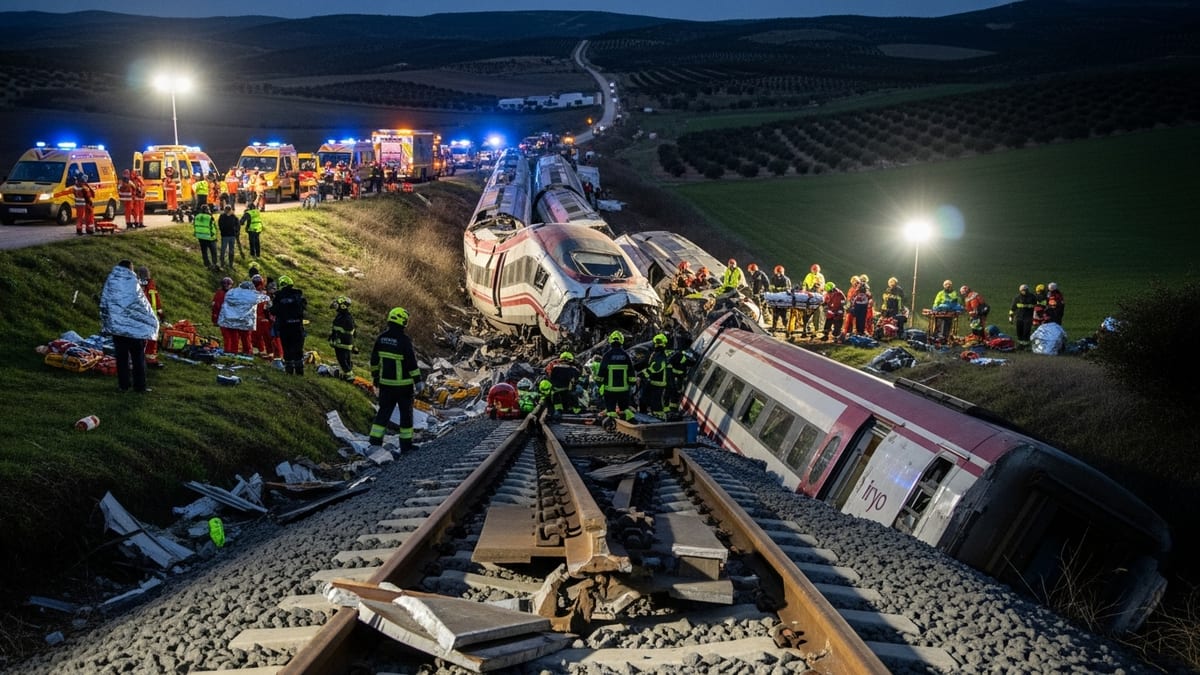
Evening collision on busy London commuter route
According to published coverage, the collision occurred on Friday evening south of the town of Bedford, around 90 kilometers north of London, on lines serving London St Pancras station. Two passenger services traveling toward the capital were involved, turning a busy commuter and intercity corridor into an active emergency zone.
Reports indicate that both trains were operating southbound when the rear of one service struck the other. Rail tracking data cited in news coverage places the impact at about 5:15 p.m. local time, a period when many travelers were heading into or out of London for work and leisure.
Images from the scene published by international and UK news outlets show at least one train upright on the tracks, with carriages apparently derailed or damaged. Passengers are depicted standing or sitting in adjacent fields and along a road parallel to the line, some with visible bandages while others appear largely uninjured but visibly shaken.
Emergency services deployed extensive resources, including specialist medical teams and an air ambulance, responding under a declared major incident as the scale of the crash became clear.
Casualties and injuries among passengers and crew
Publicly available information from multiple outlets indicates that one of the train drivers died in the crash. Early tallies from regional health services and media reports describe a wide range of injuries among passengers and crew members on board the two trains.
Figures reported by British and international media suggest more than 80 people sustained injuries of varying severity. A significant number are described as seriously or very seriously hurt, while several dozen others were treated for minor wounds such as cuts, bruises, and suspected fractures.
Passenger accounts cited in coverage describe a sudden impact that threw people forward inside the carriages, followed by scenes of confusion and distress. Some travelers reported struggling to move through the damaged train, while others exited through gaps in doors or were assisted down to the trackside by fellow passengers and emergency responders.
Local hospitals in the Bedford area and along the rail corridor were placed on heightened alert to receive a large influx of patients, with medical staff mobilized to manage both trauma care and the logistical challenges associated with a mass-casualty rail incident.
Impact on rail services and weekend travel plans
The collision has caused severe disruption for rail users on one of the main north–south routes into London. East Midlands Railway, which operates services on the affected line, reported that a train from Corby to London St Pancras and a train from Nottingham to the same destination were involved in the incident.
According to statements cited in news reports, the company canceled all services to and from London St Pancras on Friday evening, as the line remained blocked for recovery work and on-site investigations. Passengers heading to the capital or returning north were advised to seek alternative routes or postpone travel where possible.
Uncertainty extended into the weekend, with operators unable to provide firm schedules for Saturday while the line remained under the control of investigators and engineering teams. Travelers planning to use East Midlands routes between London and cities such as Nottingham, Leicester, Derby, and Corby have been urged, in media guidance, to check service updates frequently and allow additional journey time.
The disruption also affects connecting services for domestic and international trips, as London St Pancras is a key interchange for regional, suburban, and high-speed trains. Delays and diversions are likely to ripple across the wider network until full line capacity is restored.
Safety investigation and questions over cause
Specialist rail investigators are expected, according to UK media coverage, to focus on how two southbound trains came into conflict on the same stretch of line. Key areas of inquiry are likely to include train signaling, speed at the time of impact, and operational communication between drivers, signallers, and the control center.
Reports highlight that the crash occurred in clear weather during a routine operating period on a well-used electrified main line. That context is likely to sharpen attention on any potential technical failure, human error, or combination of factors that may have contributed to the collision.
Britain’s recent rail safety record has seen relatively few high-casualty incidents compared to historic accidents, and modern main-line operations incorporate multiple layers of protection intended to prevent such collisions. Public discussion following the Bedford crash is already focusing on whether additional safeguards, training, or equipment upgrades may be recommended once investigators release their findings.
For now, published reports emphasize that it may take weeks or months before a full technical explanation is made public. Interim updates are expected as investigators gather data from on-board recorders, signaling logs, and witness statements, and as damaged rolling stock and track components are examined in detail.
Travel considerations for visitors and commuters
The crash north of London has immediate implications for visitors planning trips that rely on East Midlands services into St Pancras. Travelers arriving in the UK or using London as a hub for journeys to the Midlands and northern England may face longer journeys, bus replacement services, or last-minute changes of station.
Based on information carried by UK travel and news outlets, passengers are being encouraged to verify their specific train times on the day of travel and to be prepared for route alterations via alternative London terminals or connecting cities. Those with flexible itineraries may wish to reschedule nonessential journeys until the line is fully reopened and timetables stabilize.
For commuters who rely on the Bedford corridor, the crash is a stark reminder of the vulnerability of single main routes into the capital. As operators work to restore services, many will temporarily shift to other rail lines, long-distance coaches, or road travel, adding congestion across multiple modes of transport.
As the investigation progresses and infrastructure repairs advance, travelers can expect a phased return of services through the Bedford area. Until then, the collision remains both a personal tragedy for those directly affected and a significant disruption on one of Britain’s busiest rail arteries.