


More news on this day
A rush-hour collision between two London-bound passenger trains near Bedford in central England has left one train driver dead and at least 89 people injured, disrupting a key intercity corridor and raising fresh questions about the resilience of the country’s rail network.
Get the latest news straight to your inbox!
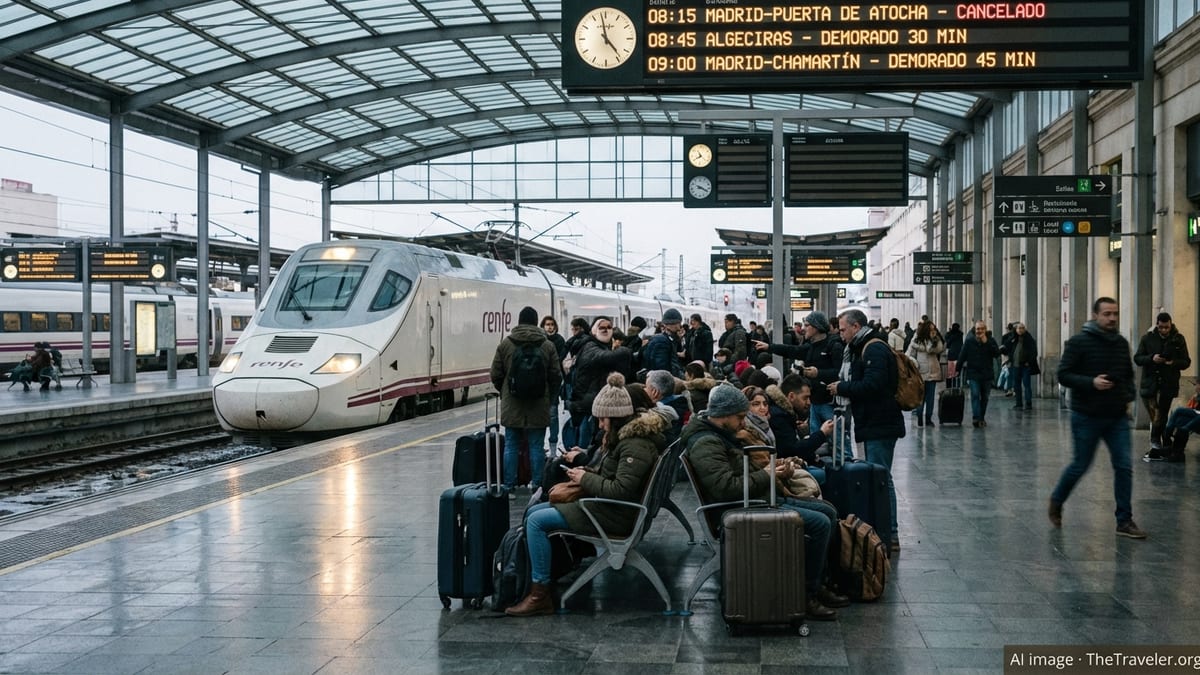
Rush-hour crash on busy London corridor
Published reports indicate that the collision occurred on the afternoon of Friday, 19 June 2026, on a section of track south of Bedford used by frequent intercity and commuter services into London St Pancras. Both trains were reportedly travelling southbound toward the capital at the time of impact, during one of the day’s busiest travel periods.
Coverage from multiple news outlets describes scenes of confusion and panic as passengers were thrown from their seats by the force of the collision. Witness accounts cited in local and international media mention travelers being “hurled forward,” with some suffering visible fractures and head injuries as carriages jolted violently to a stop.
Emergency services declared a major incident and deployed extensive resources to the line, including helicopters and specialist hazardous-area teams. Images published by news organizations and on social media show at least one train with crumpled carriages and shattered windows, standing askew on the tracks but not fully derailed.
Rail operators have confirmed that the route affected is one of the principal arteries linking London with communities across the East Midlands and beyond, magnifying the impact on evening travel and raising concerns for visitors relying on long-distance and airport connections.
Casualties and scale of injuries
According to figures reported by regional health and transport bodies and repeated across multiple news outlets, one person, understood to be a train driver, has died as a result of the crash. At least 89 others have been reported injured, including passengers with serious trauma such as suspected fractures and head injuries.
Publicly available information from ambulance services indicates that the injured span a wide range of ages, from younger adult commuters to older travelers. Triage efforts at the scene reportedly categorized more than 30 people as having very serious or serious injuries, while dozens more sustained minor wounds and shock.
Hospitals across the wider Bedfordshire and north London area have been receiving casualties, with some patients transferred by air ambulance. Medical staff quoted in national media describe intensive efforts to stabilize those arriving with complex injuries, including potential internal trauma or spinal damage associated with sudden high-impact deceleration.
For families of passengers, the scale of the casualty figures has triggered urgent attempts to trace loved ones who may have been on board the affected services, with rail operators and local authorities providing information lines and advice through their usual public channels.
Impact on rail services and passenger travel
The collision has caused major disruption along one of England’s busiest north-south rail corridors, affecting both intercity and regional journeys into and out of London St Pancras. Rail operators have advised that services through the Bedford area are severely limited, with cancellations and diversions expected to continue while investigators and recovery teams work at the site.
Travel reports show that passengers are being urged to check the latest service updates before setting out, with tickets being accepted on alternative routes where capacity allows. Overcrowding has been reported on surviving services, and journey times across parts of the East Midlands and eastern England have lengthened significantly.
For international visitors and domestic travelers using rail connections to reach airports or cross-country links, the disruption may trigger missed onward journeys and overnight delays. Travel advisories recommend allowing extra time, having flexible arrangements where possible, and considering alternative routes via other London terminals or nearby cities if services from Bedford remain constrained.
Local communities near the crash site are also experiencing increased traffic volumes on surrounding roads, as replacement buses and diverted drivers route around the affected rail line. Authorities are signaling that the line may not fully reopen until detailed inspections have been completed and damaged equipment removed.
Early focus on cause and safety systems
While the precise sequence of events remains under investigation, early reporting from specialist rail publications and broadcast outlets highlights the role of modern train protection systems that are designed to prevent collisions on busy main lines. Commentators note that serious rail crashes in Britain have become comparatively rare, making this incident one of the most significant in recent decades.
Some coverage references the possibility that one train may have struck the rear of another service ahead, a scenario that typically involves an intricate combination of signalling, braking performance and human decision-making. However, rail safety experts caution that it is too early to draw firm conclusions, and that official findings will depend on data recorders, signalling logs and detailed site analysis.
Investigative work is expected to examine how speed restrictions, signal aspects and automatic protection systems interacted in the minutes before the crash. Questions are also likely to focus on whether weather, track conditions or any temporary engineering works played a contributory role, and whether additional safeguards could have further limited the consequences.
Reports on previous investigations into other rail incidents in the United Kingdom suggest that any formal inquiry may ultimately result in detailed safety recommendations spanning technology, driver training, maintenance regimes and infrastructure investment, with the aim of reducing the risk of a recurrence.
Context within Britain’s rail safety record
Analysts and historians cited in recent coverage note that Britain’s rail network has, over recent decades, maintained a comparatively strong safety record, with a low frequency of fatal passenger-train collisions compared with road traffic incidents. That background has intensified public shock at a crash of this magnitude on a modern main line.
However, commentators also point out that the network is under sustained pressure from rising passenger numbers, ageing infrastructure in some regions and complex upgrade programs aimed at introducing new signalling and rolling stock. These overlapping factors can create operational challenges that heighten the importance of robust safety systems and clear operational procedures.
The Bedford collision is likely to be viewed alongside past rail accidents that prompted sweeping safety reforms, serving as a new reference point in public debates about investment levels, staff training, system redundancy and the pace of infrastructure modernization. Travel and consumer advocates are already calling, in published opinion pieces and broadcast interviews, for transparency around the findings and for any recommended improvements to be implemented swiftly.
For travelers, the incident serves as a stark reminder that while rail remains one of the safer modes of long-distance transport in statistical terms, rare but severe events can have far-reaching human and logistical consequences. Over the coming days, more detailed accounts from passengers and railway workers are expected to shed light on how the crash unfolded inside the carriages, further informing the broader conversation around rail safety in England and across Europe.