


More news on this day
The driver who died in a collision involving two passenger trains near Bedford has been named as 60 year old Shaun Burton, as investigators continue to examine how the busy London bound route became the scene of one of Britain’s most serious rail crashes in recent years.
Get the latest news straight to your inbox!
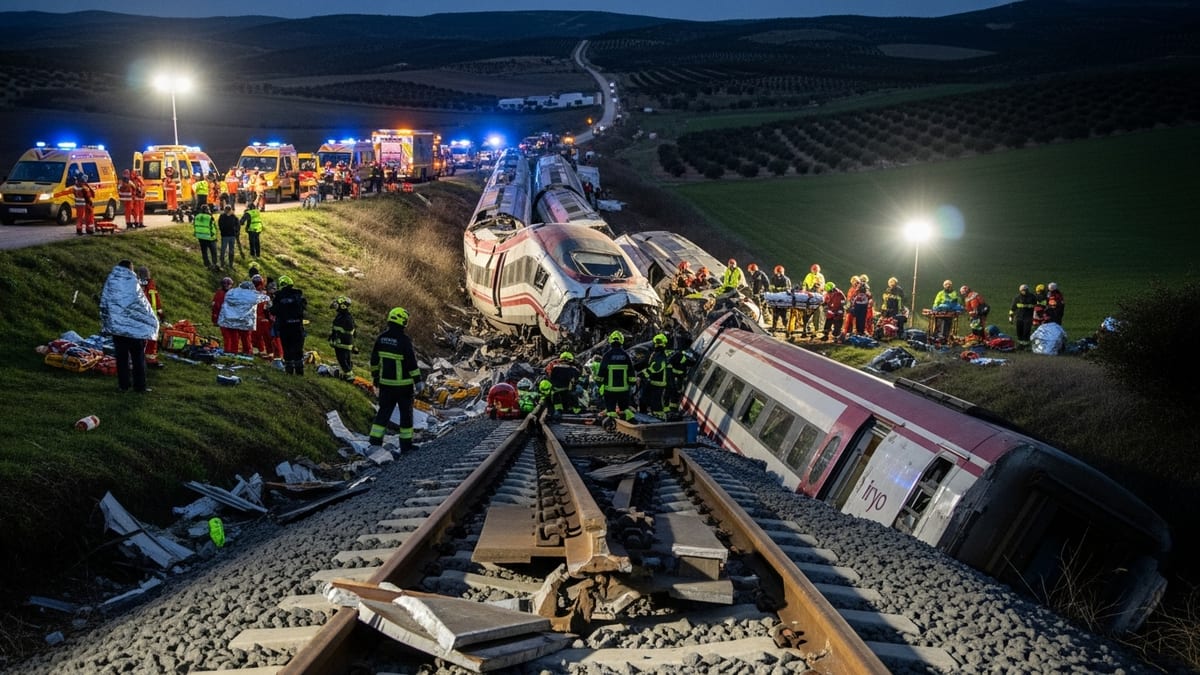
Driver Identified After Fatal Bedford Rail Crash
Publicly available information from British Transport Police and local coverage indicates that Shaun Burton was driving one of the East Midlands Railway services when the crash occurred south of Bedford on Friday 19 June. He was pronounced dead at the scene, while around 100 passengers were treated for injuries of varying severity.
Reports indicate that Burton, described by those close to him as a devoted rail professional, had decades of experience on the network. Tributes shared in regional media and on social platforms highlight his reputation as a calm and reliable driver who took pride in his work.
Burton’s family have issued a written statement through official channels expressing devastation at the loss and thanking emergency responders and rail colleagues for their efforts. Messages of condolence from the wider rail community have continued to gather over the weekend, reflecting the tight knit nature of the industry.
The naming of the driver places a human focus on a crash that has so far been discussed largely in terms of casualty figures and technical failures. For many regular commuters on the Midland Main Line, the incident has underlined the unseen responsibilities carried by those at the controls of high speed passenger services.
Collision On Busy London Corridor Leaves Dozens Injured
The collision took place during the late afternoon peak, on a section of track just south of Bedford used heavily by services running between the East Midlands and London St Pancras. According to publicly available information from rail operators, a Corby to London service ran into the rear of a Nottingham to London train ahead of it on the same southbound line.
Images and video captured from nearby show the rear carriages of the leading train badly damaged, with the following train’s front units visibly crumpled. Emergency service statements indicate that at least one person died and dozens were taken to hospital, including several with critical injuries.
Ambulance and fire crews from across the region responded, supported by air ambulances and specialist rescue teams. Passengers have described being thrown from seats, hit by luggage and struggling through smoke and debris to reach exits. Despite the violence of the impact, the majority of those on board were able to walk away with minor injuries.
The section of line affected is an important artery for both long distance and commuter traffic, feeding directly into London’s St Pancras International. The disruption has therefore had national implications, with knock on delays reported across the East Midlands and other parts of the network as operators reroute services.
Investigators Focus On Signals, Spacing And Safety Systems
Accident investigators from the Rail Accident Investigation Branch and police specialists are examining how two trains ended up on the same track with insufficient separation. Early coverage from multiple outlets suggests particular attention is being paid to the signalling system in the area and how it was interpreted in the moments before impact.
Modern signalling is designed to maintain safe blocks of space between trains, using a sequence of coloured lights and track circuits to show whether a section is occupied. Investigators are expected to reconstruct the exact signal aspects displayed to each driver, the train speeds and braking patterns, and any communication with control rooms.
Publicly available technical commentary has also questioned the role of automatic protection systems that can intervene if a driver fails to respond to a restrictive signal. Whether those systems were active, and if so how they performed, is likely to be central to the inquiry.
Similar investigations in past rail collisions have often taken months, with interim updates followed by a detailed final report that can recommend changes to signalling standards, rolling stock design and driver training. Observers expect the Bedford case to prompt renewed debate about investment in digital signalling and automatic train protection on busy intercity corridors.
Travel Disruption And Advice For Rail Passengers
The crash has led to extended closures on the Midland Main Line south of Bedford, with track repairs and infrastructure inspections ongoing. Network Rail has described the collision as a tragic but isolated event, while warning that reduced capacity and diversions are likely to affect journeys for at least several days.
East Midlands Railway and other operators on the corridor have introduced emergency timetables, cancelling some trains and diverting others via alternative routes where possible. Replacement buses are operating on sections where lines remain blocked, but journey times between London, Bedford, Kettering, Nottingham and Corby are significantly longer than usual.
Travellers planning to use this route are being advised in published guidance to check live departure boards before leaving for the station, allow extra time, and consider alternative routes via Birmingham or the East Coast Main Line if travelling between the Midlands and London. Ticket flexibility has been introduced on some services, allowing passengers to use different operators on reasonable alternative routes.
For international visitors arriving at St Pancras and planning onward travel towards the East Midlands, the disruption is an important practical consideration. Travel planners recommend building in additional connection time, especially for those with flights, tours or accommodation check in times later in the day.
Bedford Collision In Wider Rail Safety Context
Britain’s rail network is widely regarded as one of the safest in Europe, with major collisions between passenger trains relatively rare. Publicly available statistics show that many recent serious incidents have involved derailments linked to weather or infrastructure, rather than high speed impacts between two moving services on the same line.
The Bedford crash therefore stands out as a stark reminder of the risks inherent in intensive rail operations on busy intercity routes. The fact that both trains were modern units operated by the same company on a familiar corridor has intensified scrutiny of the underlying systems designed to keep them apart.
Rail unions and passenger advocacy groups are using the incident to renew calls for continued investment in signalling upgrades, more widespread use of automatic train protection, and robust staffing levels in control centres. Commentators also note that the crash comes at a time of broader debate about rail funding, franchising models and the balance between capacity growth and resilience.
For travellers, the collision is likely to prompt questions about safety on peak hour commuter and intercity services. Experts cited in open reports point out that, despite the severity of the Bedford crash, rail travel in the United Kingdom remains far safer than road transport on a per passenger basis. As investigations progress, the focus will be on ensuring that lessons learned translate into concrete measures to reduce the chances of a similar incident on this key route in the future.