


More news on this day
As airfares and hotel rates in Western Europe continue to strain holiday budgets, new rankings and pricing data indicate that Türkiye and Poland are rapidly redefining the classic European city break by pairing historic centers and dense festival calendars with some of the continent’s strongest value for money.
Get the latest news straight to your inbox!
Value Destinations Outpace Western Icons
Recent surveys of European city-break costs suggest that traditional favorites such as Paris, Rome and Venice have become some of the most expensive short-stay options on the continent, prompting travelers to look east and south for more affordable weekends away. Comparative price-level indices compiled by European statistics bodies show that overall consumer prices in Poland sit significantly below the European Union average, while Türkiye is consistently highlighted as one of the lowest-cost markets for accommodation, dining and daily expenses compared with major eurozone destinations.
Analysis of Eurostat data published in early summer identified Türkiye as the cheapest of seven leading European holiday destinations when a basket of travel-related goods and services was compared, including food, drink, clothing and hotel rates. Parallel coverage of city-break trends from specialist travel outlets for the 2026 Easter period highlighted the Turkish resort city of Marmaris, on the Aegean coast, as Europe’s lowest-cost city break in their sample, contrasting sharply with high pricing reported for Paris, Rome and Venice.
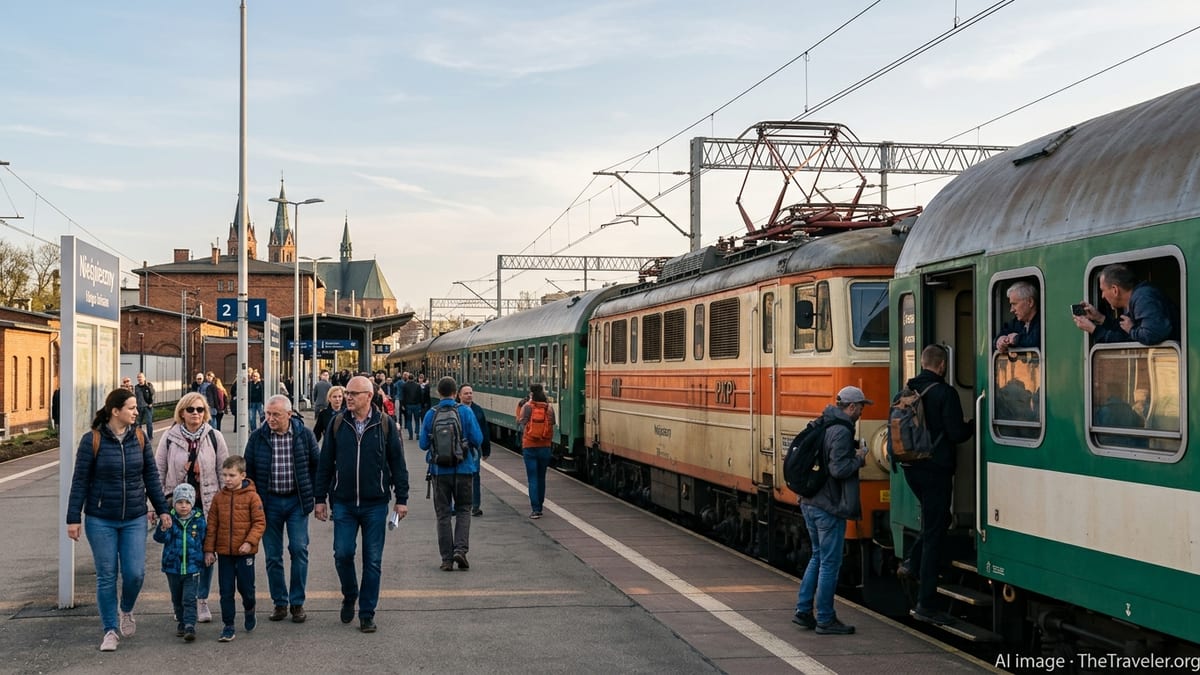
Poland’s cities are also rising through value-for-money rankings. A 2025 study of European city-break costs by a major UK travel money provider, widely covered in European media, placed three Polish cities in its top ten best-value urban destinations. The research combined typical spend on two nights of central accommodation, a range of meals, local transport and key sightseeing tickets, illustrating how far Eastern and Central Europe now undercut Western capitals on short-break budgets.
These findings are increasingly visible in traveler behavior. Online discussions in budget travel communities and forum posts from late 2025 and early 2026 regularly cite Poland and coastal Türkiye as “one of the best value destinations in Europe right now,” with visitors highlighting low local transport fares, competitively priced restaurants and comparatively modest museum and attraction fees even in peak season.
Türkiye Pairs Historic Harbors With Low Daily Costs
Türkiye’s positioning as a budget-friendly city-break hub builds on several years of rapid tourism growth. Figures compiled by the national statistics agency and trade bodies show that international tourism revenue reached a record level in 2024, while international arrivals climbed above 50 million. At the same time, purchasing power parity data for 2024 indicates that local price levels for many travel-related items remain well below the European average, aided in part by exchange-rate movements.
Beyond Istanbul’s familiar skyline of Ottoman mosques and Byzantine landmarks, coastal cities are driving a shift in how travelers think about Turkish urban escapes. The Aegean port of Marmaris, more traditionally associated with resort packages, has been recast in recent coverage as a stand-alone city-break option, with short-stay packages over Easter 2026 undercutting not only Western European rivals but also several competing Mediterranean destinations. Reports point to competitively priced seafront hotels, abundant low-cost dining and inexpensive intercity coach links that allow travelers to add nearby historic sites without significantly increasing their spend.
In Istanbul, publicly available information highlights how the city’s visitor economy blends heritage with contemporary culture. The historic peninsula around Sultanahmet concentrates headline attractions such as Hagia Sophia and the Blue Mosque, while the Beyoğlu district across the Golden Horn draws visitors with independent galleries, music venues and food markets. Travel guides and booking platforms indicate that, despite rising demand, mid-range hotel rates and meal prices in these neighborhoods typically remain below equivalent districts in cities such as Paris or Amsterdam, particularly outside the highest summer season.
Smaller Turkish cities are also starting to appear in budget travel round-ups. Coastal hubs on the Aegean and Mediterranean, long popular with regional tourists, are increasingly promoted as weekend breaks for European visitors thanks to growing low-cost flight links. Analysts note that the same price dynamics making Türkiye an affordable summer destination apply during shoulder seasons, when temperatures are milder but room rates and airfares are often at their lowest.
Polish Cities Turn Heritage Streets Into Wallet-Friendly Weekends
In Central Europe, Poland’s historic cities are emerging as a network of linked, affordable city-breaks that can be combined on a single itinerary. Official tourism research for Kraków shows that the city has maintained its status as one of Poland’s most visited destinations, with municipal studies describing it as a strong domestic and international brand built on cultural heritage and high-quality services. At the same time, local surveys of spending patterns report that average per-visitor outlays have remained comparatively modest, with a noticeable shift among domestic travelers toward more budget-conscious accommodation choices.
Kraków’s compact Old Town, inscribed on the original UNESCO World Heritage List in the late 1970s, allows visitors to explore much of the city on foot, reducing transport costs. Independent budget guides and visitor accounts describe hostels and guesthouses clustered within walking distance of the Main Market Square, along with mid-range hotels that remain competitively priced against similar properties in Western Europe. Street food, milk bars serving traditional dishes and low-cost public trams all contribute to keeping daily budgets manageable.
Further north, the Baltic port of Gdańsk has been repeatedly singled out in European travel coverage as a standout bargain for short breaks. A 2025 analysis by a European broadcaster of city-break costs named Gdańsk alongside other Eastern European cities as one of the best-value options for summer trips, pointing to relatively low prices for accommodation and meals compared with coastal cities in Scandinavia or Western Europe. Visitor statistics compiled by local authorities indicate that Gdańsk welcomed around 4.5 million tourists in 2024, underlining its growing profile while it continues to be viewed by many travelers as less crowded and more affordable than major capitals.
Price comparisons published by tourism information sites suggest that a basic daily budget in Gdańsk can remain well below that of more famous seaside cities, especially outside the peak of July and August. Sample costings show that a day of sightseeing, local transport and meals can be achieved for the equivalent of several dozen US dollars, particularly for visitors willing to choose simple guesthouses or apartments just beyond the main pedestrian thoroughfares.
Festivals and Culture Add High Impact at Low Cost
While price remains a major driver of demand, Türkiye and Poland are gaining an additional advantage in the crowded city-break market through dense cultural calendars that add value without requiring large extra outlays from visitors. Kraków’s cultural institutions, for example, support a year-round schedule of events that includes jazz festivals, film showcases, literary gatherings and traditional parades. Public sources summarizing the city’s culture describe its Jewish Culture Festival, held each summer in the historic Kazimierz district, and long-running Christmas and Easter markets as key draws that activate public spaces with concerts, craft stalls and food stands.
Many of these events take place in open squares or along pedestrian streets, where the principal costs to visitors are low-priced snacks and occasional ticketed performances. Municipal cultural budgets and partnerships with sponsors underwrite much of the programming, which means travelers on tight budgets can experience live music, street theatre or seasonal rituals without paying premium admission fees common at large venues in Western Europe.
In Poland more broadly, national tourism materials highlight an extensive roster of regional festivals that can be integrated into city-break itineraries. The Baltic coast hosts maritime celebrations in Gdańsk and nearby ports, while cities such as Wrocław and Warsaw stage music and film festivals that spill into public spaces. Transport links between these cities are supported by competitively priced rail and coach networks, making it relatively inexpensive for visitors to string together multiple events across a week or two.
Turkish cities offer similar cultural leverage for budget-conscious travelers. Istanbul’s biennials, contemporary art exhibitions and neighborhood street festivals, widely promoted by cultural foundations and municipal bodies, often feature free entry days or outdoor programming. Coastal cities, including Marmaris and others along the Aegean and Mediterranean, stage summer music nights and harbor-front performances that are open to the public, giving short-stay visitors access to local culture beyond standard sightseeing without significantly adding to trip costs.
Multi-City Itineraries Redefine the European City Break
The combination of comparatively low prices, layered heritage and busy cultural calendars is encouraging travelers to rethink the city break as a chain of shorter stops rather than a single two-night stay. Budget-oriented travel media now routinely promote itineraries that link multiple Polish cities by rail, suggesting routes that connect Gdańsk, Warsaw, Wrocław and Kraków over one or two weeks. Sample schedules show that overnight costs and intercity tickets remain low enough to keep total spending below what a shorter trip to a Western European capital might require.
In Türkiye, similar patterns are emerging, with suggested journeys that combine Istanbul’s monumental core with time in coastal cities or secondary hubs reachable by low-cost domestic flights or long-distance buses. Publicly available timetables and fare data indicate that intercity bus routes can be substantially cheaper than equivalent journeys in Western Europe, particularly when booked in advance or during shoulder seasons.
For cost-conscious travelers, these trends collectively mark a shift in the geography of the European city break. Rather than defaulting to a handful of well-known Western capitals, more visitors are considering itineraries anchored in Türkiye and Poland, where purchasing power remains higher and cultural returns on each euro or dollar spent can be substantial. As inflation and accommodation pressures continue to shape travel decisions across the continent, current data and travel reporting suggest that these two countries are well placed to hold their position at the heart of Europe’s budget urban tourism map.