


More news on this day
A four-week shutdown on Merseyrail’s Northern Line is expected to trigger significant disruption to rail travel in and out of Liverpool, with diversion plans and replacement buses altering journeys on some of the region’s busiest commuter and leisure routes.
Get the latest news straight to your inbox!
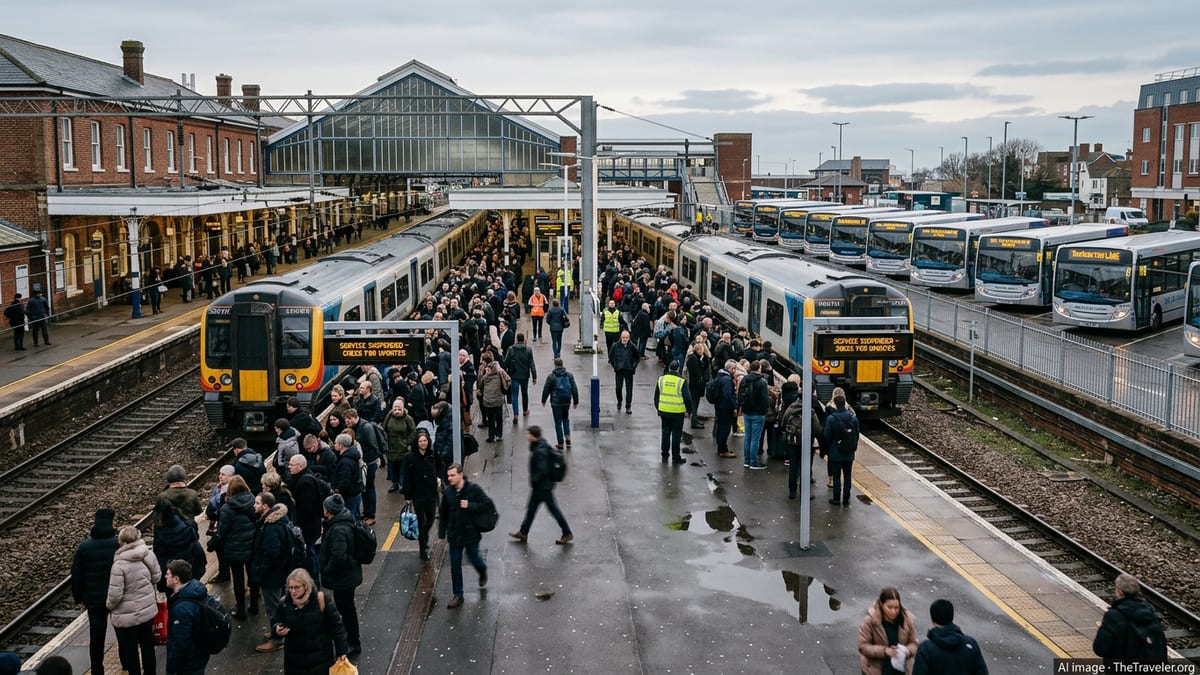
Major Closure Hits Core Commuter Corridor
The four-week suspension affects a central stretch of the Northern Line, one of Merseyrail’s two core routes, which links Liverpool city centre with suburbs and towns across Sefton, Knowsley and West Lancashire. Publicly available information indicates that services on key branches feeding into Liverpool Central will be curtailed or diverted while heavy engineering work is carried out on track and signalling infrastructure.
The Northern Line, shown in blue on regional rail maps, is widely used for daily commuting into Liverpool’s commercial core, as well as for leisure trips to coastal destinations such as Southport and popular residential hubs including Ormskirk, Kirkby and the Headbolt Lane extension. Regular frequencies, often four trains per hour on different branches, mean any prolonged shutdown on the central corridor quickly ripples across the wider network.
The line also provides important interchange opportunities at Liverpool Central and Moorfields for onward connections via the Wirral Line to destinations such as Birkenhead, Chester and New Brighton. A sustained interruption on the Northern Line therefore has knock-on effects extending beyond Merseyside into neighbouring parts of Cheshire and Lancashire.
Rail planning documents suggest the closure has been scheduled during a traditionally quieter late summer travel window to limit the overall impact. However, the combination of commuter demand, tourism traffic and upcoming events in Liverpool means crowding and delays remain likely on remaining rail and road corridors during the shutdown.
Replacement Buses, Diversions and Longer Journeys
Operators and transport authorities are preparing an extensive package of service alterations to keep passengers moving while the line is closed. These measures typically include rail replacement buses running between affected Northern Line stations, strengthened services on alternative Merseyrail branches and guidance to use other city-region rail routes where possible.
Replacement buses are expected to connect key stations north and south of the affected section, allowing passengers to transfer back onto rail for the remainder of their journeys. Experience from previous engineering blocks suggests that journey times on these buses can be significantly longer than standard train services, particularly during peak hours when road congestion around central Liverpool intensifies.
Some longer distance passengers may be directed towards the City Line services from Liverpool Lime Street, operated by other train companies, to reach destinations such as Warrington and Manchester. However, that redirection can add pressure to already busy mainline trains, and seat availability is likely to vary by time of day.
Travel planners advise that passengers check revised timetables carefully, allow additional time for connections and be prepared for multiple changes of mode, from train to bus and back again. For workers reliant on exact arrival times, as well as visitors heading to events or flights, the reduced reliability associated with rail replacement and diversions could be particularly challenging.
Impact on Daily Life, Tourism and Local Economy
The Northern Line serves dense residential districts, key employment centres and popular visitor destinations, so the four-week shutdown is expected to have consequences well beyond the platforms themselves. Commuters from suburban areas such as Maghull, Formby and Kirkby are likely to face longer and less predictable journeys, which in turn could affect punctuality at workplaces across Liverpool’s central business district.
Retailers and hospitality venues in the city centre may experience shifts in footfall patterns as some residents opt to work from home or avoid non-essential trips while disruption persists. On the other hand, travellers who proceed with their journeys despite the closure might adjust their schedules, spending more time in the city between connections or choosing alternative attractions closer to unaffected stations.
The leisure and tourism sector, which often relies on seamless rail access for day-trippers to seaside locations and sporting events, could also feel the strain. Access to race meetings, football fixtures and waterfront events may be complicated by the altered rail patterns, with some visitors choosing private cars instead. This switch risks adding pressure to road networks around Liverpool and at coastal hotspots, particularly at weekends.
Local business groups have previously highlighted how concentrated rail disruption can influence spending behaviour, with some visitors postponing trips until full services resume. While a four-week period is comparatively short in rail infrastructure terms, the timing at the tail end of the summer season means any downturn in visitor numbers may be acutely felt by smaller independent operators.
Advice for Passengers Planning Essential Trips
Passenger-focused information emphasises the importance of forward planning during the Northern Line shutdown. Travellers are encouraged to consult updated journey planners on a daily basis, because engineering activity sometimes triggers incremental timetable adjustments as work progresses. Early morning and late evening services can be especially vulnerable to last-minute changes.
Season ticket holders on affected sections may wish to explore flexible working arrangements, including temporary home-working or adjusted start times, to reduce exposure to the busiest peak periods. Where possible, off-peak travel can help spread demand, improving the chances of securing a seat on remaining rail services and easing pressure on replacement buses.
Visitors to Liverpool who are unfamiliar with the local network are advised to pay close attention to station names and interchange points, particularly when travelling via Liverpool Central or Moorfields, where Northern and Wirral Line platforms are on different levels. Allowing extra transfer time between platforms, and confirming the correct branch train, can help prevent missed connections.
For those who have no choice but to drive, transport planners recommend checking for temporary parking restrictions and being aware that key approach roads to the city centre and waterfront may be busier than usual. Park and ride options linked to unaffected stations could provide a compromise, enabling passengers to complete at least part of their journey by rail and avoid the most congested central streets.
Longer-Term Investments and Capacity Questions
The four-week Northern Line shutdown is part of a broader programme of rail renewals and capacity improvements across the Liverpool City Region. Recent years have seen the rollout of new Merseyrail trains and work on future stations designed to unlock additional growth corridors, including schemes tied to the Northern Line.
Industry reports note that maintenance and upgrade projects of this scale are essential to safeguard reliability and safety on intensively used suburban networks such as Merseyrail. Track renewals, tunnel inspections, power supply works and signalling upgrades are often difficult to complete during short overnight possessions, making extended closures at certain points unavoidable.
At the same time, the latest disruption has revived local debate about resilience and capacity in and around Liverpool. Advocacy groups argue that a system so heavily dependent on a single core corridor remains vulnerable whenever major works are needed, and some call for accelerated investment in alternative routes, new interchanges and additional platforms to spread demand more evenly.
Once the four-week blockade is lifted and normal Northern Line services resume, attention is likely to turn to how lessons from the disruption are applied to future projects. Passenger feedback on replacement buses, real-time information and coordination with other operators will form a key test of how effectively the city region can manage necessary infrastructure upgrades while keeping its vital rail arteries flowing.