


More news on this day
France’s high-altitude resorts are emerging as spring travel favorites, with new visitor data and industry reports suggesting that strong perceptions of Europe’s safety are nudging nature-loving travelers toward quieter alpine escapes outside the traditional ski season.
Get the latest news straight to your inbox!
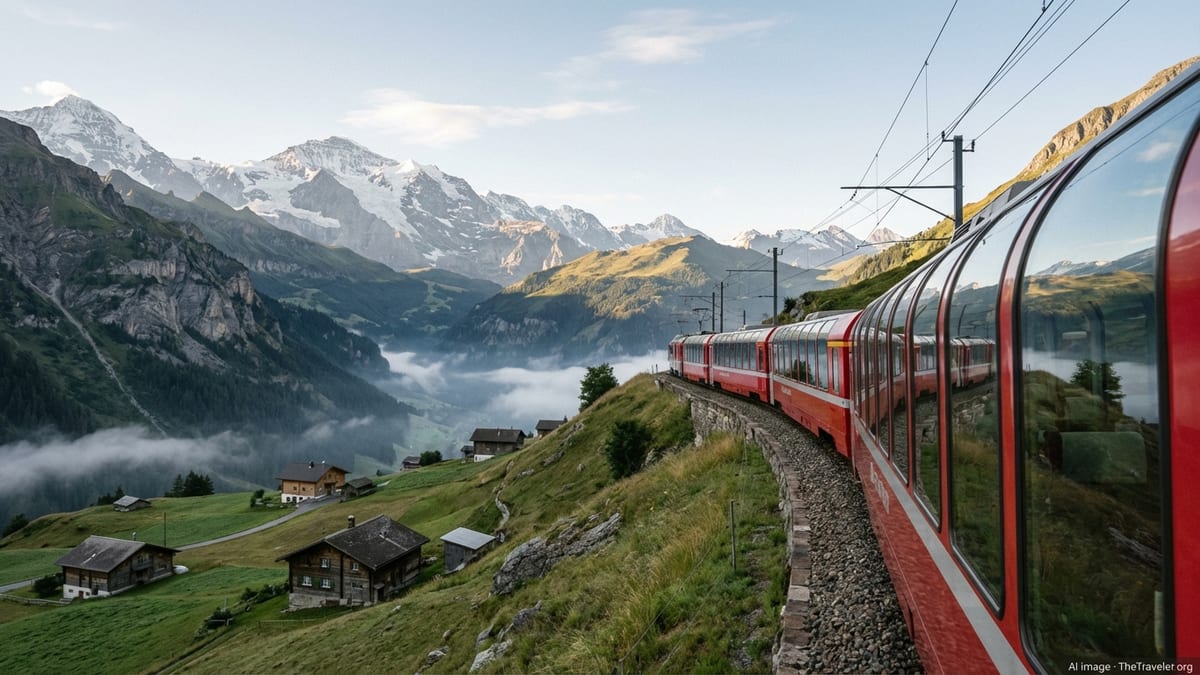
Europe’s Safety Reputation Lifts Confidence for Outdoor Travel
Recent analyses from European tourism bodies and travel risk consultancies indicate that Europe continues to rank as one of the safest regions worldwide, a factor that is increasingly shaping where and how international visitors plan their trips. Long-haul travel surveys released in mid-2026 highlight that perceived safety now sits alongside value for money and climate as a leading criterion when travelers choose a European destination.
Aggregated indices drawing on crime statistics, conflict exposure, health infrastructure and disaster risk consistently position a majority of European countries in the top tiers of global safety rankings. While different methodologies produce slightly different lists, a recurring theme is that Europe concentrates a large share of the world’s safest destinations, reinforcing its image as a low-stress region for cross-border travel.
This broad perception is particularly significant for travelers considering remote or outdoor-focused itineraries. Planning a self-drive circuit through little-known valleys, booking independent hiking routes or staying in small mountain villages can feel less daunting when the wider region scores well on safety indicators and transport networks are perceived as reliable.
Industry observers note that these safety rankings do not remove the need for basic precautions, but they do create a baseline of confidence that benefits destinations marketed around nature, wellness and adventure. As global headlines swing between geopolitical tensions and extreme weather, Europe’s relative stability has become part of the appeal of its high-altitude landscapes.
France Consolidates Its Position as a Global Tourism Magnet
France’s tourism authorities report that the country welcomed around 102 million international visitors in 2025, maintaining its status as the most visited destination worldwide. Official economic updates describe a robust start to 2025 for French tourism, following a record year in 2024, with international receipts climbing and accommodation occupancy buoyed by both domestic and foreign demand.
Within this broader performance, mountain regions are steadily expanding their influence beyond the classic winter peak. Government briefings on seasonal activity point to encouraging booking trends for spring and early summer breaks in rural and alpine areas, as travelers search for open-air settings, moderate temperatures and experiences that feel more grounded in local culture.
French tourism strategies have in recent years placed renewed emphasis on diversifying demand across the calendar and across regions, promoting lesser-known areas alongside coastal hotspots and major cities. Mountain departments such as Savoie, Haute-Savoie and Isère, long associated with high-capacity ski domains, are highlighted in these campaigns for their lakes, heritage towns and extensive networks of marked trails.
Analysts say that by combining strong national brand recognition with targeted promotion of quieter seasons, France is well positioned to capture visitors who are reassessing their travel habits in line with safety perceptions, crowding concerns and environmental awareness.
Spring in the French Alps and Pyrenees Shifts From Snow to Soft Adventure
Destination reports from Savoie Mont Blanc, the wider French Alps and the Pyrenean departments show a gradual rebalancing between winter and shoulder seasons. While ski tourism remains vital, local tourism boards increasingly spotlight spring as a time for hiking, cycling, lake activities and wellness retreats, framed as “soft adventure” rather than extreme sports.
In Savoie and Haute-Savoie, where a dense network of resorts was originally built around downhill skiing, published tourism overviews now stress the importance of hiking routes, road cycling and mountain biking, paragliding, climbing and lake-based sports from March through June. The same valleys that host crowded pistes in February pivot to flower-filled meadows, open lifts for hikers and family-friendly trail infrastructure as the snowline retreats.
In the Pyrenees, thermal spas, national parks and pastoral landscapes are promoted alongside higher-altitude trekking routes and wildlife watching. Local tourism publications emphasize the relative intimacy of these mountains compared with busier alpine corridors, aligning with broader traveler interest in authenticity and human-scale communities.
These shifts are supported by accommodation providers that now design spring packages around wellness, farm visits and gastronomic discovery, often tying in with regional products such as Savoie cheeses, alpine wines or Pyrenean charcuterie. For travelers focused on safety and comfort, the combination of well-maintained infrastructure, established rescue services and village-based stays adds an extra layer of reassurance.
Travelers Seek Authenticity, Sustainability and Rail-Linked Escapes
Global travel platforms tracking booking patterns for 2025 and early 2026 describe a clear tilt toward nature-rich, slower itineraries. Spring trend reports from major accommodation marketplaces highlight rising interest in rural stays, smaller communities and outdoor activities over big-city weekends, noting that these preferences cut across age groups and markets.
Within France, this translates into higher visibility for mountain villages reachable by rail and regional coach, especially for visitors arriving via Paris, Lyon or Toulouse. Industry surveys report that a growing share of travelers factor rail accessibility into their choice of resort or valley, partly for environmental reasons and partly because it aligns with the perception of Europe as a place where safe, multi-country journeys by train are easy to arrange.
Demand for authenticity also plays out in the kind of activities that define a spring break. Instead of short, high-intensity trips, many visitors now opt for longer stays that combine guided hiking with market visits, local cooking classes or time in family-run guesthouses. Publicly available research on post-pandemic travel behavior suggests that travelers who feel secure at their destination are more willing to venture beyond the most touristed sites to explore side valleys and lesser-known hamlets.
Mountain destinations have responded by investing in trail signage, interpretive panels, village heritage routes and agritourism initiatives, which in turn reinforce the perception of well-managed, visitor-friendly landscapes. This loop between safety, infrastructure and authentic experience is particularly evident in France’s best-known alpine massifs, where centuries-old pastoral traditions now coexist with modern outdoor tourism.
Competition Grows as Other European Mountain Regions Ride the Same Wave
France’s mountain territories do not operate in a vacuum. Neighboring regions in Switzerland, Italy, Austria and Spain are also benefiting from Europe’s strong safety rankings and the desire for open-air, climate-moderate holidays. Trade media coverage of spring 2025 and 2026 bookings notes healthy demand for the Swiss Alps, the Dolomites and the Scottish Highlands, all positioned as secure and well-equipped nature destinations.
Comparative safety indices and peace rankings tend to place many of these countries alongside France in the higher tiers, which encourages travelers to pair multiple regions within a single itinerary. It is increasingly common for visitors to combine a few days in the French Alps with a rail connection to northern Italy or Switzerland, supported by integrated passes and cross-border tourism partnerships.
For France, this regional competition is as much an opportunity as a challenge. As Europe promotes itself collectively as a safe, diverse and easily navigable destination, individual countries can differentiate on culture, cuisine and the character of their landscapes. France’s blend of renowned gastronomy, dense rail network and varied mountain ranges from the Alps and Jura to the Pyrenees and Massif Central remains a strong asset.
Looking ahead to the 2027 spring season, sector analysts expect the interplay between safety perceptions and demand for nature, adventure and authenticity to remain central. If Europe continues to score well in global safety benchmarks and France sustains investment in its mountain infrastructure and villages, its high-altitude escapes appear well placed to stay near the top of travelers’ wish lists.