


More news on this day
Hundreds of passengers were left facing long waits and missed connections at Kuwait International Airport on July 16 and 17 after a fresh disruption in operations led to 48 delayed flights and at least nine cancellations on routes linking Kuwait with the United Arab Emirates, Qatar, Saudi Arabia, India and several European destinations, according to publicly available flight-tracking data and regional media coverage.
Get the latest news straight to your inbox!
Wide Ripple Effect Across Gulf and Indian Subcontinent Routes
Publicly available flight information shows that services to and from Kuwait International Airport experienced significant disruption over July 16 and 17, with delays stretching from short operational hold-ups to multi-hour schedule changes. Flights connecting Kuwait City with key Gulf hubs such as Dubai, Abu Dhabi, Doha and Sharjah were among those affected, along with services to Riyadh and other Saudi cities.
Data from flight-tracking platforms indicates that low-cost and full-service carriers operating between Kuwait and India, including services from Kochi, Kozhikode and Hyderabad, recorded arrival and departure delays, with some aircraft departing hours behind schedule. In several cases, revised timings pushed arrivals into late-night or early-morning periods, complicating onward connections for travelers bound for other destinations in South Asia and the Gulf.
Routes linking Kuwait with European hubs were also impacted as aircraft and crew were held out of sequence. Industry reporting on the wider Middle East aviation network notes that carriers have been operating with limited slack in their schedules since regional airspace disruptions earlier in the year, making them more vulnerable to knock-on effects when a hub experiences sudden congestion.
While some flights ultimately departed with extended delays, others were reportedly removed from schedules altogether, forcing passengers to accept last-minute rebooking options or refunds. Travel forums and social media posts from passengers referenced missed family events, lost hotel nights and the challenge of securing alternative routes at short notice during the busy summer holiday period.
Drone-Related Security Concerns Add to Operational Strain
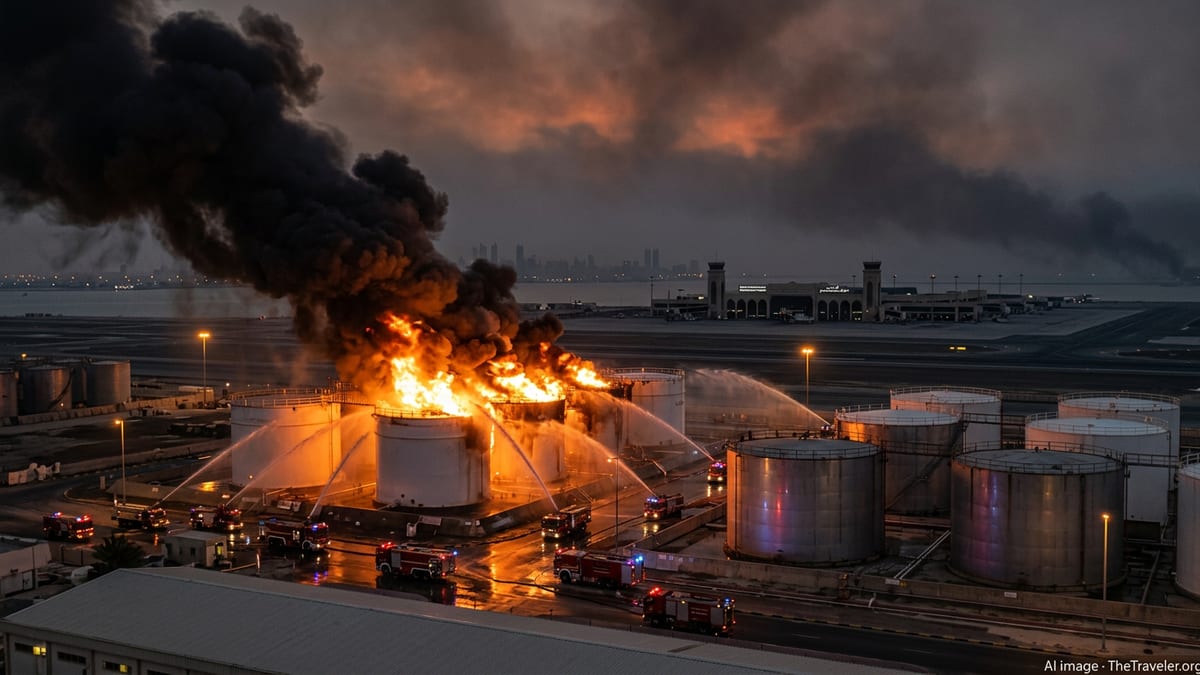
Regional news coverage in the Gulf states links the latest disruption at Kuwait International Airport to heightened security responses following drone-related incidents around the facility in recent months. Reports indicate that military and air-traffic responses to suspected or confirmed drone activity have repeatedly required temporary restrictions on civilian movements, causing knock-on schedule problems for commercial airlines.
Aviation analysts note that while modern air-traffic systems are designed to cope with weather-related disruptions and isolated technical issues, unplanned security interventions tend to be more difficult to manage because they can require immediate airspace closures or diversions. When this coincides with peak summer travel periods, even relatively short shutdowns can trigger queues of aircraft awaiting departure slots and holding patterns for inbound flights.
In Kuwait’s case, the impact has been magnified by the broader context of regional instability and previous damage to infrastructure at major Gulf hubs. Public information on the 2026 Iran war and its aviation fallout describes how earlier missile and drone strikes forced large sections of Middle Eastern airspace to close, grounding or diverting thousands of flights and leaving carriers operating revised routings and compressed schedules.
Industry observers suggest that the recurring security checks and temporary restrictions at Kuwait International Airport have not only affected individual passengers but also complicated airline efforts to rebuild regular timetables. With aircraft and crews already stretched, additional disruptions can push carriers to consolidate lightly booked services, contributing to the nine cancellations and reinforcing the impression of an airport still working toward full operational stability.
Passengers Report Long Queues, Unclear Options and Missed Connections
Accounts shared on travel forums and passenger discussion boards describe crowded check-in halls and departure lounges at Kuwait International Airport as travelers waited for updates from airline staff and overhead screens. Several passengers reported being informed of significant delays only after arriving at the terminal, although others received messages about schedule changes or cancellations within 24 to 48 hours of departure.
Some travelers flying between Europe and South Asia via Kuwait reported that their transit plans were particularly vulnerable. Restrictions on certain categories of connecting passengers, along with evolving rules at Terminal 4, left a subset of transit travelers uncertain about whether they could complete their journeys as booked. In a number of reported cases, passengers were advised to seek refunds and purchase fresh itineraries via alternative hubs such as Doha, Dubai, Abu Dhabi or Riyadh.
Consumer-rights advocates and frequent-flyer commentators point out that passengers flying from or to the European Union, the United Kingdom and certain other jurisdictions may have access to statutory compensation or rerouting rights when long delays or cancellations are not caused by extraordinary circumstances. However, the extent to which drone-related security concerns and broader regional instability qualify as extraordinary is still the subject of debate, and travelers often must navigate complex claims processes with airlines and intermediaries.
For many affected passengers, the immediate concern has been arranging accommodation, food and replacement tickets during the disruption. Anecdotal reports highlight inconsistent handling across carriers, with some airlines reportedly offering hotel vouchers and meal support, while others directed customers primarily toward online self-service tools for refunds or rebooking.
Airlines and Regulators Face Pressure to Clarify Schedules
The wave of 48 reported delays and nine cancellations has renewed scrutiny on how airlines serving Kuwait International Airport communicate with customers in a volatile operating environment. Travelers posting online have expressed frustration at receiving confirmation emails and mobile-app notifications that flights were “on schedule” even as earlier departures on the same route were being cancelled or rerouted.
Aviation commentators say carriers are balancing operational uncertainty with the commercial risk of cancelling services too early. Some airlines serving Kuwait and the wider Gulf have reportedly opted to wait until a 24 to 48 hour window before making final decisions on whether to operate a flight, in the hope that local conditions or airspace restrictions will ease in time to proceed.
Regulatory bodies in the region have publicly emphasized safety as the primary concern while facilitating a gradual reopening of airspace and airport infrastructure. At the same time, published notices by civil aviation authorities across the Gulf underscore the need for airlines to submit realistic schedules and maintain clear communication with passengers about potential last-minute changes.
Industry analysts expect continued pressure from consumer groups, travel agents and corporate clients for better transparency on the likelihood of disruption along Kuwait-linked routes. Detailed advisories, clearer cut-off dates for schedule changes and coordinated messaging between airports, airlines and booking platforms are among the measures being discussed to rebuild traveler confidence.
Ongoing Volatility in Middle East Aviation Network
The disruption at Kuwait International Airport comes against a backdrop of continuing volatility in the Middle East aviation system. The 2026 Iran war and subsequent attacks on key airports across the region forced sweeping timetable overhauls, longer routings around conflict zones and higher operating costs for carriers, particularly on long-haul services connecting Europe and Asia.
High fuel prices and constrained capacity have left airlines with limited flexibility to absorb fresh shocks. When a hub such as Kuwait City experiences sudden delays or temporary closures, the impact can ripple along entire route networks, especially for carriers that rely on tightly timed connections to maximize aircraft utilization.
Travel experts monitoring the situation caution that passengers planning itineraries through Kuwait and other Gulf hubs in the coming weeks should build in additional time for connections and monitor flight-status tools closely. Flexible tickets, comprehensive travel insurance and a willingness to reroute via alternative airports are being recommended as ways to reduce the risk of becoming stranded if further disruptions occur.
While operations at Kuwait International Airport have gradually resumed after previous shutdowns, the latest cluster of delays and cancellations underlines the lingering fragility of air travel in a region still adjusting to the effects of conflict and evolving security threats. For hundreds of passengers this week, that fragility translated into hours spent in terminal queues and a reminder that, for now, travel across parts of the Middle East remains subject to sudden and significant change.