


More news on this day
Summer holidaymakers flying with Ryanair are being urged to brace for long queues and "significant" delays at major European hubs after the airline highlighted fresh bottlenecks linked to the European Union’s new Entry/Exit System at passport control.
Get the latest news straight to your inbox!
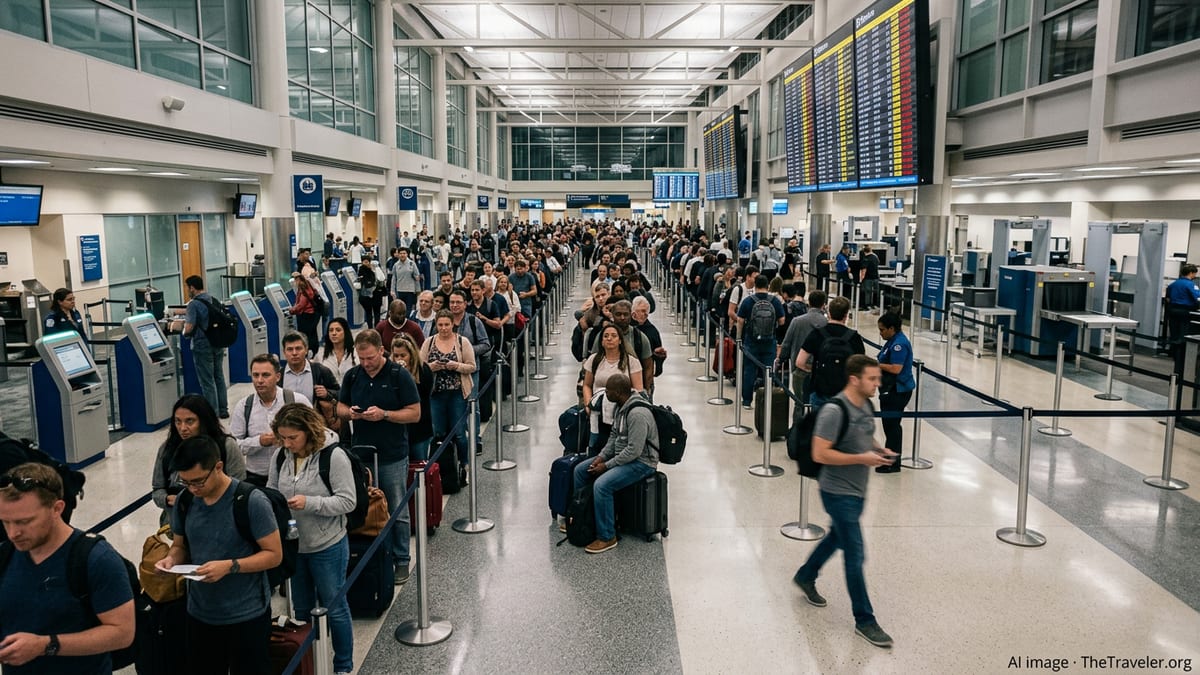
Nine major hubs highlighted amid broader list of disruption hotspots
According to recently published guidance for customers, Ryanair has identified a cluster of busy European airports where processing backlogs at border control are leading to repeated hold-ups, particularly for non-EU passengers. While the carrier has circulated an internal list of 15 airports facing recurring issues this summer, operational updates picked up by travel media focus on nine major hubs where the impact is being described as especially acute during peak hours.
Publicly available reports indicate that these pressure points include popular gateways such as Lisbon, Tenerife South, Madrid, Alicante, Malaga, Milan Bergamo, Milan Malpensa, Paris Beauvais and Berlin. At these airports, long queues at the border, especially at times of heavy leisure demand, are reported to be pushing processing times well beyond what many travellers experienced before the new border regime was introduced.
Coverage of recent incidents, including passengers missing flights after being stuck in passport control lines, has prompted renewed scrutiny of how airports and border agencies are managing summer volumes. Ryanair’s warnings add to a growing body of evidence that the new checks, while designed to tighten security and modernise data collection, are straining infrastructure that was already under pressure from post-pandemic travel growth.
The airline is advising customers that queuing and clearance times are likely to vary significantly by time of day and by airport, with late-morning and evening peaks most vulnerable. Travellers connecting from regional services into these major hubs are being told to allow extra margin to reach departure gates, particularly where journeys involve exiting and re-entering the secure area.
EU Entry/Exit System blamed for long passport queues
Ryanair’s latest alert centres on the European Union’s Entry/Exit System, a new biometric border control regime that has been progressively rolled out across the Schengen area. Public information on the scheme explains that it requires non-EU nationals entering and leaving the bloc to undergo additional checks, including the capture of fingerprints and facial images, and the electronic recording of each crossing.
Airline and airport groups had previously warned that, without adequate staffing and infrastructure, the changes could lead to multi-hour queues at border posts during high season. Statements from sector associations, including IATA and European airport bodies, have pointed to scenarios in which queues could stretch to several hours at peak times if flexibility is not built into the system’s operation.
On the ground, reports from several of Ryanair’s focus airports describe passengers facing lengthy waits at manual booths where the new biometric process is being applied, with some travellers being held back from security and boarding areas while data is captured. At certain terminals used heavily by low-cost carriers, local media accounts suggest that the concentration of short-haul leisure flights is amplifying the problem as large numbers of passengers arrive at border checks within short time windows.
The airline has linked these conditions directly to its decision to advise of “significant” delays and long queues, arguing in public communications that the introduction of the Entry/Exit System has outpaced upgrades to passport control capacity in some countries. Travel industry observers note that, while the system is intended to streamline repeated journeys over time, the early stages of implementation are proving challenging in locations where physical space and staffing levels are constrained.
European travel bodies call for more flexibility and staffing
The warning from Ryanair is emerging alongside broader appeals from European aviation organisations for changes to how the Entry/Exit System is managed over the peak summer period. Recent joint communications from airline and airport associations have urged EU institutions and member states to review procedures and introduce temporary flexibilities to prevent bottlenecks at key gateways.
These industry groups have pointed in particular to the risk that insufficient staffing and inadequate automated equipment could undermine the benefits of digital border controls. In their view, the combination of high leisure demand, more complex checks and infrastructure limitations raises the prospect of prolonged disruption at some major airports if remedial steps are not taken quickly.
Ryanair’s own messaging mirrors this assessment, calling attention to what it describes as a mismatch between the speed of the system’s rollout and the readiness of ground infrastructure to handle the new requirements. Publicly available information from the airline suggests that it is pushing for an emergency extension of flexibilities that would allow border authorities to adjust procedures and redeploy resources during the peak season.
Analysts in the European travel sector suggest that the situation could become a test case for how large-scale digital border projects are implemented in busy transport hubs. While there is broad support for improved data sharing and stronger external border controls, the delays now emerging at some Schengen entry points are prompting questions over contingency planning and coordination between national governments, airports and carriers.
Impact on UK and non-EU holidaymakers heading to Europe
The sharpest impact of the new queues appears to be falling on non-EU travellers, including large numbers of UK families heading to popular Mediterranean destinations during the school holidays. Reports in British and European media describe families facing waits of one to two hours or more at passport control in certain terminals, with young children and elderly passengers particularly affected.
Ryanair has singled out airports serving Spain, Portugal, Italy, France, Germany, Poland and Hungary as locations where UK and other non-EU passengers are especially likely to encounter delays on both arrival and departure. For many households that have budgeted closely for short breaks, lengthy processing times can increase stress levels and heighten the risk of missed onward connections, lost accommodation time and additional expenses for rebooked flights.
Travel trade organisations have also signalled concern that recurring disruption at key sun-and-city destinations could dampen demand later in the season if issues are not addressed. While there is currently no widespread pattern of cancellations linked directly to border queues, anecdotal accounts of flights departing with booked passengers still stuck in passport lines have raised the stakes for airlines and airports alike.
Consumer groups are reminding passengers that, where long delays cause missed departures, airlines and airports may handle responsibility differently depending on whether the delay occurred before or after security. Public guidance stresses the importance of allowing additional time for border control and of carefully checking each airport’s recommended arrival times, which in some cases have been increased in response to the Entry/Exit System.
What Ryanair passengers can do before travelling
Ryanair is encouraging customers to adapt their travel behaviour to mitigate the risk of being caught in the worst of the queues. The airline’s public advice includes arriving at airports earlier than usual for both outbound and return flights, particularly at the nine highlighted hubs and other locations where the Entry/Exit System is fully in use.
Passengers are being urged to complete airline check-in and baggage formalities as early as possible, then move promptly to security and passport control rather than spending time in landside areas of the terminal. Travel experts note that, with bottlenecks concentrated at border posts, clearing this stage early can create a useful buffer in case conditions worsen later in the day.
Some airports have introduced or expanded fast-track options at security and passport control, although availability often depends on terminal layout and local regulations. Where such services exist, Ryanair customers may wish to consider paid priority lanes or dedicated family channels, especially during peak holiday weekends when demand is highest.
Industry observers add that travellers should monitor their airline’s app and official communication channels for airport-specific updates, as conditions can change quickly. With summer now underway and passenger numbers climbing, both Ryanair and airport operators are under pressure to keep disruption within manageable limits while the Entry/Exit System continues to bed in across Europe.