


More news on this day
Dubai International Airport is sharpening its security procedures while rolling out passenger-friendly technology, prompting updated guidance on what travelers can safely and legally carry in their hand luggage and checked bags when flying through DXB.
Get the latest news straight to your inbox!
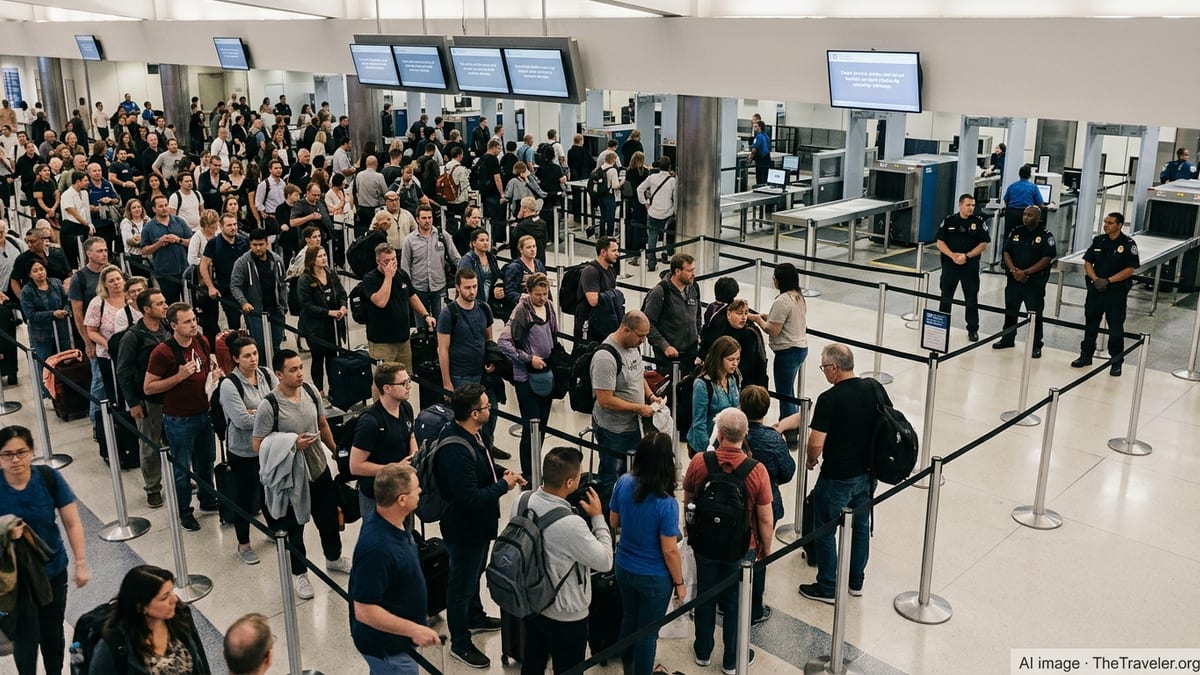
Smarter security at DXB, same core safety rules
Dubai International Airport remains one of the world’s busiest hubs, and recent upgrades focus on making security checks faster while keeping long-standing safety rules in place. Dubai Airports and local partners have been working with global industry bodies on smarter screening concepts designed to streamline the checkpoint experience at DXB and Dubai World Central, including advanced scanners and more automated processes at security lanes.
Publicly available information shows that these initiatives aim to reduce bottlenecks at screening points without relaxing the underlying restrictions on dangerous goods. Enhanced baggage handling systems and more sophisticated imaging technology support security staff in identifying prohibited items more quickly, which in turn helps queues move faster when passengers pack correctly.
Despite the technological changes, travelers remain responsible for knowing what can be carried in cabin bags and what must go in checked luggage or be left at home. United Arab Emirates aviation regulations and Dubai Airports’ own guidance continue to set the baseline for what is allowed, and airline-specific rules, such as size and weight limits, still apply on top.
For passengers, this means the practical focus has shifted from repeated manual checks toward better preparation before arriving at DXB. Understanding the current rules on liquids, electronics, batteries, and restricted objects remains the surest way to benefit from the new systems at security.
Liquids, aerosols, gels: 100 ml rule still in force
While some airports worldwide are piloting more flexible policies on liquids with next-generation scanners, published guidance for Dubai International confirms that the familiar 100 milliliter limit for liquids, aerosols, and gels in cabin baggage still applies. Travelers are advised to avoid carrying liquids in their hand luggage unless necessary and to expect screening staff to enforce size limits strictly at security lanes.
Current information on DXB’s security pages notes that any liquids, aerosols, or gels carried through the checkpoint must fit into containers of 100 milliliters or less and be placed in a single, clear, resealable plastic bag inside hand luggage. Larger containers, even if partially full, are not accepted in cabin bags and should go into checked baggage where permitted by airline and customs rules.
These liquid rules cover a broad range of items, including bottled water, soft drinks, perfume, cosmetics such as foundation or liquid lipstick, hair products, gels, pastes, and liquid-based foods like soups or sauces. Medication and special dietary liquids may be subject to additional screening, so passengers are encouraged to carry prescriptions or supporting documentation and to allow extra time for inspection if needed.
The continuing 100 milliliter restriction is particularly important for travelers connecting through Dubai from regions where local trials may allow larger liquid quantities. Transit passengers should repack duty-free or personal liquids in line with DXB’s requirements before reaching a Dubai security checkpoint to avoid confiscation.
What you can pack in hand luggage at DXB
Within the liquid limits, a wide range of everyday items can be carried in cabin baggage through Dubai International, provided they comply with airline size and weight allowances and do not appear on prohibited lists. Most travelers are permitted to bring standard personal electronics, such as laptops, tablets, cameras, mobile phones, and headphones, along with chargers and power banks that meet airline and aviation safety rules for lithium batteries.
Dubai Airports’ public guidance emphasizes that passengers should keep essential valuables and documents in their carry-on bags. This typically includes passports, wallets, jewelry, small electronics, and important medication. Travel documents, cash, and fragile or high-value items are strongly discouraged in checked baggage due to the risk of loss or damage in transit.
Small personal care items, including travel-sized toiletries, makeup in compliant containers, toothbrushes, and deodorant sticks, are generally allowed. Baby care items such as formula, baby food, and diapers can be carried, with liquid quantities subject to security screening. Travel comfort items like neck pillows, light blankets, and reading material pose no issue at security as long as they do not conceal prohibited objects.
For many airlines operating at DXB, cabin baggage rules also permit limited quantities of duty-free purchases, including sealed beverages and perfumes bought after security, subject to airline carry-on limits and any additional controls on certain routes. Passengers should retain receipts and keep items in tamper-evident bags where provided, especially when connecting onward to destinations with specific import restrictions.
Items that must never go through DXB security
United Arab Emirates aviation rules and airport security policies set out a detailed list of items that are not allowed in cabin baggage and, in some cases, not permitted on board at all. According to documentation linked from UAE civil aviation resources, prohibited items for hand luggage include firearms, replicas and imitation weapons, explosive and incendiary materials, flammable liquids, and devices designed to incapacitate, such as stun guns and certain chemical sprays.
Sharp objects are a key area of attention at security checkpoints. Knives with blades above a minimal length, large scissors, certain tools, and metal implements that could be used as weapons are typically barred from cabin bags. These items may be allowed only in checked baggage, if at all, and passengers who forget to remove them from hand luggage usually have them confiscated at DXB security.
Dubai Airports also highlights common everyday items that can still trigger problems at screening. Lighters, flammable containers such as some camping fuels, and toy weapons of all kinds are singled out as items that should not be packed in hand luggage. Even realistic-looking toys and souvenirs that resemble weapons can cause delays or be removed by security staff.
Some objects are restricted because of fire risk rather than security concerns. Larger lithium batteries, certain power banks, and self-balancing scooters face tight controls under global dangerous goods regulations. Travelers are encouraged to check current airline and aviation safety guidance carefully, as these rules can change and may differ between cabin and checked baggage.
Checked baggage rules and why airline policies still matter
While security upgrades have focused heavily on the passenger screening experience, DXB’s vast checked baggage system continues to operate under strict safety and customs rules. Baggage restrictions are shaped by a combination of UAE law, Dubai airport policies, and the conditions set by individual airlines, many of which publish detailed baggage guidance for flights to and from Dubai.
Commonly accepted items in checked baggage include clothing, shoes, larger toiletries, and non-fragile personal belongings. Liquids that exceed the 100 milliliter limit for cabin bags can often be packed in checked luggage, subject to airline and customs limits on alcohol, aerosols, or other regulated substances. Travelers should verify any quantity limits or packaging requirements in advance, particularly for high-proof spirits or pressurized cans.
Certain categories remain strictly controlled, even in checked bags. Explosives, fireworks, flares, some chemical products, and corrosive substances are generally prohibited in all baggage. Regulations also restrict the carriage of some batteries, fuel-powered equipment, and items that could leak or combust under pressure or temperature changes in the hold. Airlines serving DXB typically align their conditions of carriage with international aviation safety standards on dangerous goods.
Because policies can vary by carrier and destination, DXB passengers are strongly advised to review both Dubai Airports’ security guidance and their airline’s baggage rules shortly before travel. Publicly available resources highlight that regulations are updated periodically, and relying on older information can result in unexpected repacking at the check-in counter or security line.
Preparing for a faster journey through Dubai International
Reports indicate that Dubai’s move toward smarter security is intended to support rising passenger numbers with smoother flows through checkpoints, rather than to introduce more intrusive procedures. For travelers, the practical effect is that well-prepared baggage is more likely to pass through advanced screening systems without delay.
Airport information channels recommend that passengers arrive with cabin bags neatly organized so that liquids, laptops, and other electronics can be screened efficiently under current rules. Even as technology evolves, clearly separating items and avoiding clutter in hand luggage can reduce the need for manual bag searches.
Travelers connecting through DXB are also encouraged to keep destination-specific security rules in mind. Some routes, particularly to North America or certain Asia-Pacific countries, may apply additional screening for liquids, electronics, or duty-free purchases at departure gates. These measures sit alongside DXB’s own procedures and can affect what ultimately makes it onto the aircraft cabin.
With Dubai International positioned as a key global hub, security and baggage regulations are reviewed regularly in line with international standards and local legislation. Passengers who check official airport and aviation resources shortly before departure, and pack their bags accordingly, are best placed to benefit from the latest security upgrades while keeping their journey through DXB as smooth as possible.
Sources: Dubai Airports Security & Customs information; UAE General Civil Aviation Authority prohibited items list; UAE Aeronautical Information Publications; DXB baggage rules overview; Background on Dubai International Airport