


Dubrovnik has no shortage of island escapes, but most visitors with limited time end up torn between two classic options: the Elafiti Islands (usually Lopud, Koločep and Šipan) or a quick hop to Lokrum. Both offer clear Adriatic water and stone-scented pine forests, yet the experience on each is very different. This guide breaks down beaches, ferry logistics, swimming, crowds, history, costs, family suitability and ideal trip length so you can confidently pick the best island trip for your style of travel.
Get the latest updates straight to your inbox!
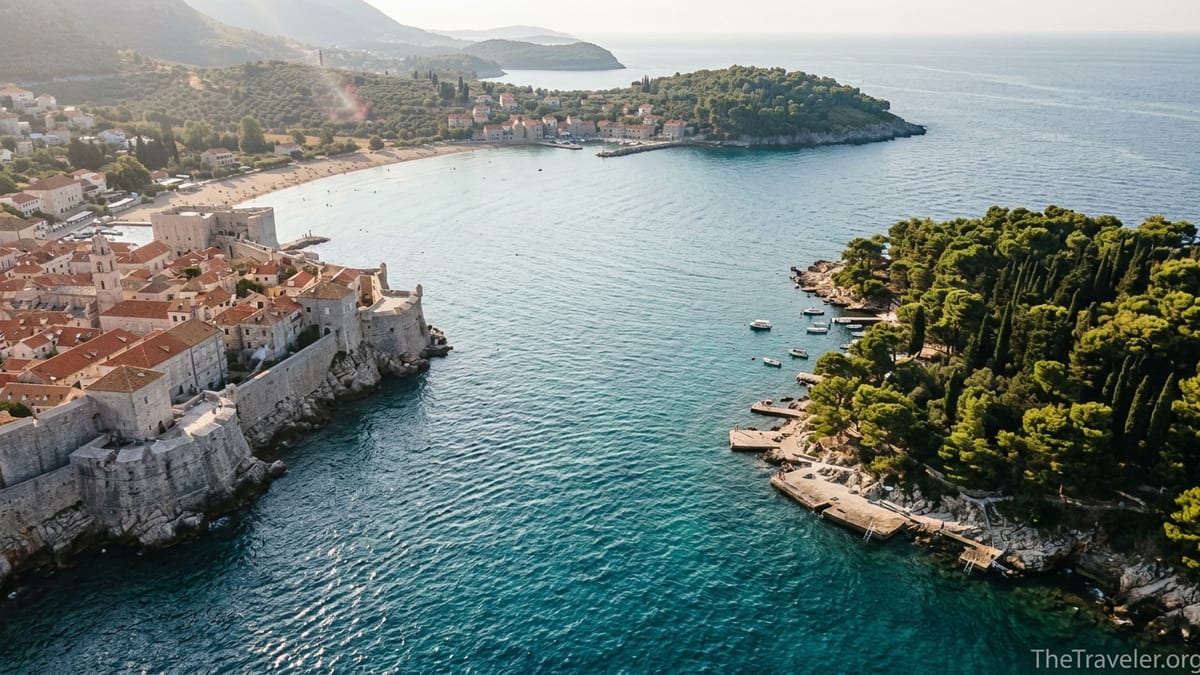
At a Glance: Two Very Different Island Experiences
Lokrum sits just offshore from Dubrovnik’s Old Town, about 600 meters across the channel, with ferries shuttling back and forth in roughly 10 to 15 minutes. It feels like a huge city park on an island: botanical gardens, shaded paths, peacocks, a monastery complex, rocky bathing spots and a saltwater “Dead Sea” lagoon for floating rather than proper beach time. You can leave the Old Town, be swimming off Lokrum’s rocks half an hour later, and be back in the city in time for sunset drinks on the walls.
The Elafiti Islands are a small archipelago stretching northwest of Dubrovnik, with most day trippers heading to the trio of Koločep, Lopud and Šipan. Reaching Lopud or Šipan on the state ferry from Gruž port usually takes 45 to 75 minutes depending on the route and stops. Once there, the experience is more “small Adriatic village” and less “city park”: promenades with cafés, low stone houses, small churches, olive groves and, on Lopud, one of southern Dalmatia’s best sandy beaches at Šunj bay. A day here feels like a mini holiday, not just a side excursion.
If you want the quickest nature hit with minimal logistics, Lokrum usually wins. If your dream is a full slow day of beach, cafés and island atmosphere, especially with kids, the Elafitis are hard to beat.
Ferry Logistics, Timetables and How Long You’ll Spend in Transit
For Lokrum, boats usually operate as a shuttle from the Old Town harbor in high season, roughly every 30 minutes through the middle of the day, with a crossing time of around 10 to 15 minutes. The exact frequency and first/last departures change slightly each year and by month, but practically this means you can finish walking the city walls, buy a combined Lokrum ticket at the small kiosk by the harbor and be on the island quickly without advance planning. Many visitors simply watch the next departure board and go when it fits around lunch.
The Elafiti Islands require more planning because sailings are less frequent. The main state passenger line from Dubrovnik’s Gruž port, often referred to as line 807, typically runs to Koločep, Lopud and Šipan about four times daily in the main 2026 season. Published return tickets from Gruž to any of the three islands are usually a little over 5 euro per person for the round trip, with the same price regardless of which island you choose. However, departure times are fixed: you might have a morning boat around 9:30, another around lunchtime, and late afternoon / evening returns. Miss the last evening sailing and you are looking at an overnight on the island or arranging an expensive private transfer.
In practical terms, allow about 30 minutes from the Old Town to Gruž by local bus or taxi, then 30 to 60 minutes on the ferry to Lopud or Šipan, depending on stops. From leaving your apartment in the Old Town to arriving on Šunj beach on Lopud, most travelers will spend close to 90 minutes including walking and waiting. Private boat excursions shorten sailing times (for example, a small speedboat might reach Lopud in roughly 30 minutes from Dubrovnik), but those are much more expensive than the state ferry and often sold as full-day three-island tours that run 6 to 8 hours.
Beaches and Swimming: Sandy Šunj vs Rocky Lokrum Coves
For classic beach time, the Elafiti Islands, and specifically Lopud’s Šunj beach, are the clear winner. Šunj is a long, shallow sandy bay on the south side of Lopud. The sand and gently sloping seabed make it one of the most family-friendly swimming spots near Dubrovnik. In summer, beach bars rent sun loungers and umbrellas, and there are simple restaurants for grilled fish, salads and cold drinks. You can walk far out into the water before it gets deep, which is ideal for less confident swimmers or small children.
To reach Šunj, you arrive at Lopud village on the north side then either walk about 25 to 30 minutes across the island on a paved path with some uphill sections, or pay for a golf-cart shuttle that runs regularly between the harbor and the beach for a small per-person fee. Many visitors enjoy the walk there, taking the shaded route past stone houses and small chapels, then ride the cart back when tired and sun-salty. There are also smaller swimming coves directly in Lopud village, but Šunj is the main draw for sand and space.
Lokrum, by contrast, is almost entirely rocky coastline. Instead of a single big beach, you find multiple flat rock plateaus and ladders into deep, clean water. The island’s small saltwater lagoon, often called the Dead Sea, is a sheltered spot where people float and kids paddle, but it is not a sandy beach. You will want water shoes if you have sensitive feet and be comfortable climbing in and out via ladders or sloping rocks. The upside is that the water around Lokrum feels like a giant natural swimming pool, and there are several designated nude areas for those seeking more privacy. For travelers who dislike sand and love cliff-style jumping and snorkeling in deep water, Lokrum is perfect.
Crowds, Atmosphere and How “Escaped” You’ll Feel
Lokrum’s proximity to the Old Town makes it extremely popular, particularly between late June and early September. Boats often leave nearly full by mid-morning, and the main swimming rocks closest to the ferry landing can feel busy by midday. However, once you walk 10 to 15 minutes along the paths, the island quickly feels quieter. The interior is all pine and cypress forest, shaded tracks, peacocks wandering near the botanical garden, and the ruins of the Benedictine monastery turned summer residence. If you only have half a day and want to escape the shoulder-to-shoulder crowds on Stradun without leaving sight of the city walls, Lokrum delivers that sense of decompression.
The Elafiti Islands offer a more traditional “small town on an island” feel. Lopud village has a pedestrian-only waterfront promenade lined with cafés, a church tower, small guesthouses and a couple of hotels. Šipan’s harbor at Suđurađ is even sleepier, with fishing boats, a castle-like summer residence and a few konobas (simple restaurants) on the waterfront. Koločep, the closest of the three to Dubrovnik, has pine forest and walking trails between its two settlements. Even in peak season, while ferries can be busy, you can usually find pockets of quiet along a path, in an olive grove or at a small cove away from the main beach. The trade-off is time: you invest more of your day in getting there, but you gain a deeper sense of having gone somewhere.
In practical terms, if you are visiting Dubrovnik in July or August and staying near the Old Town, Lokrum is still busy but may be the only realistic way to get a green space and swim without committing a full day. If you are willing to dedicate one entire day of your stay to island time, the Elafitis feel significantly more relaxed and less tour-bus-driven.
History, Nature and What You Can Actually Do On Each Island
Lokrum is protected as a nature reserve, and that shapes what you can do. There are no overnight stays on the island, and no private cars or loud motorized activities for visitors. You will find marked walking trails through dense Mediterranean vegetation, the remains of a Benedictine monastery, a small museum space that touches on the island’s history and its link to television filming, plus the 19th-century Fort Royal at the top, which provides panoramic views back to Dubrovnik’s walls and out along the coast. For many travelers, a typical Lokrum visit involves two or three swims from different rocky spots, a walk to the saltwater lagoon, a short hike up to the fort viewpoint and a drink at the simple island café before returning.
The Elafiti Islands layer more village life and low-key culture on top of their nature. On Lopud, you can combine Šunj beach with a wander through the narrow lanes of the main settlement, stopping for an ice cream or coffee at a seafront café. There are remnants of old summer villas, a couple of churches and the hilltop Sutvrač fortress rewarding a steeper hike with wide sea views. On Šipan, paths lead through vineyards and olive groves between the harbors of Suđurađ and Šipanska Luka, with Renaissance-era summer residences dotted along the way. Koločep offers shaded coastal and woodland walks, as well as small coves and a more residential feel.
Because the Elafitis are inhabited, you also get more of a sense of everyday Croatian island life. When you sit down for grilled fish or octopus salad at a family-run konoba on Šipan, you are usually eating where locals dine too, especially outside peak lunchtime when tour boats arrive. Lokrum, by contrast, has more of a day-use infrastructure: snack bars, a couple of cafés, picnic lawns and sea-access platforms built for visitors rather than resident communities.
Costs, Tours and How Each Option Fits Different Budgets
For Lokrum, the main cost is the island entry ticket, which typically includes the round-trip boat from the Old Town harbor. Recent seasons have seen adult prices around 30 euro, with reduced rates for children; 2026 pricing is similar, though always check locally as small increases are common year to year. Many visitors comment that Lokrum is not a cheap outing when you factor in on-island food and drinks, which are often more expensive than similar items back on the mainland. On the other hand, there is no separate boat fare, no need for a taxi or bus to Gruž, and you are paying for both transport and entry to a protected nature reserve and park.
The Elafiti Islands can be extremely budget-friendly if you use the state ferry and self-guide. A round-trip passenger ticket from Gruž to Koločep, Lopud or Šipan is commonly in the 5 to 6 euro range, set by the national operator. Once on the island, you can swim for free, bring your own picnic, and simply buy a coffee or ice cream on the promenade. A golf-cart ride between Lopud harbor and Šunj beach is usually just a few euros per person each way. Basic seafood lunches on Lopud or Šipan cost similar or slightly less than in Dubrovnik’s Old Town, depending on how tourist-heavy the specific restaurant is.
Where costs jump is with organized tours. Three-island boat excursions leaving from near the Old Town or from Gruž generally cost somewhere in the region of 35 to 65 euro per adult for a full-day outing including simple lunch and drinks. Private speedboat charters that allow you to customize your stops can easily reach a few hundred euros for a group, especially in high season. These can be excellent value if you are splitting the cost between friends or family and want flexible timing, swimming from the boat, and the ability to skip crowded piers.
Families, Mobility and How Much Energy Each Trip Demands
For families with younger children, the most important questions are usually: “Is there shade? Is there a safe place to swim? And how much walking is involved?” Lokrum scores well for shade and short walking distances from the main dock to swimming spots and the lagoon. Parents can spread out towels on grassy areas under trees, then take the kids down to the rocks for dips. The island paths are mostly wide and relatively flat near the center, although pushing a stroller over some sections can still be a bit bumpy.
However, Lokrum’s rocky access to the sea can be challenging for very small children or anyone with balance issues. The saltwater lagoon is easier, but those who strongly prefer sand underfoot may not be satisfied. By contrast, Šunj beach on Lopud is almost tailor-made for kids: shallow water, soft sand, and beach bars with toilets close behind the loungers. The main compromise is the 25 to 30 minute walk or the golf-cart ride across the island from the ferry pier. Families often take the shuttle up and then walk back in the late afternoon, stopping for an ice cream on the seafront before the return ferry to Dubrovnik.
For travelers with reduced mobility, Lokrum may be more realistic if the primary goal is to sit in nature and enjoy the view with only short, manageable walks. The Elafiti option works best if you are comfortable boarding ferries, potentially standing in crowds during loading, and either riding a cart or walking uneven paths to reach beaches. In all cases, arriving early in the day reduces the stress of crowds and heat, especially in July and August.
Trip Length: Half-Day Break vs Full-Day Island Escape
Lokrum is fundamentally a half-day destination, though you can stay longer if you fall in love with its rocky coves. Many travelers follow a pattern such as: walk the city walls at 8:00, have a late morning coffee in the Old Town, then catch a midday boat to Lokrum for three or four hours of swimming, walking and lazing in the shade. You can be back in Dubrovnik by late afternoon, with time for a shower and an evening reservation at a restaurant in the Old Town or the Lapad area.
The Elafiti Islands make far more sense as a full-day trip. Even if you leave on one of the earlier boats from Gruž, you will likely not be fully settled on a beach or café terrace until mid-morning. From there, you will want enough time to swim, eat, wander through the village and perhaps take a short hike. For many, the sweet spot is catching a mid-morning ferry to Lopud, spending several hours between Šunj and the village, then returning on a late afternoon or early evening sailing. If you book a three-island day tour, you are typically committing to at least six hours boat-based, often with multiple short stops for quick swims or 60- to 90-minute strolls in each port.
When planning your Dubrovnik itinerary, a useful rule of thumb is: if you only have two full days in the city, Lokrum is the logical island choice because it eats up less time and energy. If you have three or more days and crave at least one full switch-off beach day, that is when dedicating a day to the Elafitis becomes worthwhile.
The Takeaway: Which Island Trip Is Better For You?
If your priority is simplicity, minimal travel time and a quick nature break from the stone and crowds of Dubrovnik’s Old Town, Lokrum is the stronger choice. You walk to the harbor, buy your combined ticket, ride 10 to 15 minutes across the channel and spend a relaxed half-day swimming from rocks, exploring shaded paths and admiring views of the city walls from Fort Royal. It is particularly good for travelers with tight schedules, couples wanting a spontaneous afternoon escape, and anyone who values shade and deep, clear water over sand.
If your priority is a full beach day, island-village atmosphere and an experience that feels like a mini Adriatic holiday in its own right, the Elafiti Islands, especially Lopud with its Šunj beach, are the better fit. You will invest more time in ferries and walking, but in return you get a sandy, shallow bay ideal for children, waterfront cafés where you can linger over lunch, and the feeling of having stepped into a quieter, more local rhythm. Budget-conscious travelers using the state ferry can keep costs extremely reasonable, while those wanting a special day can opt for private or small-group boat tours.
In practice, many visitors who stay in Dubrovnik for four or five days manage to do both: a half-day to Lokrum slotted around city sightseeing, and a full-day Elafiti excursion for beach time. If you have to choose only one, weigh your tolerance for boat travel and walking against your desire for sand, and let that decide: Lokrum for quick, easy, rocky-swim nature; the Elafitis for slower, sandier island life.
FAQ
Q1. Is Lokrum or the Elafiti Islands better if I only have one full day in Dubrovnik?
If you truly have just one full day, most travelers are happier staying in the city and using Lokrum for a flexible half-day nature break. You can combine the Old Town walls, a walking tour and a few relaxed hours on Lokrum without spending too much time on boats. The Elafiti Islands demand more transit and planning, so they fit better when you have at least two or three full days in Dubrovnik.
Q2. Which option is better for families with small children?
For toddlers and early swimmers, the sandy, shallow water at Šunj beach on Lopud is hard to beat, making the Elafiti option slightly better overall for a dedicated family beach day. However, it does involve a ferry from Gruž and either a 25 to 30 minute walk or a golf-cart ride across the island. If you prefer to minimize logistics and walking, Lokrum can still work for families, especially using the sheltered saltwater lagoon, but you will be dealing mostly with rocky sea access rather than sand.
Q3. How much should I budget for each trip?
For Lokrum, expect to pay roughly 30 euro per adult for the combined ticket that covers the round-trip boat and entry to the nature reserve, plus extra for food and drinks on the island, which tend to be on the pricey side. For the Elafiti Islands, a do-it-yourself day using the state ferry from Gruž might cost only 5 to 6 euro for the return ticket, plus whatever you spend on lunch, drinks and perhaps a small fee for the golf-cart shuttle on Lopud. Organized three-island boat tours often run between about 35 and 65 euro per person including a simple onboard lunch.
Q4. Can I visit both Lokrum and an Elafiti Island in one day?
It is technically possible but usually not enjoyable. Lokrum works as a half-day paired with city sightseeing because the crossing is short and departures are frequent. The Elafiti Islands, by contrast, require committing to a specific ferry time out of Gruž and back again, with less flexibility. Trying to squeeze both into a single day often leaves you rushing from boat to boat and not relaxing properly anywhere. Most visitors are better off choosing one island per day.
Q5. Do I need to book ferries or tours in advance?
For Lokrum, you typically do not need to book in advance; you buy your ticket on the day at the Old Town harbor, and boats run regularly in high season. For the Elafiti state ferries, tickets are usually bought at the Gruž ticket office on the day as well, though in peak summer it pays to arrive early to secure a spot on the sailing you want. Organized three-island tours and private boat trips should be booked at least a day or two ahead in July and August, especially if your dates are not flexible.
Q6. Which destination is less crowded in July and August?
Both can be busy in high summer, but Lokrum often feels more crowded near the main landing area and popular rocks because many visitors head there straight from the Old Town. On the Elafitis, even if the ferry over is full, people tend to spread out along promenades, beaches and walking trails. Lopud’s Šunj beach does get busy in the middle of the day, yet you can usually find some personal space by walking to one end of the bay or exploring smaller coves closer to the village.
Q7. Is there anywhere to stay overnight on Lokrum or the Elafiti Islands?
Overnight stays are not allowed on Lokrum; the island is a protected reserve and strictly day use only, with the last boats leaving in the early evening. The Elafiti Islands, on the other hand, are inhabited and have accommodation options ranging from small guesthouses and apartments to a couple of larger hotels, particularly on Lopud and Šipan. Spending a night or two on an Elafiti island gives you quiet mornings and evenings once the day boats have gone.
Q8. Which is better for snorkeling and more adventurous swimming?
Lokrum is excellent if you like deep-water swimming, jumping from rocks and snorkeling around cliffs. The water is clear, and the rocky coastline creates plenty of fish-friendly nooks. The Elafiti Islands offer good snorkeling too, especially from boat tours that stop in little coves, but their main draw for many visitors is easy-access sandy or pebble beaches rather than dramatic rocky swim spots right off the main settlement.
Q9. How early should I start my day to avoid heat and crowds?
In July and August, it is wise to be on one of the first boats out. For Lokrum, that might mean catching a morning ferry soon after opening, enjoying a couple of swims before midday, then retreating to the shade or returning to town. For the Elafiti Islands, aim for a morning sailing from Gruž so that you can be at Šunj beach or exploring village lanes before the strongest afternoon sun and biggest tour groups arrive. Early departures also give you more flexibility in choosing a less crowded return time.
Q10. If I love photography, which island gives better views?
Both offer excellent photo opportunities, but in different ways. From Lokrum’s Fort Royal and coastal paths you get classic postcard views back to Dubrovnik’s walls, red roofs and the mainland mountains, especially in late afternoon light. The Elafiti Islands provide more traditional island scenes: fishing boats in small harbors, church towers above stone houses, sandy bays like Šunj, and wide open sea horizons at sunset. If capturing Dubrovnik itself from the water is your goal, Lokrum has the edge; if you want broader Adriatic landscapes and village life, the Elafitis are more rewarding.