


More news on this day
Renewed military strikes between the United States and Iran, and mutual accusations of breaching a fragile ceasefire, are reverberating across Middle East aviation, with Dubai and key Gulf hubs reporting fresh disruption, rerouted flights and heightened caution along some of the world’s busiest long haul corridors.
Get the latest news straight to your inbox!
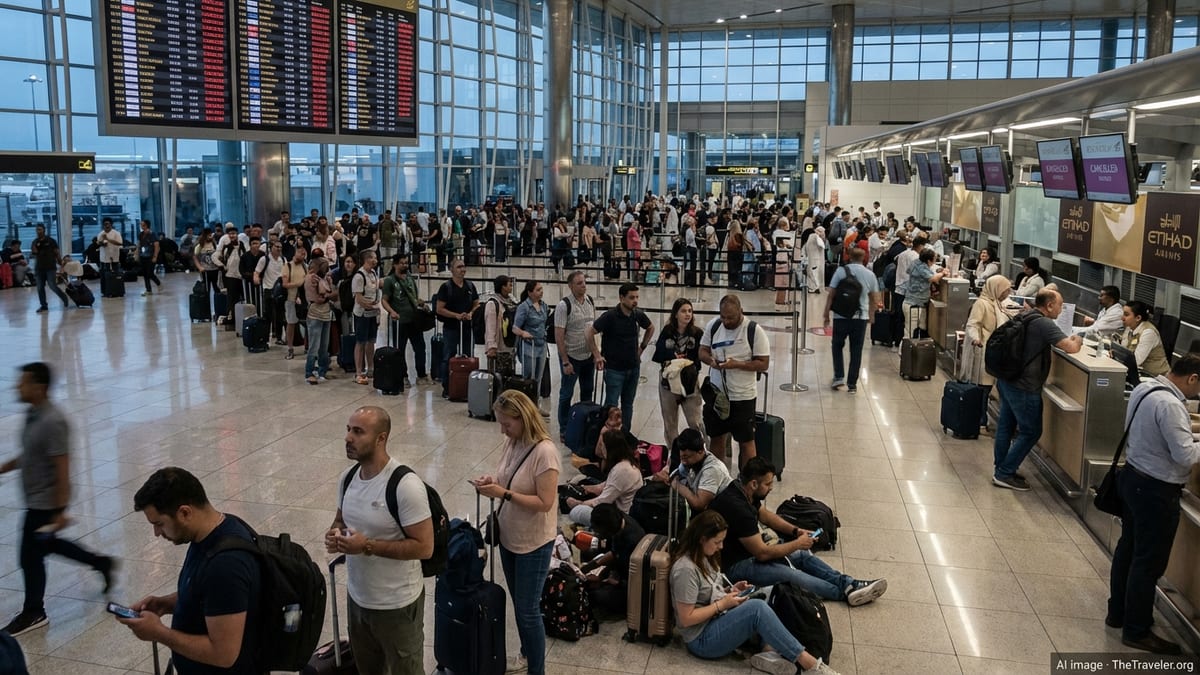
Flight schedules steady but fragile at Dubai hub
Publicly available information from airlines and airport operators indicates that flights into and out of Dubai International and Al Maktoum International are largely operating, but on a more fragile footing than just weeks ago. Travel coverage from regional outlets describes services as running close to normal following a full reopening of UAE airspace in May, after earlier closures linked to the 2026 Iran war. However, carriers have reactivated contingency plans over the past several days as tensions spiked around the Strait of Hormuz.
Conde Nast Traveller Middle East reports that while Dubai’s main terminals remain open, some long haul services are operating with extended routings to skirt sensitive airspace, particularly on links to Europe and parts of Asia. These changes add flight time and fuel burn, and in some cases have triggered rolling delays. Passengers connecting through Dubai are being advised in public guidance to reconfirm itineraries and allow extra time at the airport in case of short notice gate or timing changes.
Earlier in the conflict, Dubai temporarily suspended operations during airspace alerts and nearby attacks, underscoring how quickly conditions can change. Analysts note that, although the latest round of US and Iranian strikes has so far focused on military and infrastructure targets away from the UAE, the city’s position as a major transit hub close to the Strait of Hormuz means aviation planners continue to treat the situation as volatile.
US Iran clashes ripple across Gulf aviation network
The current disruption stems from a chain of incidents around the Strait of Hormuz that both Washington and Tehran describe as violations of the interim ceasefire agreed on 17 June. According to international news coverage, an Iranian drone attack on a commercial cargo ship exiting the strait late last week prompted US airstrikes on Iranian missile, drone and radar sites. Iran has since launched missiles and drones toward US-linked facilities in Bahrain and Kuwait, with each side accusing the other of undermining the truce.
Reports from Gulf-based media describe alarms and temporary protective measures in Bahrain following these attacks, as well as damage in parts of Kuwait. While airports there have remained open, flight tracking data and airline advisories point to occasional delays, diversions and route adjustments as pilots and operations teams work around evolving risk assessments.
The wider Gulf aviation network, which includes major hubs in Doha, Abu Dhabi and Riyadh, has shifted in and out of contingency mode since the Iran war began in late February. Earlier phases of the conflict brought large scale cancellations and the closure of entire airspace corridors over Iran and Iraq. Recent weeks had seen a cautious return towards normality after the ceasefire, but the latest exchange of fire has revived concerns that route restrictions could tighten again with little warning.
Rerouting over the Strait of Hormuz and beyond
Industry analyses of the conflict highlight the Strait of Hormuz as the critical chokepoint for aviation as well as for shipping and energy. The narrow waterway sits beneath some of the busiest air routes connecting Europe with South and Southeast Asia, and serves as a key corridor for flights linking the Gulf with the wider world. Since the war’s outbreak, airlines have repeatedly redrawn their flight paths to avoid potential missile and drone activity near the strait and along Iran’s southern coast.
Specialist commentary on the US Iran ceasefire notes that tens of thousands of flights have been cancelled or rerouted across the region since late February, contributing to longer journey times, higher fuel costs and congestion in alternative air corridors over Saudi Arabia, Turkey and the eastern Mediterranean. The latest flare up has reinforced that pattern, with several carriers again routing well south or west of the most sensitive zones.
For passengers, the impact is often felt less in outright cancellations than in accumulative delays and schedule changes, particularly on connecting itineraries. Travel reports suggest some airlines are engaging in day by day adjustments, adding padding to schedules or swapping aircraft types to preserve capacity on trunk routes while retaining flexibility to react if airspace notices change.
Travellers urged to check bookings and allow extra time
Across the Gulf, publicly available travel advisories and media coverage consistently urge passengers to stay close to their airlines for the latest information. Those flying into or through Dubai and neighbouring hubs are being encouraged to reconfirm departure times before leaving for the airport, monitor airline apps or SMS alerts and arrive earlier than usual for check in and security.
Travel journalists note that even when airports remain fully open, knock on effects from regional tension can appear at short notice, such as aircraft arriving late from previous sectors, last minute aircraft substitutions or crew duty time limitations following extended routings. These operational constraints can create a patchwork of minor disruptions that is hard for travellers to track without direct communication from their carrier.
Insurance and consumer groups quoted in regional coverage recommend that passengers on non essential trips consider flexible or changeable tickets while the ceasefire remains contested, given the potential for further airspace restrictions if clashes intensify. For those with essential travel, routing through multiple hubs, rather than relying on a single tight connection, is being presented as one way to build resilience into itineraries.
Prospects for talks and what they mean for air travel
Despite the latest round of strikes, reports from major international newspapers indicate that both the United States and Iran have signalled a willingness to scale back attacks and send delegations to Qatar in the coming days to discuss the ceasefire’s future. Coverage describes plans for parallel meetings in Doha, even as each government continues to dispute who first violated the truce and what security arrangements should apply around the Strait of Hormuz.
Aviation analysts caution that, for airlines, the political headlines matter less than the practical risk environment reflected in airspace notices and insurer guidance. Even if talks proceed, carriers are expected to keep conservative routings in place until there is a sustained period without attacks on commercial shipping or infrastructure near key flight paths.
For now, Dubai and the wider Middle East remain open but jittery aviation markets. The region’s hubs continue to move large numbers of passengers between Europe, Asia, Africa and Australasia, yet the latest ceasefire disputes have underlined how exposed these corridors are to shifts in US Iran relations. Travellers planning journeys in the weeks ahead are likely to face a landscape of mostly functioning schedules, threaded through with pockets of uncertainty that will require close attention to updates and a measure of flexibility.