


More news on this day
Hundreds of travelers across Australia and New Zealand are facing overnight stays, missed connections and abrupt itinerary changes after more than 80 flight delays and 37 cancellations disrupted services for Virgin Australia, Qantas, Jetstar and Air New Zealand across Sydney, Melbourne, Perth, Adelaide, Auckland and Christchurch.
Get the latest news straight to your inbox!
Network Strain Triggers Fresh Wave of Disruption
According to live flight tracking data and airport operations reports, services across the trans-Tasman network and key domestic corridors have once again come under strain, with delays clustering at peak morning and evening periods. The latest wave of disruption has left departure boards dominated by late and cancelled services, particularly for short haul and regional links that feed into the larger hubs.
Published coverage of recent operational days in the region shows a consistent pattern of high disruption, with multiple instances this year of several hundred delays and several dozen cancellations affecting Australia and New Zealand on a single day. On these days, Qantas, Virgin Australia, Jetstar and Air New Zealand feature prominently among carriers reporting off‑schedule operations, underlining the pressure on the region’s major airline groups.
For travelers, the impact is immediate and visible. Passengers booked on early morning services out of Sydney and Melbourne have reported rolling pushbacks that turn 30‑minute delays into multi‑hour waits, while evening departures have been cut completely once curfews and crew duty limits are reached. Those disruptions quickly cascade through the day, creating bottlenecks on both sides of the Tasman.
The current tally of more than 80 delayed flights and 37 cancellations across the six cities represents a snapshot of a wider reliability challenge that has intensified since the rapid return of travel demand. Industry data from recent months indicates that on some peak days, total delays and cancellations across Australia and New Zealand have run into the many hundreds of flights.
Major Hubs From Sydney to Auckland Under Pressure
Australia’s largest gateways have borne the brunt of the latest operational turbulence. Sydney and Melbourne, which handle dense schedules from Qantas, Virgin Australia and Jetstar, have recorded the highest volume of delayed departures, particularly on short‑haul sectors linking the two cities and feeding Adelaide and Perth. Reports indicate that queues for check in and security have lengthened quickly once disruption sets in, slowing passenger flows throughout the terminals.
Perth and Adelaide, though smaller, have not escaped the knock‑on effects. Delays on east coast services have rippled across their schedules, with late arriving aircraft from Sydney and Melbourne causing missed connections for travelers heading into Western Australia or returning to South Australia. Publicly available route frequency data highlights how heavily Adelaide in particular relies on Sydney and Melbourne flights, meaning any interruption on those trunk routes is quickly felt across the network.
Across the Tasman, Auckland and Christchurch have seen their own share of disruption, especially on flights connecting to Sydney and Melbourne. Published coverage of recent operational days shows both cities frequently appearing among the worst affected when system‑wide delays hit the region, with Air New Zealand, Jetstar and Qantas services all impacted. Even a small cluster of cancellations on these links can strand travelers with limited same‑day alternatives.
The combination of delays at Australian hubs and schedule disruptions in New Zealand has complicated trans‑Tasman itineraries. Passengers traveling on multi‑sector journeys via Sydney or Melbourne into Auckland or Christchurch have reported missed onward flights and overnight diversions, adding hotel and rebooking costs to already expensive long haul trips.
Weather, Resourcing and Fleet Constraints Combine
Analysts point to a familiar mix of factors behind the latest round of travel chaos. Strong winds and low visibility events around Sydney in particular can trigger single‑runway operations or airspace flow restrictions, instantly reducing capacity and forcing airlines to push back or cancel flights. When these constraints coincide with school holidays or heavy business traffic, the margin for recovery shrinks rapidly.
Resourcing and fleet issues have also played a role. Public reporting over recent months has highlighted ongoing challenges in sourcing flight and cabin crew, as well as maintenance pressures on narrowbody fleets that underpin high frequency domestic and trans‑Tasman routes. When even one aircraft is removed from service unexpectedly, high‑utilisation schedules at carriers such as Jetstar, Virgin Australia, Qantas and Air New Zealand can unravel within hours.
Government aviation performance statistics from both countries show that on‑time performance remains below pre‑pandemic norms, with a higher proportion of services arriving late or being cancelled outright. These data sets underline that the disruption seen this week is part of a broader pattern rather than an isolated incident, and that recovery to more stable operations has been slower than many travelers anticipated.
The concentration of problems on short haul and regional routes has particular consequences for those in smaller cities. When a thinly served link into a hub is cancelled late in the day, affected passengers may have no alternative service until the following morning, effectively marooning them overnight even if only a single flight is removed from the timetable.
Travelers Scramble for Rebooking and Basic Support
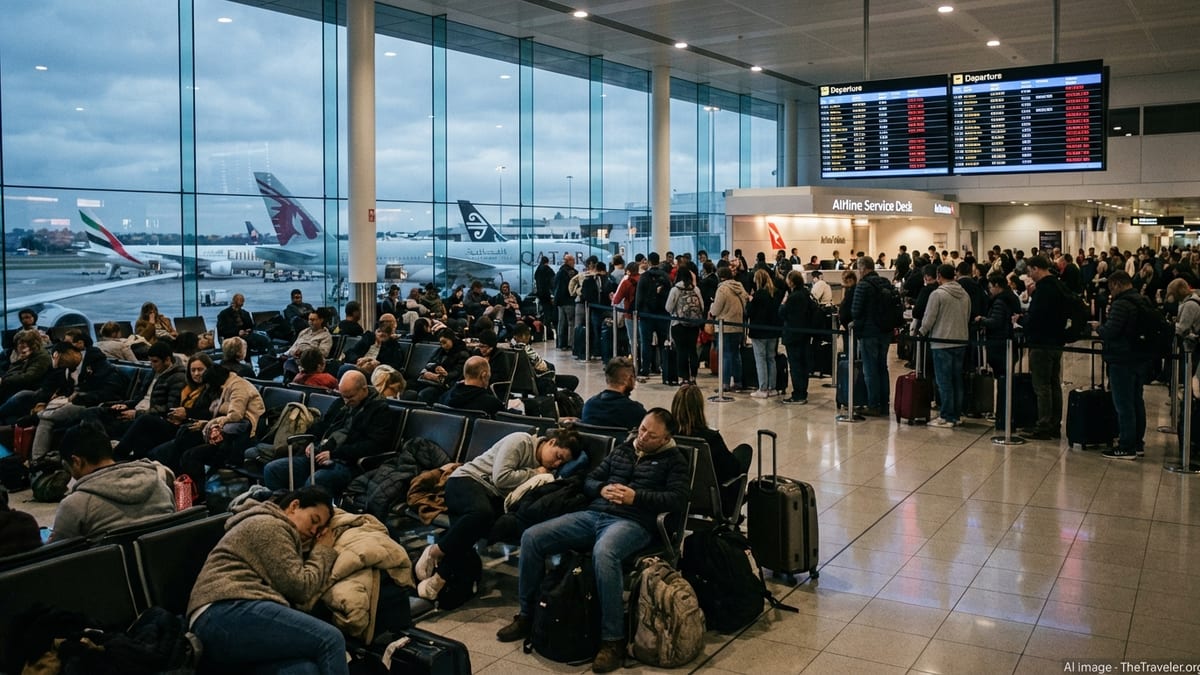
As disruption spread through Sydney, Melbourne, Perth, Adelaide, Auckland and Christchurch, images shared across social media platforms showed long lines at service desks and passengers sitting on terminal floors while awaiting updates. Travelers reported difficulties reaching call centers and limited availability on same‑day replacement services, particularly on popular leisure routes and the Sydney to Melbourne corridor.
Standard airline responses have included automatic rebooking on the next available service, credit vouchers for future travel and occasional hotel and meal support where flights have been cancelled late at night. However, publicly available consumer advice notes that entitlements vary significantly depending on the cause of the disruption and the terms and conditions of each carrier, leading to confusion among passengers about what they can claim.
Travel rights advocates in the region continue to highlight the absence of a single, harmonised compensation framework across Australia and New Zealand. While some carriers offer more generous assistance in practice, others restrict help to rebooking and modest vouchers, leaving travelers to rely on travel insurance or personal funds to cover accommodation, food and missed connection costs.
For those with tightly timed connections on international itineraries, the consequences can be particularly severe. Missed onward flights can result in the loss of non‑refundable tickets, disrupted cruise departures or shortened holidays, with limited recourse if the underlying delay was attributed to weather or air traffic control constraints rather than airline controllable causes.
What Disrupted Passengers Can Do Right Now
Consumer guidance published by aviation regulators and travel bodies across Australia and New Zealand suggests several practical steps for those caught up in disruption events such as the current one. Travelers are encouraged to monitor airline apps and airport departure boards closely, as schedule changes are often reflected digitally before they are announced at the gate.
Passengers are also advised to act quickly if a cancellation appears, as seats on alternative flights can sell out within minutes once a disruption becomes widespread. Same‑day options may include routing via a different hub, shifting to an earlier or later departure, or in some cases switching to another carrier where reciprocal arrangements or flexible fare rules permit.
For those facing overnight stays, it is recommended that travelers keep receipts for any out‑of‑pocket expenses related to accommodation, meals and ground transport, as these may be required when seeking reimbursement from airlines or travel insurers. Documentation such as delay notifications, boarding passes and booking confirmations can also be useful when lodging formal complaints or claims.
Looking ahead, industry observers note that persistent staffing and fleet constraints, combined with increasingly volatile weather patterns, mean that episodes of large scale disruption are likely to remain a feature of travel across Australia and New Zealand. For now, the experience of hundreds of passengers stranded by more than 80 delays and 37 cancellations across Sydney, Melbourne, Perth, Adelaide, Auckland and Christchurch offers a reminder of how quickly a routine travel day can unravel when several pressure points collide.