


More news on this day
Flight disruption affecting Dubai and parts of the Middle East is still rippling through airline schedules, even as carriers add back capacity and British Airways maps out a phased return to key regional routes after months of suspensions and reduced flying.
Get the latest news straight to your inbox!
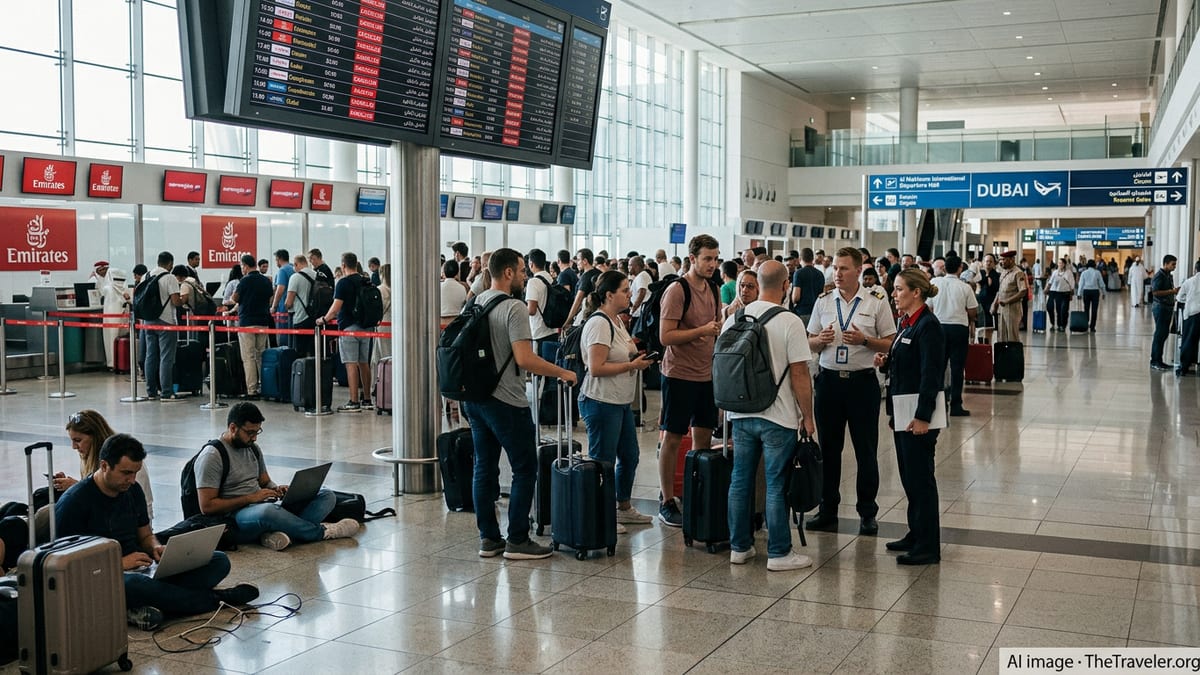
Delays continue as knock-on disruption hits Dubai and regional hubs
Published coverage over the past week has pointed to renewed pockets of disruption for services into Dubai International Airport (DXB) and Abu Dhabi’s Zayed International Airport (AUH), with delays and occasional cancellations tied to a mix of factors rather than a single cause. Recent reports have linked schedule instability to airspace risk management, reroutings, and wider network shocks that leave aircraft and crews out of position.
One major trigger in early September was a technical issue at the UK’s air traffic control provider, NATS, which caused widespread disruption across British airports and left airlines managing a backlog of flights after systems were restored. Emirates issued a travel advisory warning of ongoing disruption for flights departing from and arriving at airports across the UK, advising customers to check flight status and monitor notifications before heading to the airport.
At the same time, published coverage has indicated that fresh regional tensions can still add delays by forcing route changes or holding patterns. In mid-September, The National reported more than 170 delayed flights in Dubai and Abu Dhabi on a single day, illustrating how quickly the region’s tightly banked connection schedules can be disrupted when multiple issues stack up.
British Airways outlines restart timelines, with reduced frequencies
British Airways’ path back into the region has been gradual and conservative, reflecting the operational complexity of returning aircraft and crew to normal patterns while keeping contingency options open. Earlier in 2026, multiple outlets reported that British Airways pushed back the restart of some services, with Dubai among the routes held back until late October rather than a summer relaunch.
By late summer, schedule filings tracked by industry watchers showed British Airways planning a reduced Dubai operation when services resume, shifting from three daily London Heathrow to Dubai rotations to two daily from October 25, 2026. The same schedule updates indicated adjustments across other Middle East markets, including reduced planned capacity to Doha and Riyadh from late October, and tentative resumptions for select routes such as Amman from late October and Abu Dhabi from January 2027 at the earliest.
For travelers, the key point is that “restart” does not necessarily mean a return to pre-disruption capacity. A reduced timetable can translate into fewer rebooking options when irregular operations occur, and it can also make premium-cabin availability tighter on peak dates as pent-up demand meets fewer seats.
Why “back to normal” remains difficult for airlines operating via Dubai
Even when airports remain open and most flights operate, disruptions can persist because airlines are continually adjusting risk assessments and routings. In Europe, aviation safety guidance has also evolved since the spring escalation, with the European Union Aviation Safety Agency noting in July 2026 that it did not extend its earlier regional bulletin as-is, replacing it with updated advisories reflecting residual medium-level risks in parts of the region and separate, higher-risk bulletins for specific airspaces.
For network carriers, these decisions affect more than a single city pair. Dubai functions as a major intercontinental transfer point, so delays on inbound Europe flights can cascade into missed long-haul connections to South Asia, Southeast Asia, and Africa, where onward banks may be limited to one or two departures a day.
Airlines also have to manage practical constraints that passengers rarely see: crew duty-time limits, aircraft rotation plans, and airport-slot timing. If a long-haul arrival into Dubai is late, it can cause a chain reaction through an aircraft’s remaining day of flying, especially for fleets that rely on tight turnarounds.
What travelers can do now: timing, connections, and flight-status checks
Airlines continue to emphasize that flight status can change rapidly during disruption periods. Emirates’ public travel updates have advised customers to regularly check flight status and monitor email notifications for delays, changes, or cancellations before traveling to the airport, particularly when wider network issues such as UK air traffic control disruptions affect inbound and outbound flows.
For passengers booking routes that connect through Dubai, choosing longer connection times can reduce misconnect risk during periods when small delays are common. Where schedules allow, booking earlier departures can also provide more same-day recovery options, especially on routes where airlines are operating reduced frequencies.
Travelers should also be aware that consumer-rights outcomes can differ depending on the cause of disruption. The UK Civil Aviation Authority has published guidance stating that passengers affected directly by the situation in the Middle East are unlikely to be entitled to fixed-sum compensation under UK or European passenger-rights rules, though care and assistance obligations may still apply depending on the itinerary and carrier.