


More news on this day
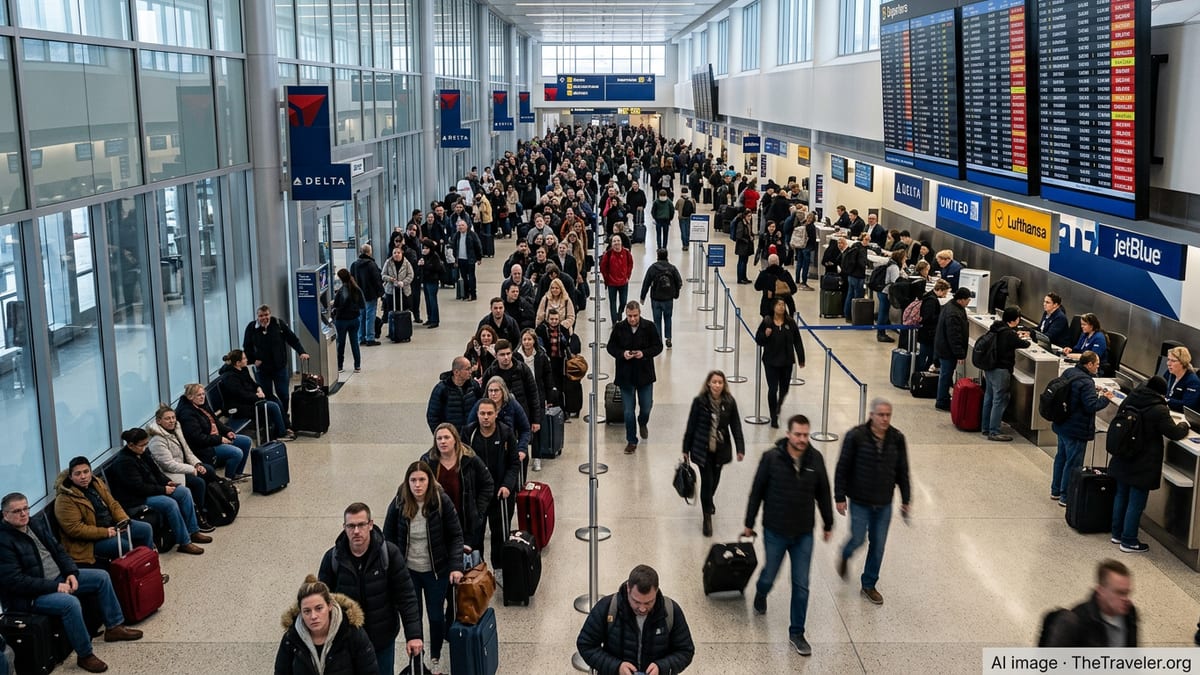
Travelers may soon get earlier warning when the U.S. airspace system is trending toward a rough day, as the Federal Aviation Administration expands data-driven tools designed to forecast flight delays several hours ahead and help the industry respond before disruptions compound.
Get the latest news straight to your inbox!
What the FAA is rolling out and why it matters
Published coverage in 2026 points to the FAA adopting newer commercial-style air traffic management software intended to bring more systemwide forecasting into day-to-day operations, with a particular focus on identifying developing constraints earlier than traditional methods. The goal is not simply to predict that delays will happen, but to anticipate where they will form and how they may propagate across routes, airports, and time windows.
The FAA’s delay picture is shaped by a mix of factors that shift quickly: convective weather, runway configurations, airspace restrictions, traffic volume peaks, and the knock-on effects of earlier cancellations or late inbound aircraft. When these forces combine, small disruptions can scale into multi-hour gridlock. Earlier predictions are meant to give dispatchers, traffic managers, and airports more time to reroute demand, adjust departure times, or throttle flows in a way that reduces passenger-facing chaos later.
For travelers, the practical impact is the potential for earlier schedule adjustments by airlines and clearer expectations about whether a later-afternoon departure is likely to leave on time. That does not eliminate delays, but it can reduce “last-minute surprise” scenarios where gates, crews, and connecting itineraries are already locked in.
How the FAA predicts delays: from hours-ahead demand to time-based flows
A central element in FAA traffic management is the ability to forecast demand several hours into the future and compare it against expected capacity. Publicly available FAA materials describe the Traffic Flow Management System (TFMS) as receiving planned and active flight information and generating demand forecasts from the current time to several hours ahead, supporting decisions that can reduce or redistribute congestion.
On top of that forecasting layer, the FAA has long relied on time-based management tools that meter aircraft through constrained airspace and into busy arrival banks. FAA documentation describes Time Based Flow Management (TBFM) as a foundational decision support tool for time-based management in en route and terminal environments. In simple terms, it sequences arrivals using time targets rather than just miles-in-trail spacing, supporting smoother flows when demand outstrips capacity.
Another piece of the modernization puzzle is better integration between surface operations and airborne traffic management. The FAA’s Terminal Flight Data Manager (TFDM) Surface Metering effort is designed to integrate airport surface surveillance and operational data with other FAA systems such as TBFM and TFMS, improving the ability to manage aircraft flow from the gate to the runway and onward into the broader network.
Weather is the biggest wildcard, and the FAA is pushing forecasts further out
Weather remains the dominant driver of major delay days in the United States, especially in summer thunderstorm season when airport arrival rates can collapse quickly. FAA NextGen program information describes efforts to extend short-range predictive weather products beyond two hours to longer lead times, with an emphasis on 2-to-8-hour windows when convective weather is expected.
Those longer lead times matter because they align with how airlines and airports can realistically respond. If an airport is likely to lose arrival capacity later in the afternoon, earlier awareness can allow airlines to swap aircraft assignments, move some departures earlier, delay others before boarding begins, or proactively rebook connections rather than waiting for a flood of missed flights.
Importantly, aviation weather forecasting is probabilistic, not certain. Public descriptions of the FAA’s work on strategic traffic flow management emphasize not only translating weather predictions into operational constraints, but also communicating measures of confidence. For travelers, that means the best systems may increasingly communicate risk windows rather than binary “on time” promises.
What passengers could notice: earlier alerts, different delay patterns, and more preemptive changes
In the near term, travelers are most likely to see the benefits indirectly through airline operations. If FAA tools surface impending constraints earlier, airlines may choose to adjust schedules sooner in the day, including preemptive delays or selective cancellations that reduce later knock-on impacts. That can feel frustrating in the moment, but it may prevent worse disruptions later, such as hours-long tarmac holds or missed crew legality windows that strand aircraft overnight.
Another potential change is how ground delay programs and flow initiatives are timed. FAA materials on system performance and traffic management describe how congestion at a destination can trigger programs that hold flights at their departure airports until the destination can accommodate them. With better forecasts, those holds can be planned with more lead time and potentially with more precision, reducing situations where a flight boards and then waits indefinitely.
Passengers may also see more consistency in estimated departure times earlier in the day, especially during peak summer convective periods. While a single flight can still be affected by late-arriving aircraft, maintenance issues, or crew availability, earlier network-level signals can help airlines avoid creating impossible schedules once the system starts to bottleneck.
Limits, transparency, and what to watch next
Even the best predictive tools cannot eliminate delays caused by sudden runway closures, rapidly forming storms, equipment outages, or unexpected airspace restrictions. The promise of “hours-early” prediction is strongest for foreseeable constraints such as planned runway work, known capacity reductions, holiday demand surges, and broad weather patterns that are already developing.
Another limitation is that forecasting improves only if the underlying data and integration are reliable. FAA descriptions of collaborative and integrated systems, including TFMS data services and surface metering integration, point to ongoing work to connect more stakeholders and data streams. Over time, wider adoption and tighter integration can improve the quality of the predictions and how quickly they translate into operational decisions.
For travelers planning trips in late 2026 and beyond, the most meaningful indicators will be whether airlines start publishing more proactive schedule adjustments earlier in the day on high-risk weather dates, and whether airport-wide disruptions become less “surprise-driven.” The technology push signals a clear direction: predicting constraints earlier, managing flows more precisely, and trying to keep disruptions from cascading across the national airspace system.