


More news on this day
Air traffic across Dubai and the wider Middle East remains constrained but functional today, as Gulf hubs keep pared-back schedules running while conflict-related airspace restrictions and occasional technical problems continue to cause delays and selective cancellations.
Get the latest news straight to your inbox!
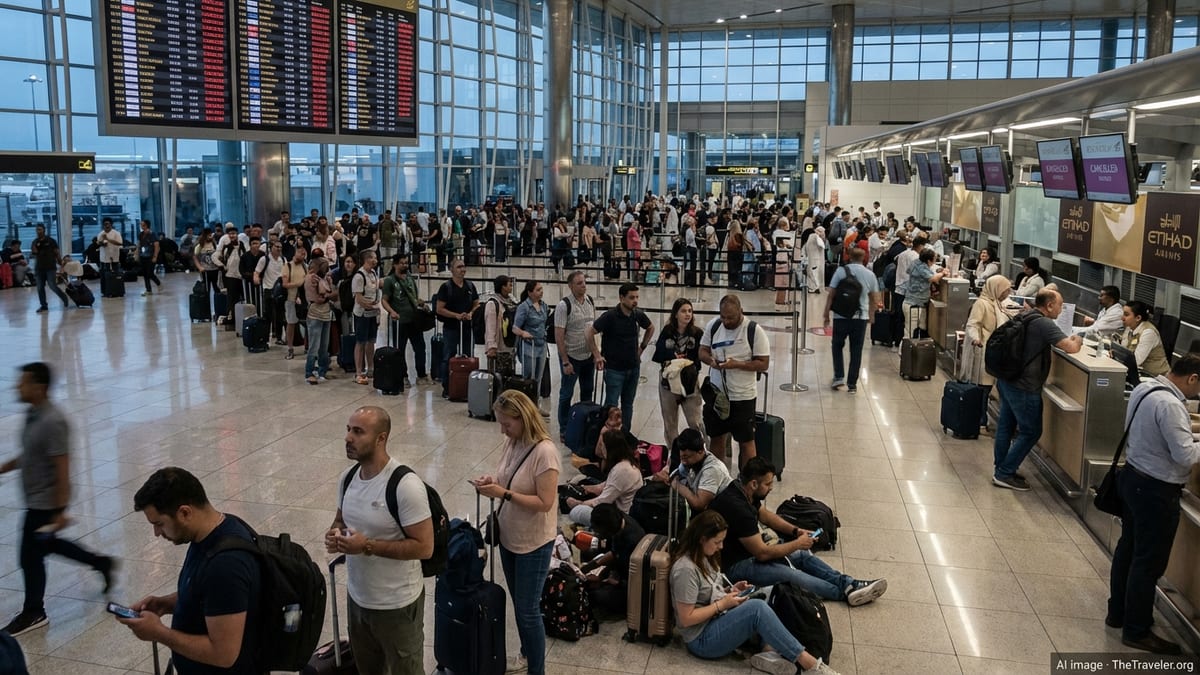
Dubai flights running, but on trimmed and closely managed schedules
Dubai International Airport is open and handling both departures and arrivals today, with its live boards showing a steady stream of flights taking off to Europe, Asia, Africa and North America. Publicly available flight information indicates that long haul services such as Emirates flights between Dubai and major US and European cities are operating, although at frequencies below pre-crisis patterns and with isolated cancellations appearing in the daily schedule.
Independent flight-tracking platforms list numerous Emirates departures on June 12, including services between Dubai and hubs such as Houston, Riyadh, Nice and other global cities. These data points suggest that while capacity has been cut on some routes, the carrier continues to run a broad intercontinental network using its wide-body fleet.
Low cost carrier flydubai is also flying today from Dubai to regional and medium haul destinations, including Istanbul and Entebbe, according to real time status pages and travel agency trackers. As with Emirates, some rotations have been reduced compared with earlier schedules, but the airline is maintaining connectivity across the Gulf, East Africa, the Indian subcontinent and parts of Europe.
Reports from recent days describe scattered cancellations by various airlines serving Dubai, reflecting both operational pressures and the need to route around restricted airspace. However, local airport data and airline status tools point to a pattern of disruption within what is now a relatively stable, managed operation rather than the near-standstill that followed the initial closure of regional skies at the start of the conflict earlier this year.
UAE carriers balance recovery with ongoing regional constraints
After the February and March shutdowns that forced widespread groundings, UAE based airlines have progressively rebuilt their schedules while acknowledging that regional conditions remain volatile. Emirates has published network updates stating that it is operating an extensive but adjusted programme, with some destinations still subject to reduced frequencies or longer routings due to airspace restrictions.
Etihad Airways, based in Abu Dhabi, similarly reports that it is running a comprehensive commercial schedule to around 80 destinations across the Middle East, Africa, Asia, Australia, Europe and North America. Even so, the carrier has continued to announce individual disruptions when technical or operational issues arise, such as the recent cancellation of a Washington to Abu Dhabi flight following an equipment problem.
Low cost operators flydubai and Air Arabia have also restored most of their core networks from Dubai, Sharjah and other UAE airports. Recent coverage of the UAE aviation market notes that hundreds of flights experienced delays and a smaller number were cancelled during a spike in disruption earlier in June, affecting all four major carriers. Since then, schedules have largely stabilised, but passengers are still being urged by travel industry advisories to check flight status on the day of travel.
Overall, the prevailing picture in the UAE is of airlines operating under constrained but workable conditions. Routes into and over sensitive parts of the Middle East remain closely managed, yet the main Gulf hubs are again functioning as connective nodes between Europe, Asia, Africa and the Americas.
Middle East airspace: patchwork of closures, detours and limited resumptions
Across the wider region, airspace restrictions and security concerns remain a defining factor in how and where airlines can fly. Reports on the conflict and subsequent airspace closures describe earlier blanket suspensions over countries including Iran, Iraq, Qatar and parts of the Gulf, which forced carriers to cancel services and redesign routings between Europe and Asia.
Subsequent updates from aviation consultancies and travel management companies highlight a gradual shift from total closure to a patchwork system of suspended, restricted and open corridors. Some destinations, such as parts of Iran, are still listed as not served by certain operators, while nearby markets including Saudi Arabia are described as fluid, with potential delays rather than outright bans.
Qatar’s airspace, which was temporarily closed during the height of the crisis, has been reopening in stages. Public documents and airline communications referencing May and June indicate that Qatar Airways is in a rebuilding phase and is working toward serving more than 150 to 160 destinations again, helped by the restoration of secure operating corridors from Doha. Travellers connecting through Hamad International Airport continue to face the possibility of last minute schedule changes, but regular commercial flights are again crossing Qatari skies.
These variations mean that flights between Europe and Asia that once passed routinely over Iran or the northern Gulf may now be detouring over alternative corridors, adding time and cost but allowing services to operate. Industry analysis suggests that these reroutings, while disruptive, have become part of a new operating normal for many carriers using Middle Eastern hubs.
What travelers can expect if flying through Dubai or regional hubs now
For passengers planning to transit through Dubai today or in the coming days, available data points toward flights mostly operating, but often against a backdrop of schedule changes and rerouted paths. Airport and airline status pages frequently show flights as on time or slightly delayed rather than cancelled outright, yet specific routes continue to see frequency cuts, aircraft swaps or revised departure times.
Travel advisories from both airlines and industry intermediaries consistently emphasize that flight status should be checked as close to departure as possible. Passengers are being encouraged to monitor their booking management tools and to allow extra time at the airport in case of congestion at check in and security, which can build quickly when earlier disrupted flights feed into later banked departures.
Reports from frequent flyers and online traveler communities over recent weeks paint a mixed but improving picture. Many describe smooth connections through Dubai, Abu Dhabi and Doha with no delays, while others recount late notice cancellations or rebookings, particularly on routes touching the most affected parts of the region. These shared experiences align with official schedules that show airlines operating robust networks, but still adjusting day by day.
In practice, this means that Dubai and the main Middle Eastern hubs are once again viable gateways for international itineraries, though not yet back to pre conflict predictability. Anyone flying through the region can reasonably expect their flight to operate, but should remain prepared for last minute changes as airlines continue to navigate a complex and shifting airspace environment.