


More news on this day
Hundreds of travelers were left scrambling at Miami International Airport this week after a wave of 158 flight delays and 10 cancellations involving American Airlines, Virgin Atlantic, Iberia and several other carriers disrupted departures to major hubs including Dallas Fort Worth, Tampa, London and Chicago.
Get the latest news straight to your inbox!
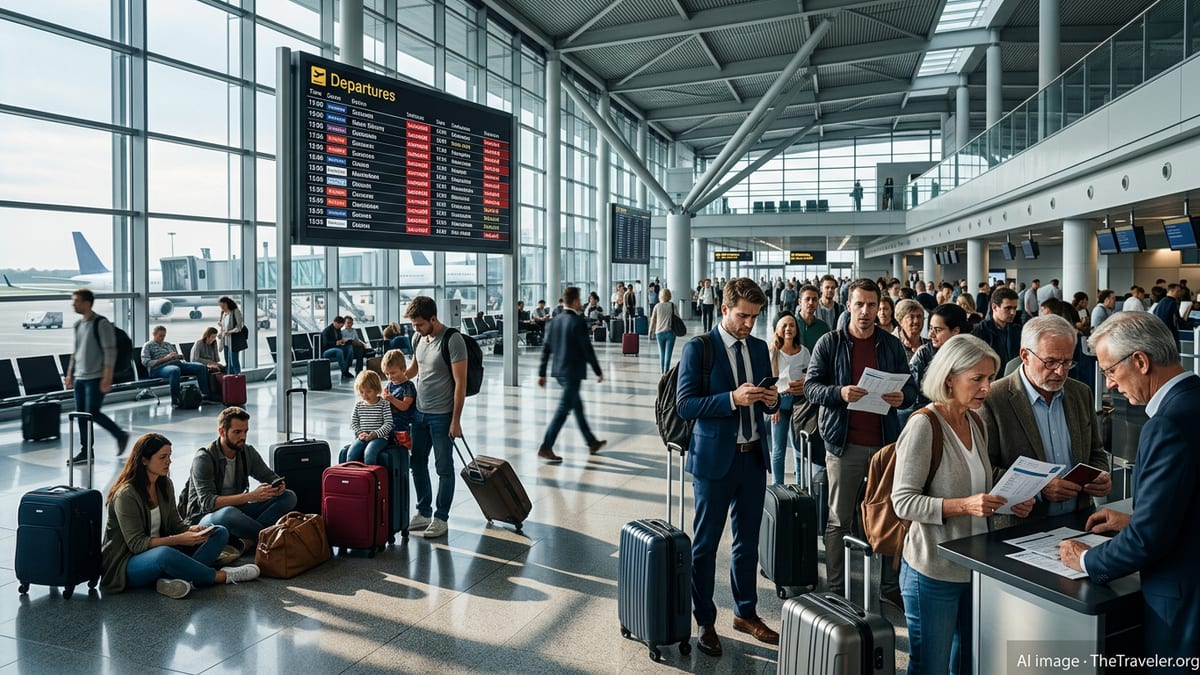
Delays and Cancellations Ripple Across Key Miami Routes
Publicly available tracking data and local media coverage indicate that operations at Miami International came under intense strain as delays accumulated across midweek peak periods. By late evening, at least 158 flights had been delayed and 10 cancelled, leaving departure boards dominated by rolling schedule changes. The disruption hit a mix of domestic and long haul international services, concentrating pressure on high demand corridors that connect South Florida with some of the busiest airports in the United States and Europe.
Data for recent months shows that Miami International regularly handles heavy traffic to Dallas Fort Worth, Tampa, Chicago and London, with American Airlines and its partners accounting for a significant share of that volume. When irregular operations occur at a major hub, the impact is rarely confined to a single route. The latest issues in Miami coincided with wider network stresses at Dallas Fort Worth and Chicago, meaning that delays quickly cascaded through connecting banks of flights.
Reports compiled from airline status pages and airport dashboards show that American Airlines bore the brunt of the disruption, though services operated by Virgin Atlantic, Iberia and other carriers were also affected. Long haul flights to London and Madrid faced knock on effects from late arriving aircraft and crew rotations, while shorter domestic legs to Tampa and Chicago encountered gate holds and departure flow control measures.
For passengers, the practical result was hours spent in crowded gate areas as departure times slipped in small increments, followed in some cases by cancellations once curfews, crew duty limits or onward connection constraints were reached. Many travelers with through tickets to secondary US cities or to European destinations beyond London found that a missed Miami departure meant an overnight stay and rebooking for the following day.
Weather, Network Congestion and Crew Limitations Intersect
Several factors appear to have converged to produce the latest wave of Miami disruptions. Recent published coverage highlights storms and unsettled conditions across parts of the Midwest and Southeast, which have already triggered ground delay programs and large numbers of late arrivals into hubs such as Chicago O Hare and Dallas Fort Worth. When aircraft and crews running behind schedule finally reach Miami, subsequent departures from South Florida can be forced into later slots or removed from the schedule entirely.
Industry analyses of recent American Airlines performance point to the vulnerability of a hub and spoke system when multiple large bases are exposed to weather and air traffic control restrictions at the same time. If storms slow down operations in North Texas or the Chicago region, aircraft slated to operate evening flights from Miami to Dallas or Chicago may still be on earlier segments, while crew members bump up against federally mandated duty time limits. Airlines sometimes respond by consolidating flights or cancelling lower volume services to protect the remainder of the schedule.
Long haul services operated by Virgin Atlantic and Iberia are also sensitive to timing constraints, as they must fit into slot controlled arrival patterns at London Heathrow and Madrid Barajas. If departure windows from Miami are missed by too wide a margin because of taxiway backlogs or inbound delays, these flights can be held for extended periods or cancelled to avoid further strain on European airspace. In turn, that leaves transatlantic travelers in Miami competing for limited rebooking options during an already busy travel period.
Recent commentary from consumer advocates and air travel analysts underscores that staffing imbalances and ongoing infrastructure projects at some US airports remain a background factor. Terminal renovations and airfield works can reduce gate flexibility, while tight staffing in ground operations or maintenance can lengthen turnaround times. When combined with weather related ground stops elsewhere in the network, the result is a fragile operating environment where a relatively small interruption can quickly grow into a multi airport disruption.
Passengers to Dallas, Tampa, London and Chicago Hit Hardest
Routes linking Miami with Dallas Fort Worth, Tampa, London and Chicago appear to have been among the hardest hit, based on publicly observable flight status data and recent traffic reports from Miami Dade County. Dallas Fort Worth ranks among the airport’s top domestic destinations by passenger volume, functioning as a primary connection point for American Airlines across the central United States and onward to the West Coast. When Miami to Dallas flights are delayed or cancelled, travelers lose access to dozens of same day onward options.
Similarly, Chicago operations have been under pressure amid recurring weather systems and air traffic programs affecting the upper Midwest. Passengers booked on Miami to Chicago services during the latest disruption were particularly vulnerable if they held onward tickets to smaller regional airports that have limited daily departures. Missing a single evening flight can translate into an arrival one or two days later than planned.
On the international side, the disruption of services to London has outsized consequences. London Heathrow is a critical gateway for both business and leisure travelers from South Florida, with American Airlines and its alliance partners coordinating schedules to feed transatlantic and European networks. When a Miami to London departure runs late or fails to operate, affected travelers may miss onward connections to cities across the United Kingdom and continental Europe, especially during peak summer and holiday travel periods when alternative seats are scarce.
Short haul routes to Tampa were also swept up in the irregular operations, illustrating how even relatively brief flights can be central to complex itineraries. Tampa serves as both an origin and destination for cruise passengers, convention attendees and Florida residents connecting to international services from Miami. A missed Miami to Tampa leg at the end of a long haul journey frequently results in unplanned overnight stays and additional costs for ground transport and accommodation.
Knock On Effects Across U.S. Airline Networks
The Miami disruption did not occur in isolation. In recent weeks, US airline networks have experienced several rounds of large scale delays and cancellations tied to storms, air traffic constraints and tight staffing. Coverage of events at Chicago O Hare, Dallas Fort Worth, Tampa International and New York area airports shows similar patterns, with hundreds of delayed departures in a single day and dozens of cancellations concentrated among a handful of major carriers.
Because American Airlines operates large hubs at Miami, Dallas Fort Worth and Chicago, irregular operations in one location tend to propagate swiftly to others. A storm induced ground delay program in North Texas can leave aircraft and crews in the wrong place for the next day’s Miami departures, while rolling delays in Chicago can snarl the return of aircraft intended for evening flights back to South Florida. Virgin Atlantic and Iberia, while smaller players in the Miami market, are also integrated into these patterns through codeshare agreements and shared airport resources.
Flight tracking platforms and passenger reports from recent disruption days show the same hallmarks: extended hold times on customer service lines, rapidly shifting estimated departure times and difficulty securing confirmed seats on alternative flights. While airlines highlight investment in mobile apps and automated rebooking tools, heavy surges in demand during irregular operations can overwhelm those systems, prompting long queues at airport customer service counters and self service kiosks.
Analysts note that as demand for air travel has recovered, many carriers are operating schedules that leave little slack in aircraft utilization or crew availability. That means the margin for error is slim. When one evening’s delays in Miami combine with the next day’s storms in Dallas or Chicago, the result can be a rolling series of operational challenges that take several days to fully resolve.
What Travelers Can Do When Stranded at a Hub
The latest disruption at Miami International once again highlights the limited options travelers often face when caught in a wave of delays and cancellations. Consumer organizations recommend that passengers keep digital or printed copies of boarding passes, delay notifications and receipts for meals, hotels and ground transport, as these records can support reimbursement requests under airline policies or credit card travel protections.
Published guidance from passenger rights groups suggests that travelers immediately check airline mobile apps and websites for self service rebooking tools when a delay stretches beyond an hour or when it becomes clear that a missed connection is unavoidable. In some cases, alternative routings through secondary hubs can be secured before the majority of affected passengers begin rebooking, improving the chances of arriving at the destination on the same day or the following morning.
Experts also emphasize the importance of monitoring the status of both current and onward flights using independent flight tracking tools in addition to airline channels. If departures from a destination such as Dallas Fort Worth or Chicago appear heavily delayed or subject to ground stops, travelers in Miami may wish to seek rerouting via less affected hubs rather than waiting for multiple disrupted segments to resolve.
For now, the situation at Miami International serves as another reminder of how interconnected modern airline networks are, and how quickly problems can spread from one region to another. With summer and holiday travel periods approaching, passengers flying routes that link Miami with Dallas, Tampa, London and Chicago may benefit from building extra time into their itineraries and preparing flexible backup plans in case the next round of operational turbulence hits.