


More news on this day
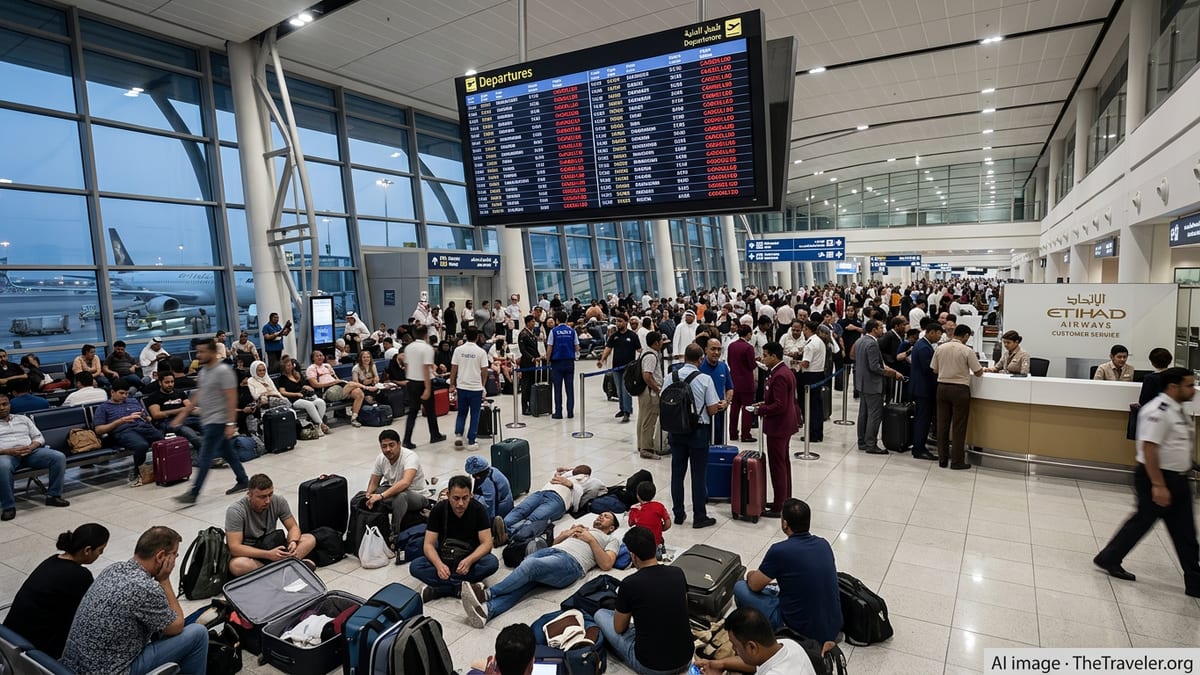
Dubai’s status as a major global hub is under renewed strain as a widening group of international airlines extends suspensions on flights to the emirate into late summer and, in some cases, late October, intensifying disruption for transit and leisure travellers across multiple continents.
Get the latest news straight to your inbox!
Major Carriers Push Back Dubai Return Dates
Publicly available schedules and airline advisories show that at least 13 international carriers have now extended or confirmed suspensions on Dubai routes, citing the ongoing geopolitical volatility affecting Gulf airspace and broader Middle East operations. The pattern points to a prolonged period of reduced capacity into one of the world’s busiest connecting hubs just as peak summer demand gathers pace.
Among the most high-profile changes, British Airways is not expected to resume its Dubai service until around 25 October 2026, according to updated schedules tracked by regional travel monitoring sites. Lufthansa Group airlines, including Lufthansa, SWISS, Austrian Airlines and Brussels Airlines, have also halted Dubai operations, with some schedules indicating suspensions until mid September and others reflecting an extension to late October to align with broader regional cuts.
Singapore Airlines has kept its Singapore–Dubai service off the board, cancelling flights SQ494 and SQ495 at least until early August, while also reinforcing capacity on alternative long haul routes such as Singapore–London and Singapore–Melbourne to absorb displaced demand. Air Canada, which had already withdrawn its Dubai service in response to the regional security situation, has prolonged its suspension, with travel advisories indicating a pause until at least late October in some communications and until early September in others, reflecting evolving assessments of operational risk.
Latvia’s airBaltic, a growing player on Europe to Gulf routes, has similarly extended its Dubai suspension until late October, part of a broader pattern of European carriers trimming or pausing services to Gulf gateways as they reroute aircraft and crews away from airspace deemed challenging.
Capacity Squeeze Hits Fares and Summer Travel Plans
The extended suspensions are tightening available seat capacity into Dubai from North America, Europe and parts of Asia at the height of the northern summer holiday season. With Emirates, flydubai and a handful of regional rivals still operating robust schedules, analysts note that demand is increasingly funnelled into a smaller pool of carriers, creating fare pressure and reducing flexibility for last minute changes.
Published coverage in Gulf and international media highlights that many passengers who would normally split long journeys between European flag carriers and Dubai stops are being forced either to reroute via alternative hubs or rebook entirely on Gulf airlines. This is particularly evident for travellers originating in the United Kingdom, Germany and Canada, where national carriers remain off the Dubai route map for much of the summer.
For budget conscious passengers, the suspension of services by mid market and low cost operators is compounding the squeeze. Reports tracking schedule changes point to a cutback in seasonal and leisure oriented Dubai routes from mainland Europe, as airlines redeploy aircraft to less exposed destinations. As a result, cheap shoulder season fares into the emirate have given way to higher average prices and thinner availability, especially on weekend departures.
Travel agents and online booking data indicate that some travellers are responding by shifting their itineraries to Abu Dhabi, Doha or Muscat and completing the final leg to Dubai by road, adding time and complexity to trips that previously relied on seamless hub connections through Dubai International Airport.
Transit Passengers Face Longer Journeys and Complex Rerouting
Dubai’s role as a mega hub means the impact of the suspensions stretches far beyond point to point traffic. A large share of passengers booked on British Airways, Lufthansa, Singapore Airlines, Air Canada and airBaltic services to Dubai were due to connect onward to Africa, South Asia and Australasia using either codeshares or separate tickets.
With these flights removed from schedules for months at a time, many travellers now face longer routings, additional stops or complete overhauls of their plans. Publicly available booking guidance from affected airlines generally offers options such as rebooking on different routes within the same network, rerouting via alternative partner hubs or applying for refunds, but availability on popular dates is limited as multiple segments of demand converge on a smaller number of flights.
Travel industry reports indicate that some long haul itineraries that used to involve a single stop in Dubai are being reconfigured into two stop journeys via Europe and Southeast Asia, adding several hours and additional immigration checks. In other cases, passengers are being moved onto flights that detour around sensitive airspace, extending flight times and disrupting tightly timed connections.
Passengers on multi ticket itineraries, such as those who combined a European carrier into Dubai with a separate onward booking on a Gulf airline, are facing particular challenges. In these scenarios, changes to one leg do not automatically trigger protection on the other, leaving travellers to negotiate with multiple airlines and, in some cases, travel agents or online platforms to secure workable alternatives.
Operational and Safety Calculus Behind Prolonged Suspensions
According to aviation analysts quoted in recent industry coverage, the extensions reflect a cautious approach by many non Gulf carriers to the current security climate, as well as practical considerations around crew scheduling, insurance and route economics. Even as some airspace corridors remain technically open, airlines are weighing the risk of sudden closures, diversions or further regional escalation against the commercial value of Dubai and nearby destinations.
For European and North American airlines in particular, Dubai is often just one part of a broader Middle East network that also touches cities currently subject to travel advisories or direct conflict related disruptions. Maintaining a limited Dubai schedule while other regional destinations remain paused can complicate aircraft and crew rotations and dilute profitability, especially if rerouted flights burn more fuel or require additional contingency planning.
Carriers based outside the region also typically face higher insurance premiums and more restrictive operational constraints when flying near conflict zones compared with Gulf based airlines that have longer experience managing such risks and may benefit from different regulatory assessments. These factors help explain why Emirates, flydubai and several regional competitors have been able to keep operating extensive Dubai schedules while many foreign airlines have opted to stay away through at least part of the upcoming autumn.
Industry observers note that some airlines have simultaneously bolstered capacity on alternative long haul routes less exposed to the current tensions, reallocating wide body aircraft that might otherwise have flown to Dubai. This redeployment helps sustain overall network revenue but deepens the shortage of seats into the emirate itself.
Uncertain Timeline Keeps Travellers in Limbo
Despite the publication of notional restart dates, the situation remains fluid. Some carriers have already modified their advisory timelines more than once as conditions evolve, and further changes are possible as autumn approaches. The range of current dates, from early August for some Singapore Airlines services to late October for British Airways, airBaltic, Air Canada and parts of the Lufthansa Group network, underlines how cautious many airlines remain.
Travel guidance published by regional media and airport information services consistently urges passengers booked to or through Dubai in the coming months to check their flight status frequently and to maintain close contact with airlines or booking platforms. Same day cancellations or aircraft swaps can occur even on routes that appear to be operating normally, particularly when airlines must react quickly to sudden airspace restrictions.
For now, Dubai International Airport continues to handle large volumes of traffic thanks to locally based carriers and those foreign airlines that have retained service. Yet the absence of multiple major global brands from departure boards through October is reshaping how travellers reach the city and connect onwards, reinforcing Dubai’s importance while simultaneously exposing how sensitive its hub role is to regional instability.
With school holidays under way and corporate travel set to pick up again from September, the extended suspensions by British Airways, Singapore Airlines, Air Canada, airBaltic, Lufthansa and their peers are likely to remain a central concern for travellers planning journeys that would once have relied on Dubai’s dense web of international connections.