


More news on this day
Hundreds of passengers across the United Arab Emirates are facing long waits, missed connections and last minute itinerary changes after widespread disruption at Abu Dhabi, Dubai and Sharjah airports led to 701 delays and 21 outright cancellations affecting Emirates, Etihad Airways, Air Arabia and several international carriers.
Get the latest news straight to your inbox!
Major UAE Hubs Grapple With Knock-On Disruptions
Abu Dhabi’s Zayed International Airport, Dubai International Airport and Sharjah International Airport, three of the Gulf’s busiest aviation hubs, have all reported significant schedule disruption as airlines adjust operations amid a volatile regional backdrop. Publicly available flight data and local airport boards show extensive delays, with services rescheduled, consolidated or rerouted and a smaller number cancelled outright.
The latest disruption follows months of intermittent schedule changes across the region, as carriers respond to airspace constraints, shifting demand and evolving security considerations. Airlines have been operating reduced or modified schedules through the UAE, with certain long haul routes suspended and others rerouted or down-gauged to smaller aircraft, increasing pressure on remaining services.
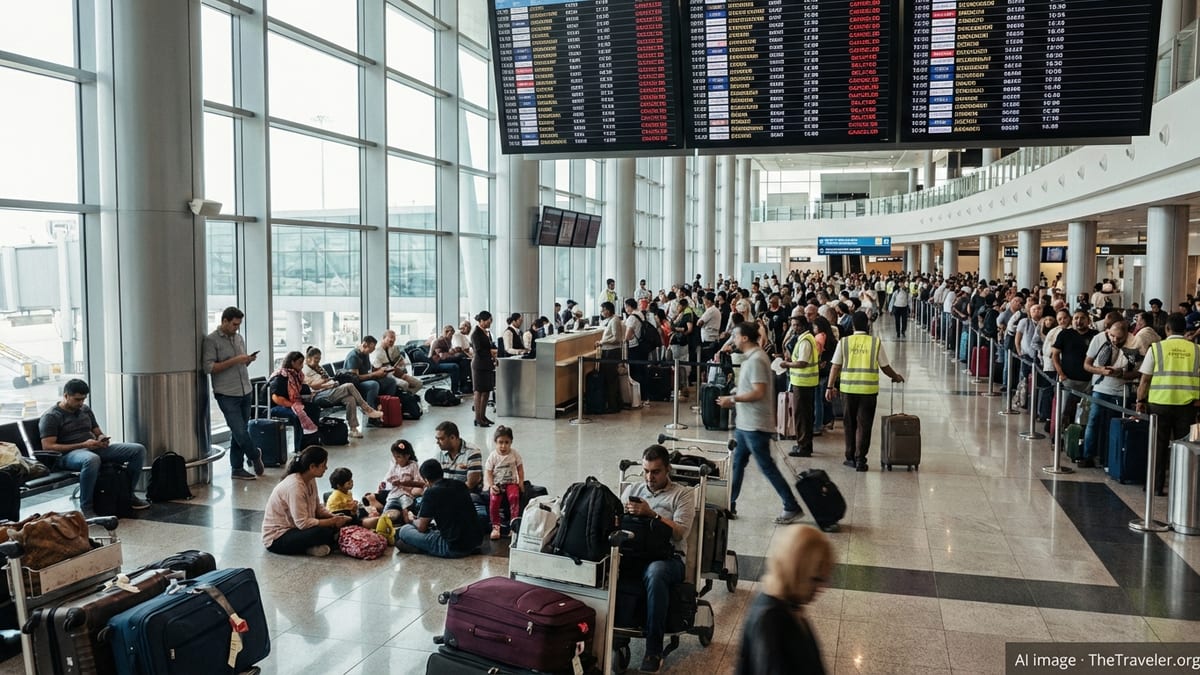
While operations at the three airports remain broadly open, the cumulative effect of rolling delays and targeted cancellations has left departure halls crowded and transit passengers facing uncertainty about onward connections. Travel forums and social media posts in recent days describe travellers being informed of cancellations only hours before departure, or discovering substantial delays when checking live flight status tools.
Airport authorities and carriers have been updating public flight information throughout the day, but the continually changing picture means passengers often receive revised timings multiple times before boarding, contributing to confusion around total numbers of affected flights.
Emirates, Etihad and Air Arabia Adjust Networks
Emirates, Etihad Airways and Air Arabia, the three largest UAE based carriers, are among the airlines most affected by the latest wave of disruption, given their extensive networks through Dubai, Abu Dhabi and Sharjah. According to recent schedules and published advisories, these carriers have been trimming frequencies on select routes, consolidating services where loads permit and cancelling a limited number of flights when operational constraints make rerouting difficult.
Emirates has maintained a substantial long haul operation at Dubai International but has periodically reduced frequencies to some destinations and switched certain services from larger widebody aircraft to smaller types. This can result in oversold flights and forced rebookings when demand remains strong, amplifying the impact of any individual cancellation or long delay on connecting itineraries.
Etihad Airways, operating from Abu Dhabi, has likewise been recalibrating its schedule, prioritising core trunk routes while temporarily scaling back some secondary destinations. When a flight from Abu Dhabi is delayed for several hours, the ripple effect often extends to partner airlines and code share services, given the carrier’s role as a transfer hub between Europe, Asia and the Indian subcontinent.
Sharjah based Air Arabia, known for its dense network of short and medium haul routes, has faced particular challenges where turnarounds are tightly timed. A delay on one inbound sector can quickly cascade across multiple rotations during the day. With a number of Air Arabia flights listed as delayed or cancelled from Sharjah and Abu Dhabi in recent days, budget conscious travellers have reported difficulty finding same day alternatives during peak summer travel.
Travellers Confront Long Queues, Missed Connections and Limited Options
The immediate human impact of 701 delayed and 21 cancelled flights is being felt most acutely in terminal buildings, where travellers describe extended check in lines, crowded transfer desks and uncertainty around rebooking options. Those with onward journeys through the UAE, particularly on multi sector tickets, are at heightened risk of missed connections when an initial leg operates significantly behind schedule.
Passengers transiting through Dubai and Abu Dhabi report having to queue for several hours at service counters to secure new itineraries, with some being rebooked on flights departing days later due to limited seat availability on alternative services. Families, workers on tight visa timelines and travellers with fixed event dates are among those most exposed to the consequences of prolonged disruption.
At Sharjah International Airport, which functions as a key gateway for budget travellers and workers from South Asia and beyond, even a small number of cancellations can have an outsized effect. For many passengers, Sharjah flights represent the most affordable option to reach home or work, and short notice changes can create significant financial and logistical strain.
Accommodation and meal arrangements vary depending on the airline, ticket type and cause of disruption. Public information from carriers suggests that support policies differ between long haul and regional flights, and between delays attributable to broader regional conditions and those linked to more routine operational issues such as crew availability or aircraft rotation.
Regional Tensions and Airspace Constraints Sit in the Background
The current wave of disruption comes against the backdrop of a turbulent year for Middle East aviation. Since late winter, airspace closures, rerouting requirements and intermittent security concerns have repeatedly forced airlines across the region to cancel or divert flights. UAE hubs, while determined to remain operational, have not been entirely insulated from the knock on effects of these developments.
When neighbouring airspace temporarily restricts overflights or when carriers must adopt longer routings to avoid sensitive areas, flight times increase and aircraft spend more hours in the air, reducing schedule flexibility. This can translate into later arrivals, missed slots, and in some cases the need to cancel sectors when crews exceed regulatory duty limits.
Carriers serving the UAE have also been cautious about restoring full schedules on certain corridors, preferring to add capacity gradually as demand and operating conditions stabilise. This conservative approach can leave little spare capacity to absorb sudden disruptions, meaning that a single cancellation or extended delay can leave hundreds of travellers without immediate alternatives.
Industry observers note that airlines in the Gulf and beyond are balancing complex considerations, including safety, regulatory obligations and commercial viability, as they make day by day decisions about which flights to operate, delay or cancel. For passengers, the result is an environment where published timetables can change at short notice and flexibility becomes crucial.
Guidance for Passengers Navigating Ongoing Disruptions
With the situation at Abu Dhabi, Dubai and Sharjah remaining fluid, travel experts recommend that passengers adopt a more proactive approach to managing their journeys. Publicly available advisories from airlines and airports consistently urge travellers to monitor flight status closely through official channels before leaving for the airport, and again after check in.
Checking in online as early as possible can help ensure that contact details are correctly registered, improving the chances of receiving timely notifications of schedule changes. Where feasible, passengers may wish to allow longer connection times when booking itineraries through UAE hubs, reducing the risk that a moderate delay on one leg triggers a missed onward flight.
Travellers already at the airport are advised to regularly consult departure boards and airline apps, as gate assignments and departure times can shift several times before boarding. In periods of heavy disruption, some passengers opt to contact their airline’s customer service channels remotely while waiting in line at service desks, in the hope of securing rebooking options more quickly.
As the peak summer travel period continues, the extent and duration of disruption at UAE airports will depend on how quickly regional conditions stabilise and how effectively airlines can adapt schedules to match demand and operational realities. For now, hundreds of travellers remain stranded or significantly delayed as Abu Dhabi, Dubai and Sharjah navigate one of the most challenging operating environments the Gulf’s aviation sector has seen in recent years.