


More news on this day
China’s summer travel rush has been thrown into disarray as severe weather and capacity constraints combine to disrupt thousands of flights across Hong Kong, Beijing, Shanghai, Shenzhen and other major hubs, with data showing widespread delays and cancellations affecting leading carriers including China Eastern and Air China.
Get the latest news straight to your inbox!
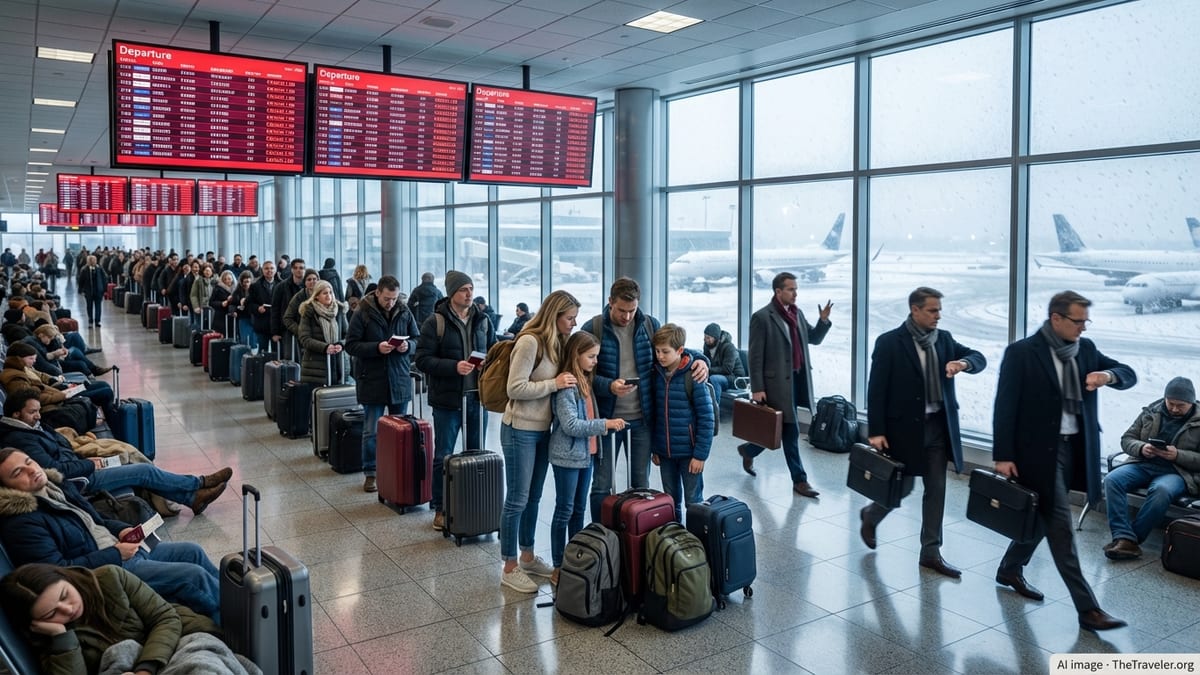
Typhoon Season and Heavy Rains Trigger Major Operational Strain
Publicly available information from Chinese and Hong Kong media shows that a succession of extreme weather events has put unprecedented strain on the region’s aviation network. In early July, Super Typhoon Bavi forced airlines serving Hong Kong International Airport to cut and reschedule services over several days as the storm moved past Taiwan and toward the mainland. Reports indicate dozens of flights to and from Hong Kong were cancelled or delayed, compounding existing summer congestion.
On the mainland, torrential rain and thunderstorms have repeatedly disrupted operations at key coastal airports. Shenzhen Baoan International Airport issued large scale delay alerts as heavy rainfall swept across southern Guangdong, with local coverage describing widespread knock on effects for both domestic and regional routes. Similar patterns emerged in Zhejiang and Fujian provinces as rain bands pushed north, forcing airports such as Hangzhou, Ningbo and Fuzhou to trim schedules and hold aircraft on the ground.
Further north, the outer impacts of the same weather systems and associated airspace controls have affected Beijing Capital and Beijing Daxing airports. Although both airports later lifted broader delay alerts, carriers had already reworked schedules, rippling through connections to Shanghai, the Yangtze River Delta and onward international destinations.
These overlapping weather events have coincided with the early stages of the peak summer holiday period, when flight volumes are already near capacity. As a result, even a relatively small share of outright cancellations has translated into thousands of delayed flights, aircraft and crew out of position, and longer recovery times across the network.
Shanghai and Hong Kong at the Center of Regional Disruptions
Shanghai’s twin gateways at Pudong and Hongqiao have emerged as focal points of the latest disruptions. According to Chinese financial media, the two airports scheduled hundreds of cancellations and schedule reductions on a single day in mid July as Typhoon Bavi’s influence and heavy rain made approaches and departures more complex. Earlier adjustments on the preceding day had already cut around one fifth of planned movements, highlighting how quickly operations can be scaled back when storms threaten.
China Eastern, which uses Shanghai as its primary hub, has carried out a series of dynamic schedule changes in response. Company traffic updates filed to stock exchanges in Hong Kong show that the airline has been rebalancing capacity on key trunk routes from Shanghai to cities such as Shenzhen, Hangzhou and coastal destinations, both to protect safety margins during adverse weather and to align with fluctuating demand. While many services continue to operate, passengers have faced retimings, aircraft swaps and short notice cancellations.
Hong Kong has simultaneously been coping with its own weather related challenges. Local press coverage indicates that more than forty flights involving Hong Kong based and regional airlines were cancelled or delayed on one storm affected weekend, with routes to Taiwan, Japan and nearby mainland cities all impacted. The city’s official aviation statistics for the spring and early summer period nevertheless show that overall cancellation rates at Hong Kong International Airport remain relatively low on average, underscoring that the most recent turbulence is concentrated in specific days around severe weather.
Because Shanghai and Hong Kong both function as critical transfer points for international itineraries into and out of mainland China, disruptions at either hub tend to cascade across multiple carriers and regions. Travellers transiting between long haul and domestic segments have been particularly exposed when short range sectors are removed or retimed.
Impact on China Eastern, Air China and Other Major Carriers
China Eastern and Air China, two of the country’s largest airlines, have been at the forefront of the current wave of disruption simply because of their scale and network structure. China Eastern’s concentration in Shanghai and the Yangtze Delta means that any operational slowdown at Pudong or Hongqiao reverberates across its nationwide network, from short haul services to central and western China to medium haul flights in Northeast Asia.
Air China, headquartered in Beijing but with secondary hubs in Shanghai and focus cities in Hong Kong and Shenzhen, is similarly exposed. Public data on its route network shows dense frequencies on key domestic corridors linking the capital with Shanghai, Guangzhou, Shenzhen and other coastal centers. When airports introduce slot reductions, enforce longer separation times during storms or adjust runway configurations, airlines with high frequencies on these trunk routes are often forced to consolidate departures, leaving some daily rotations cancelled or merged.
Other carriers, including regional airlines based in southern and eastern China, have also adjusted schedules at affected airports. Reports describe reductions in services at newly opened or expanded airports in cities such as Jiaxing and other Yangtze Delta locations, where a combination of weather and airspace management has led to multiple cancellations across single weekends. While these secondary airports handle fewer passengers than Shanghai or Beijing, cancellations there can still upend domestic itineraries that rely on timed connections to larger hubs.
For all airlines involved, the operational challenge is not limited to a single day of bad weather. Once aircraft and crews fall out of their planned rotations, it can take days of relatively stable conditions to fully restore schedules. Airlines have therefore leaned on advanced planning tools and rolling adjustments, cancelling some flights proactively to preserve stability on core routes.
Passenger Experiences: Rolling Delays and Rebooking Hurdles
For travelers, the most visible effects of this disruption have been the long lists of delayed flights on departure boards and the difficulty of rebooking during peak periods. Social media posts and user generated reports over recent months describe a pattern in which outright cancellations are relatively limited, yet delays are widespread, with some flights departing hours later than scheduled.
Passengers connecting between domestic flights and popular regional destinations such as Japan and Taiwan appear particularly vulnerable, as missed connections can require overnight stays or complete itinerary changes. Travel forums carry multiple accounts of journeys that were restructured at short notice after flights between Beijing, Shanghai and coastal cities were cancelled or retimed, with some travelers opting to switch airlines or reroute through alternate hubs.
Rebooking has also been complicated by high seasonal load factors. Even when airlines issue waivers or allow free changes for affected flights, finding alternative seats on the same day can be difficult. In some cases, travellers have reported being moved to services one or more days later or being offered refunds instead of immediate rebooking options, especially where low demand on specific international routes has already led to leaner schedules.
Despite these challenges, many reports note that the majority of flights in China continue to operate as planned, and that travel within the country remains possible with careful preparation. Passengers who monitored their flight status frequently and built extra buffer time into connections were more likely to complete itineraries without major disruption, underscoring the value of proactive planning during a volatile travel season.
What Travelers Should Watch in the Coming Days
With typhoon season continuing across the western Pacific and the July and August holiday rush building, conditions remain fluid for anyone planning flights into, out of or within China. Meteorological agencies are tracking additional storm systems that could bring further heavy rain and wind to coastal provinces, prompting renewed schedule adjustments at airports from Hong Kong and Shenzhen to Shanghai and beyond.
Airlines are expected to keep using rolling operational updates, adjusting capacity at short notice in response to air traffic control measures and local weather restrictions. Historical patterns suggest that carriers may prioritize maintaining a skeleton service on key trunk routes while trimming peripheral or lower demand flights, especially on routes where alternative ground transport options exist.
Travelers heading to or transiting through major Chinese hubs are being advised by publicly available guidance and travel commentary to monitor flight status closely in the 24 to 48 hours before departure, to allow additional connection time where possible, and to maintain flexible accommodation and ground transport plans. Those with fixed event dates or cruise departures may wish to schedule arrivals a day early to mitigate the risk of weather related interruptions.
Industry data and recent experience point to a system that remains fundamentally robust but sensitive to short term shocks, whether from typhoons, heavy rain or temporary airspace constraints. As carriers such as China Eastern, Air China and their regional counterparts work to stabilize operations, the coming weeks will test how quickly China’s aviation network can absorb weather related disruptions while accommodating a resurgent demand for domestic and international travel.