


More news on this day
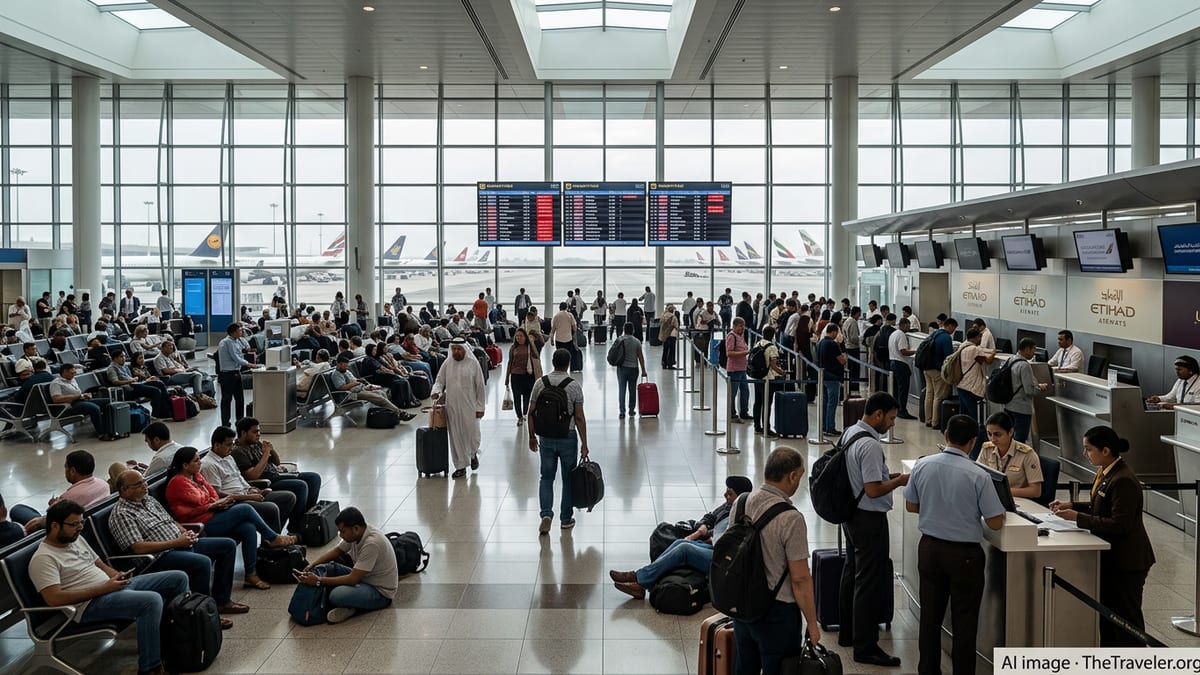
Dubai International Airport is operating but continues to see elevated delays and cancellations in July 2026, as regional tensions and airspace restrictions disrupt flight schedules across multiple carriers.
Get the latest news straight to your inbox!
Regional tensions keep pressure on Dubai schedules
Publicly available aviation and security advisories describe a Middle East air travel environment still shaped by conflict-related airspace closures and intermittent security incidents in 2026. Airspace constraints over parts of Iran and neighboring states have pushed traffic into narrower corridors, increasing congestion and limiting routing options for flights using Dubai as a hub.
Background reporting on the 2026 Iran conflict and related strikes on Gulf infrastructure indicates that Dubai International Airport experienced temporary closures and infrastructure damage earlier in the year before reopening with adjusted operations. While the airport has since restored much of its throughput, risk assessments continue to highlight the potential for renewed disruption, particularly during periods of heightened military activity or drone threats.
Recent travel advisories compiled in late June 2026 describe Dubai and other major Gulf hubs as operational but subject to schedule adjustments, rerouting and occasional last minute cancellations linked to the regional situation. This pattern has carried into July, with some long haul and regional services still suspended or operating at reduced frequency.
Passengers transiting Dubai in July are therefore contending with a system that is technically open and moving high volumes of traffic, but one that remains vulnerable to sudden shifts in regional risk profiles and associated airspace decisions.
Airlines extend suspensions and adjust Dubai routes
Airline travel alerts and schedule summaries show a patchwork of suspensions and resumptions affecting Dubai routes in July 2026. Some European and Asian carriers have progressively restored services to the emirate, often at reduced frequencies or with altered routings that avoid sensitive airspace, while others continue to keep Dubai flights paused.
For example, a major European carrier’s disruption page as of mid July lists flights to and from Dubai suspended through at least Wednesday 15 July 2026, advising affected passengers to rebook or seek refunds. Another regional airline from Central Asia has publicly announced that services from Astana and Almaty to Dubai are cancelled through 14 July, explicitly citing the regional situation.
At the same time, other long haul operators have resumed Dubai connections on a limited basis after earlier suspensions, reflecting a gradual but uneven normalization. Industry schedule trackers for Emirates and partner airlines indicate that many core trunk routes through Dubai are operating, although with minor day of departure delays and selected frequency reductions on certain markets.
The result for travelers is an inconsistent picture: while flagship Gulf carriers continue to move large numbers of passengers through Dubai, some foreign airlines remain cautious, either delaying their return to the market or extending temporary suspensions further into July.
Operational strain leads to longer delays and rolling knock on effects
Individual flight tracking data for Emirates and other carriers in early and mid July show that most Dubai departures and arrivals are operating but not always exactly on schedule. Day by day performance records highlight clusters of late departures ranging from several minutes to more than an hour, depending on routing, connection banks and upstream disruptions at origin airports.
Industry analysis of 2026 aviation performance more broadly points to the familiar pattern of knock on delays, where a disruption in one part of a network propagates through subsequent rotations. With Dubai functioning as a major connecting hub, small timing issues on inbound flights can cascade into missed connections, tight turnarounds and periodic gate or crew constraints.
Travel discussion forums focused on Dubai and Emirates report a mixed experience for passengers flying in recent weeks. Many describe smooth, largely on time journeys through Dubai, while others recount extended layovers, missed onward flights and short notice schedule changes linked to regional events. These anecdotes align with formal advisories that characterize the hub as operational but subject to intermittent disruption.
For July 2026, the operational picture at Dubai International is therefore less about a single large shutdown and more about sustained, elevated volatility in timings. Travelers are encountering an environment where most flights do eventually operate, but where the risk of delay, rebooking or an unplanned overnight stay remains higher than in typical summer seasons.
Passenger guidance: flexibility and preparation recommended
Airline alert pages and airport related FAQs consistently encourage passengers traveling through Dubai this month to build extra time into their plans. Major carriers advise customers to check flight status frequently on official apps or websites before heading to the airport, including after online check in, in case of last minute schedule changes or rerouting.
Several airlines serving Dubai have updated disruption policies that allow rebooking, voucher issuance or refunds when flights are cancelled or significantly delayed for operational reasons linked to the regional situation. Low cost and full service carriers alike outline options for changing travel dates or routes, although specific entitlements vary by fare type and point of sale.
Travel communities focused on the United Arab Emirates also stress the importance of flexible itineraries for July 2026. Contributors commonly suggest avoiding very tight connections in Dubai, considering longer layovers, and ensuring that time sensitive plans at the final destination include a margin for delay. Passengers are also encouraged to keep essential items, medications and a change of clothes in hand luggage in case of unexpected overnight stays.
For those with onward travel to Europe or other regions already experiencing their own weather or infrastructure related disruptions, the combination of regional airspace constraints and crowded summer schedules means that contingency planning is especially prudent.
Outlook for the rest of July 2026
Forecasts for the remainder of July point to continued high passenger volumes through Dubai as the school holiday and peak leisure travel season continues. Emirates and its partners are maintaining extensive networks out of the hub, and published schedule updates for the third quarter of 2026 show airlines planning capacity growth on several Dubai linked routes later in the summer, subject to equipment and airspace availability.
Security and risk consultancies monitoring the Middle East caution that the regional situation remains fluid, with the potential for further flare ups that could prompt short notice changes to airspace usage or even temporary suspensions at key airports. Previous episodes earlier in 2026 demonstrate how quickly drone or missile incidents can translate into flight diversions, cancellations and ground delays in Dubai.
For now, publicly available information describes Dubai International Airport as open and operating, but with a sustained level of schedule volatility that is likely to persist at least through late July. Travelers planning to pass through the hub in the coming weeks are advised to monitor airline communications closely and to treat published timetables as subject to change.
As airlines, regulators and security agencies continue to balance demand for international travel with evolving risk assessments, Dubai’s role as a global connector remains intact, but passengers using the airport this month should be prepared for a less predictable experience than in pre crisis summers.