


More news on this day
A Federal Aviation Administration ground stop at Hartsfield-Jackson Atlanta International Airport in mid-July 2026 led to cascading cancellations and delays, disrupting thousands of Delta Air Lines customers and straining the nation’s busiest hub at the height of the summer travel season.
Get the latest news straight to your inbox!
Thunderstorms Trigger Nationwide Ripple Effects
According to publicly available FAA traffic management advisories and local media coverage, the ground stop was issued on the evening of July 12, 2026, as strong thunderstorms moved across the Atlanta area. The restriction temporarily halted most departures bound for Hartsfield-Jackson Atlanta International Airport, while arrivals were slowed and in some cases diverted to other airports to wait out the weather.
Ground stops are used when the volume of incoming traffic would exceed what an airport can safely handle under current conditions. In this case, storm cells over key approach paths sharply limited the number of aircraft that could land at Atlanta, while lightning and heavy rain periodically curtailed ramp activity. As the weather system lingered, delays that began in the late afternoon and early evening stretched into the night.
Although the formal ground stop window was comparatively short, the timing during a peak travel weekend meant that even a few hours of restricted operations produced an outsized impact. Flights that had already pushed back were held on taxiways, inbound aircraft were placed in holding patterns or rerouted, and scheduled departures around the country faced rolling delays as the hub’s capacity fluctuated.
Publicly accessible FAA status dashboards showed Atlanta oscillating between ground stop and ground delay measures as the agency attempted to meter traffic into the constrained airspace. These layered controls contributed to a complex operational picture for airlines trying to reposition aircraft and crews in real time.
Delta Hub Operations Strained by Cancellations and Diversions
As the dominant carrier at Hartsfield-Jackson, Delta Air Lines absorbed the brunt of the disruption. Published flight-status data and airline communications indicated that Delta canceled or significantly delayed numerous departures and arrivals into Atlanta on July 12 and into July 13, creating a knock-on effect across its domestic network.
Delta’s reliance on coordinated “bank” schedules at its Atlanta hub intensified the challenge. When one arrival bank is thinned by diversions and late inbound aircraft, the subsequent departure bank cannot operate as planned. Passengers misconnect, seats depart empty or underutilized, and crews reach duty-time limits, forcing additional cancellations even after weather conditions begin to improve.
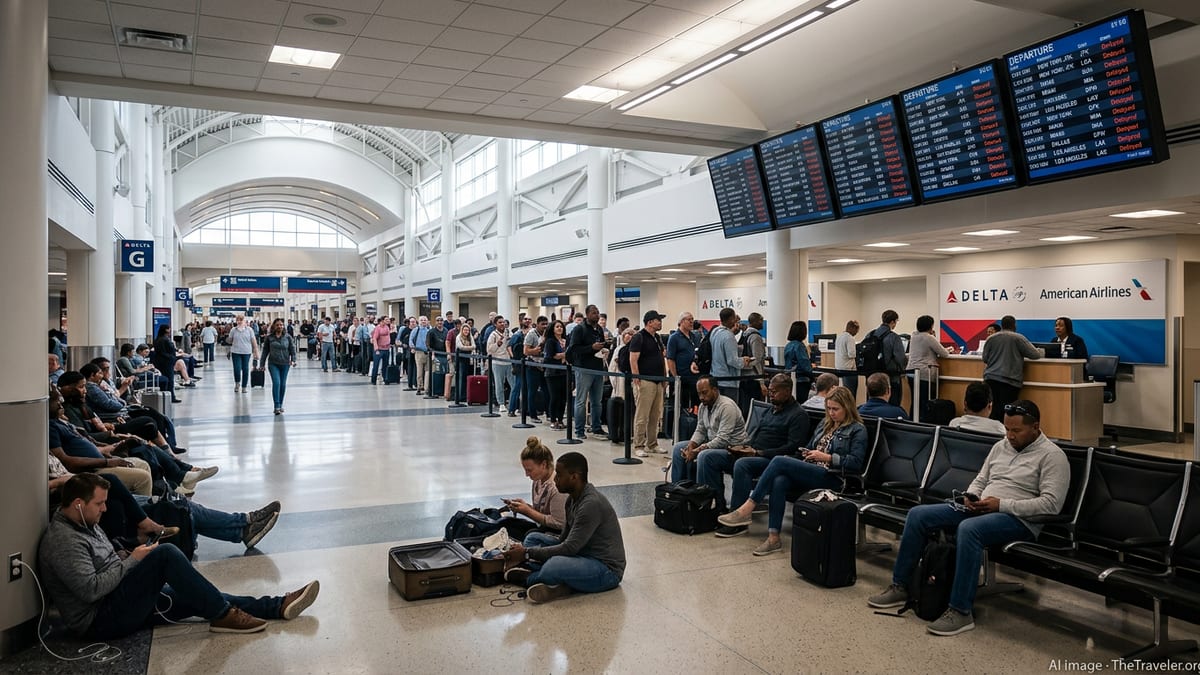
Travelers reported long lines at ticket counters and customer service desks as they sought rebooking options, with some being rerouted through alternative hubs or re-accommodated on flights later in the weekend. Social media posts and airline app notifications showed multiple rebookings for individual trips, as available seats tightened and schedules continued to shift.
The disruptions came during a period when Delta has been operating near record passenger volumes, according to recent financial reporting covered by regional business media. High load factors across the network left limited slack to absorb irregular operations, meaning that even relatively routine summer thunderstorms translated into longer recovery times.
Impact on Passengers Across the United States
The effects of the Atlanta ground stop were felt well beyond Georgia. Because so many domestic itineraries connect through Hartsfield-Jackson, the disruption touched travelers departing from and arriving in dozens of cities nationwide, including smaller communities with only a few daily Delta flights.
Passengers in outstations faced delayed departures as flights bound for Atlanta were held at the gate waiting for new departure clearances. In some locations, aircraft remained parked for extended periods while crews awaited updated arrival slot times into the hub. When holds grew too long, some flights were eventually canceled so that crew duty limits would not be exceeded.
The timing during the busy mid-July period compounded the inconvenience. Many travelers on family vacations or major events reported difficulty securing same-day alternatives, with some forced to spend unplanned nights in connecting cities or at their origin airports. Hotel availability near Atlanta and at several major connecting hubs tightened as airlines distributed vouchers and travelers sought last-minute rooms on their own.
In addition to missed connections and overnight delays, baggage handling became a pressure point. Luggage routed through Atlanta sometimes arrived days later than passengers, particularly when itineraries were rebooked at the last minute onto different connection points. Publicly available customer accounts described extended waits for delayed checked bags and crowded baggage service counters.
Infrastructure, Summer Weather and a Busy Construction Cycle
Hartsfield-Jackson Atlanta International Airport consistently ranks among the busiest airports in the world by passenger volume, and published FAA capacity and construction outlook documents show that the facility has been managing a multi-year cycle of taxiway and safety-area projects. While the July 2026 ground stop was primarily tied to convective weather, ongoing work can reduce operational flexibility when conditions deteriorate.
Some taxiways and ramp areas have been periodically constrained by pavement replacement and safety improvements, limiting options for re-routing aircraft on the ground during irregular operations. When heavy rain or lightning interrupts ramp work, recovery timelines can lengthen as crews must coordinate around both construction zones and active aircraft movements.
Summer in the Southeast is also associated with frequent thunderstorms, and Atlanta’s role as a central connecting node means that weather-related ground stops there can quickly propagate throughout the national airspace system. Historical FAA advisories from recent years show multiple instances in which storms over north Georgia prompted short but consequential ground stops or ground delay programs for flights bound to Atlanta.
Aviation analysts note that even as airlines and airports invest in upgraded radar, forecasting tools and surface-movement technology, the fundamental limits imposed by severe weather and saturated airspace remain significant. When storms linger over a key hub, the combination of high demand, constrained taxiway capacity and airspace restrictions can quickly overwhelm even well-prepared operations plans.
Recovery Efforts and Ongoing Passenger Guidance
By July 13, publicly available flight-tracking data showed Atlanta’s operations moving back toward normal ranges, although some residual delays and equipment swaps persisted as airlines worked through aircraft and crew repositioning. Delta used its mobile app, website and airport displays to push rebooking options and updated flight statuses to affected customers.
Industry practice in such events typically focuses on restoring core hub flows first, then rebuilding thinner spoke routes as aircraft and crews become available. Observed schedules from Atlanta reflected this pattern, with early recovery emphasizing trunk routes to major cities and later departures restoring service to smaller markets.
Consumer advocates and travel experts continue to advise passengers traveling through large hubs in the heart of summer to build extra time into itineraries, especially for tight connections, and to monitor flight status closely in the 24 hours before departure. The July 2026 Atlanta ground stop served as another reminder that even brief weather-related interruptions at a key hub can have outsized effects on travelers across the country.
Public information from the FAA and airlines indicates that Atlanta and Delta will continue to face similar challenges as the summer storm season continues. With demand for air travel remaining strong, any future ground stops or ground delay programs at Hartsfield-Jackson are likely to generate renewed strains on schedules, staffing and customer service operations.