


More news on this day
A Federal Aviation Administration ground stop at Hartsfield-Jackson Atlanta International Airport in mid-July 2026 triggered hours of disruptions for Delta Air Lines customers, with severe thunderstorms over the world’s busiest hub cascading into mass cancellations, extended delays and missed connections across the carrier’s global network.
Get the latest news straight to your inbox!
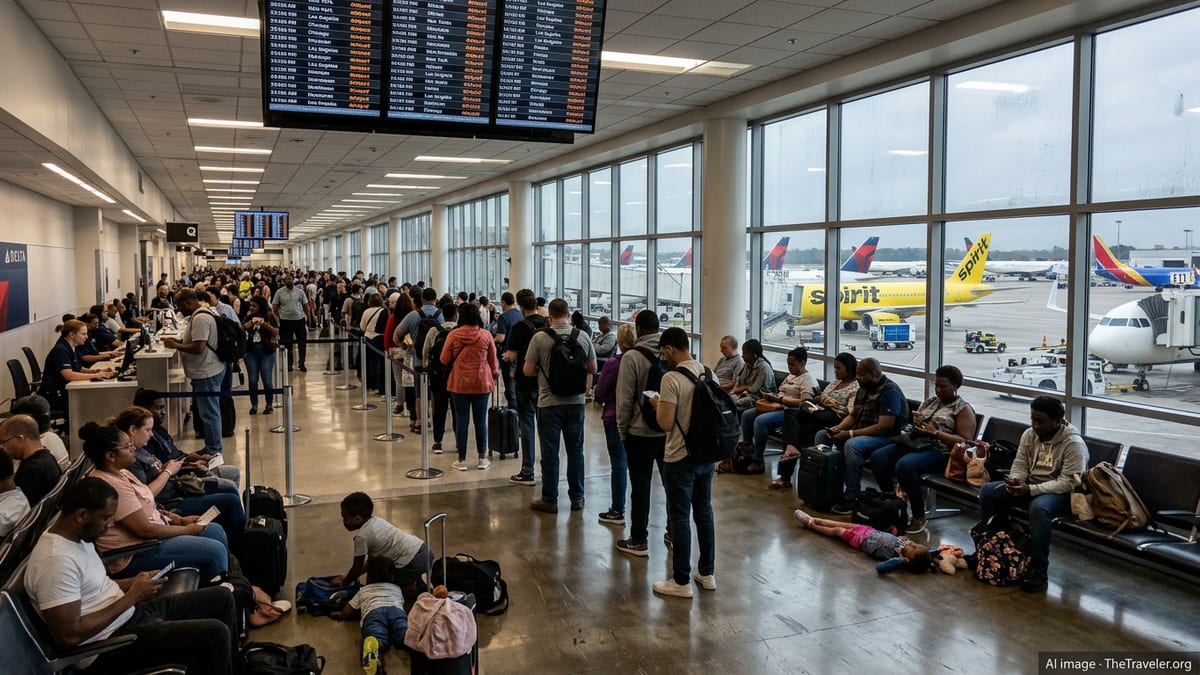
Thunderstorms Prompt Halt to Departures at Key U.S. Hub
According to publicly available FAA traffic management advisories and local broadcast coverage, the agency ordered a ground stop for flights bound for Atlanta on the evening of July 12, 2026, as strong thunderstorms moved across north Georgia. The halt temporarily stopped most departures heading to Hartsfield-Jackson, while arrivals already in the air were managed under flow restrictions until conditions improved.
Local reports indicate that the restriction followed an earlier ground delay program the same weekend, as repeated storms brought lightning, heavy rain and low visibility to the Atlanta metro area. Updates from the FAA’s National Airspace System status page showed reduced arrival rates for Atlanta and intermittent constraints related to convective weather in the Southeast.
Hartsfield-Jackson, which has held the title of the world’s busiest airport by passenger traffic for much of the past two decades, plays an outsized role in U.S. aviation. When operations slow there, the impact quickly ripples through dozens of other airports, particularly for carriers with large connecting banks such as Delta.
With the July storms arriving during the height of the summer travel season, the timing of the ground stop amplified its effect. Travel volumes through Atlanta typically surge around mid-July, and industry data and research on hub scheduling patterns show that tightly timed departure “banks” magnify the impact of even short operational pauses.
Delta’s Schedule Hit by Cancellations, Diversions and Rolling Delays
Delta Air Lines, which maintains its primary hub and corporate headquarters in Atlanta, appeared to bear the brunt of the disruption. Flight tracking data, airline apps and traveler accounts on social media pointed to waves of cancellations and multi-hour delays on July 12 and into July 13, as the carrier worked through the backlog created while departures were halted.
Inbound aircraft bound for Atlanta faced airborne holding, diversions to alternate airports and extended taxi times once they reached the ramp. Outbound flights, particularly those scheduled in the evening bank to domestic hubs and international destinations, were pushed back repeatedly or ultimately canceled when crew duty limits and gate constraints made recovery difficult.
Connections through Atlanta also unraveled as delays mounted. Delta’s hub model relies on clustering arrivals and departures in short windows, and when a ground stop interrupts one of those waves, passengers can quickly miss onward flights. Reports from travelers indicated that some were rebooked via other hubs or routed a day later, while others received hotel and meal vouchers when overnight stays became unavoidable.
The situation drew comparisons from frequent fliers to earlier severe-weather and systems-related disruptions at the same airport in recent years. The 2026 event, however, appears to have been driven primarily by convective weather and its effect on runway and airspace capacity, rather than technology failures.
Knock-On Effects Across the Delta Network
Because Atlanta sits at the center of Delta’s domestic and international network, operational constraints at the hub often echo outward to cities far beyond Georgia. Publicly viewable flight status boards on airline and airport platforms showed delayed and canceled Delta flights from major coastal markets, secondary hubs and regional spokes as the July ground stop and its aftermath played out.
Aircraft and crew that could not reach Atlanta on time were unavailable for later segments, creating what aviation analysts often describe as a “rolling delay” pattern. For example, an aircraft stuck on the ground in the Southeast waiting for clearance or a gate could cause late-night departures from the Northeast or West Coast to push back beyond their scheduled times or be canceled entirely.
Customers traveling on multi-leg itineraries, particularly those connecting from smaller regional airports through Atlanta to long-haul destinations, were among the most affected. Publicly shared itineraries show some travelers facing missed connections to transcontinental or transatlantic flights, and in some cases being shifted onto alternative routings with additional stops or downgraded cabin classes when rebooking options were limited.
These patterns underscore the vulnerability of highly centralized hub structures to localized weather events. Even when a ground stop is relatively short, the time required to reposition aircraft and crews and to re-accommodate passengers can stretch disruptions well into the following day.
Airport Capacity, Construction and Weather-Sensitive Operations
Recent FAA airport planning documents for Hartsfield-Jackson highlight ongoing construction and airfield improvement projects aimed at enhancing runway safety areas and rehabilitating key taxiways. While there is no indication that these projects directly caused the July 2026 ground stop, they can reduce operational flexibility when weather begins to constrain capacity.
When storms track directly over Atlanta, controllers may need to shift runway configurations, increase spacing between arrivals and departures and temporarily close portions of the airfield if lightning or wind thresholds are exceeded in work zones. In such conditions, even minor reductions in usable infrastructure can lengthen the time it takes to clear backlogs once a ground stop is lifted.
Aviation research focused on Atlanta’s traffic patterns has also noted how concentrated peak periods leave little slack in the system. When an afternoon or evening storm coincides with a departure bank, airlines have fewer options to spread flights into off-peak hours without encroaching on overnight curfews at downline airports or running into crew duty-time limitations.
For airlines, balancing schedule efficiency with weather resilience remains a persistent challenge. The July event at Atlanta illustrates how quickly that balance can be upset when convective weather intersects with infrastructure constraints and high seasonal demand.
What Travelers Experienced and How Airlines Responded
Passenger accounts from the July ground stop describe crowded concourses, long customer service lines and confusion as departure times shifted multiple times on airport displays and mobile apps. Many travelers heading to vacation destinations or returning from summer trips reported extended waits on board aircraft at gates or on taxiways while crews awaited updated departure slots.
Publicly available information from airline channels indicates that Delta activated its standard recovery toolkit, including automatic rebooking onto later flights where seats were available, same-day changes via digital channels, and limited travel waivers for customers who preferred to postpone their trips. Some travelers reported receiving hotel and food vouchers, while others turned to ride-share services or nearby hotels at their own expense when inventory ran short.
Consumer advocates note that U.S. airline customer service commitments vary when disruptions are classified as weather-related, which typically limits cash compensation but can still require carriers to provide assistance such as rebooking and information updates. The Atlanta disruptions again drew attention to those policies, particularly for passengers who spent long periods in terminals or on board aircraft waiting for clearance to depart.
As the peak summer period continues, aviation observers say the Atlanta ground stop serves as a reminder for travelers to build extra time into connections, monitor forecasts for major hubs and keep flexible backup plans in mind when tight schedules intersect with storm-prone regions.