


More news on this day
Air travel across Dubai and the wider Middle East is facing renewed disruption as Gulf carriers prolong route suspensions and diversions in response to the latest escalation in hostilities between the United States and Iran.
Get the latest news straight to your inbox!
Selective suspensions reshape Dubai and Gulf connectivity
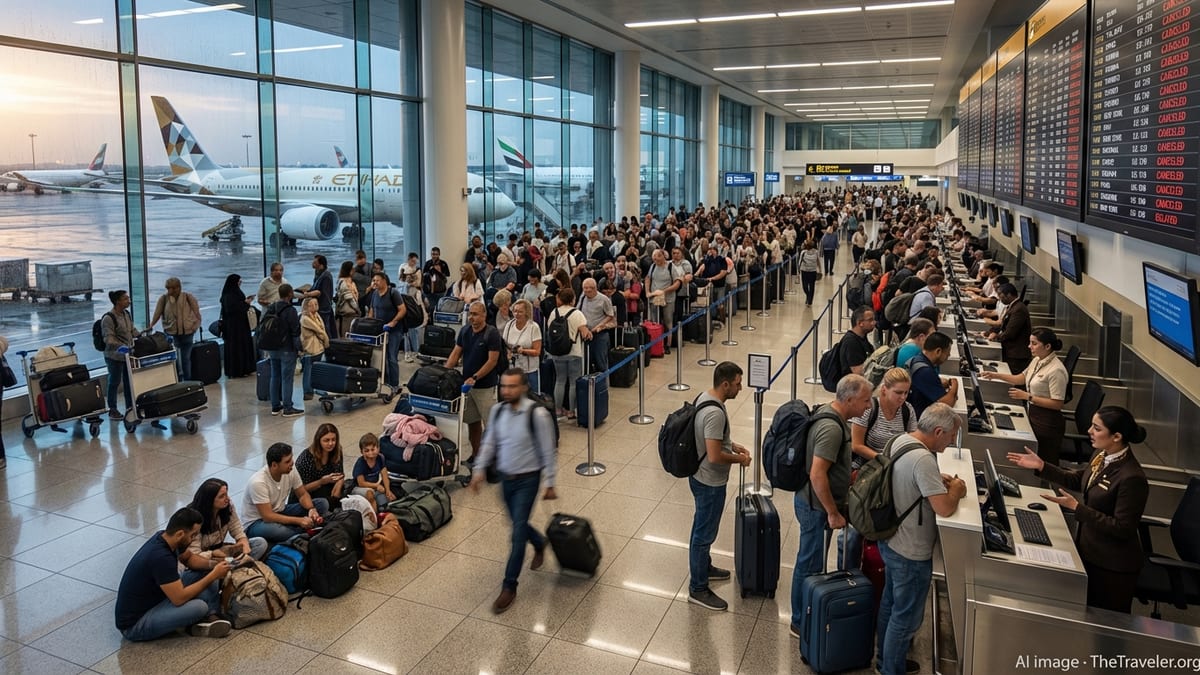
Publicly available airport and airline information indicates that schedules at Dubai International and other Gulf hubs remain well below pre conflict norms on several corridors, even as core operations continue. After the complete shutdown of Dubai airspace in late February and a gradual restart in March, carriers have rebuilt much of their regional and long haul network but continue to trim or pause routes viewed as most exposed to potential overflight risk.
Reports on Gulf operations show that Emirates has concentrated cuts on short haul links into conflict adjacent markets, cancelling multiple rotations to Kuwait in July while maintaining higher demand trunk routes to Europe, Asia and the Americas. Sister carrier flydubai has followed a similar pattern, preserving key South Asian and CIS services while exercising more caution on selected routes into Iraq and parts of the northern Gulf.
Etihad Airways from Abu Dhabi and Air Arabia from Sharjah are likewise relying on schedule adjustments rather than blanket shutdowns. Flight tracking data and timetable updates suggest that these airlines are prioritising aircraft and crew on lanes that can avoid Iranian and Iraqi airspace, funnelling more traffic via southern corridors over the Arabian Sea and Red Sea, even when this adds time and fuel cost to journeys.
Qatar Airways and regional peers extend Gulf suspensions
Among the most visible ongoing measures are the route suspensions announced by Qatar Airways, which has prolonged a halt to services to Bahrain, Kuwait and the Iraqi city of Erbil through at least the end of July. According to published coverage, the carrier attributes the continued pause to intensified Iranian strikes on Gulf states that host United States forces, including Bahrain and Kuwait.
The decision underscores how security dynamics rather than pure demand are driving schedule planning. Bahrain and Kuwait are normally important spokes in the Qatar Airways network, feeding long haul traffic over Doha, yet the airline has opted to maintain connectivity via alternative gateways rather than resume direct flying where risk assessments remain cautious.
Other regional airlines have taken a similar stance. Specialist aviation outlets report that some Saudi and Jordanian carriers have reduced frequencies or temporarily halted flights on select cross border routes while keeping domestic and lower risk international services largely intact. This patchwork of suspensions highlights an industry trying to preserve as much of its network as possible without crossing red lines set by insurers, regulators and internal safety teams.
European and Asian airlines reroute around Iran and Iraq
The repercussions of the US Iran confrontation extend far beyond Middle Eastern carriers. European and Asian airlines that rely on Gulf and Levant airspace as a bridge between continents have continued to reroute or suspend flights that would typically pass over Iran, Iraq and parts of Israel. Aviation trade reporting notes that at least one major European airline has halted flights to Dubai and Saudi destinations into early September while maintaining limited frequencies to Doha and other hubs via longer detours.
Travel advisories from several governments, including European and Asia Pacific states, recommend avoiding non essential travel to some Gulf and Levant destinations or caution that airspace closures could prompt last minute changes. As a result, some foreign airlines appear to be limiting exposure by reducing frequencies to high risk cities, consolidating services onto a smaller number of daily flights, and in some cases shifting capacity to alternative hubs such as Istanbul or Cairo.
In parallel, Asian carriers that once overflew Iran and Iraq en route to Europe are routing further south over the Arabian Sea, Oman and Egypt, extending flight times and raising operating costs. Industry analysts note that while these detours preserve connectivity, they also erode the time saving advantage that Gulf hubs traditionally offered on Europe to Asia itineraries.
Airspace restrictions and safety advisories complicate planning
The Federal Aviation Administration and other national regulators continue to publish restrictions and advisories affecting civil aviation in the Persian Gulf region. Notices to airmen and special regulations outlining limits on US carrier operations in parts of the Tehran flight information region and surrounding airspace remain in force, reflecting concern about potential miscalculation in a highly militarised environment.
Logistics and humanitarian coordination documents covering the wider Middle East crisis describe Iraq airspace as effectively off limits to many commercial operators, forcing detours that put additional pressure on remaining corridors over the Red Sea, Saudi Arabia and Egypt. Capacity constraints on these routes, combined with elevated fuel prices and extended block times, are contributing to delays, tighter connection windows and higher fares on some city pairs.
These regulatory and operational constraints are layered on top of state level travel warnings. The United States and several allied governments continue to advise their citizens to reconsider or avoid travel to a list of countries that includes Bahrain, Iraq, Kuwait and parts of the Levant, citing the possibility of further missile or drone exchanges between the US and Iran or allied groups. Such guidance, while not legally binding for airlines, feeds into corporate risk assessments and passenger demand patterns.
What travelers through Dubai and the region should expect
For passengers using Dubai, Abu Dhabi, Doha or other Gulf hubs in the coming weeks, the practical impact is likely to be a mix of longer journeys, limited choice on certain routes and a higher chance of last minute disruption. Most long haul flights into the hubs are operating, but itineraries that previously included short stops in Kuwait, Bahrain or northern Iraq are harder to secure, and same day connections may involve extended layovers or rerouting through secondary gateways.
Consumer guidance shared by airlines and travel agencies stresses the importance of monitoring booking channels closely as departure dates approach. Reconfirmation of flights, flexible ticket conditions and a willingness to accept alternative routings via southern corridors or different hubs are increasingly important for maintaining travel plans. Travelers are also being encouraged to keep accommodation and ground transport arrangements adaptable in case flight timings shift.
For the aviation industry, the current phase of the US Iran confrontation represents a prolonged test of resilience for a region that has built its global competitiveness on reliable, high frequency connectivity. As long as overflight bans, targeted suspensions and shifting risk calculations remain in place, Dubai and other Middle Eastern hubs are expected to operate with a degree of fragility, even if their terminals and runways appear busy on the surface.