


More news on this day
Air travel across Dubai and the wider Middle East remains heavily disrupted as regional and international airlines extend suspensions on selected routes amid the continuing US Iran conflict and associated airspace closures.
Get the latest news straight to your inbox!
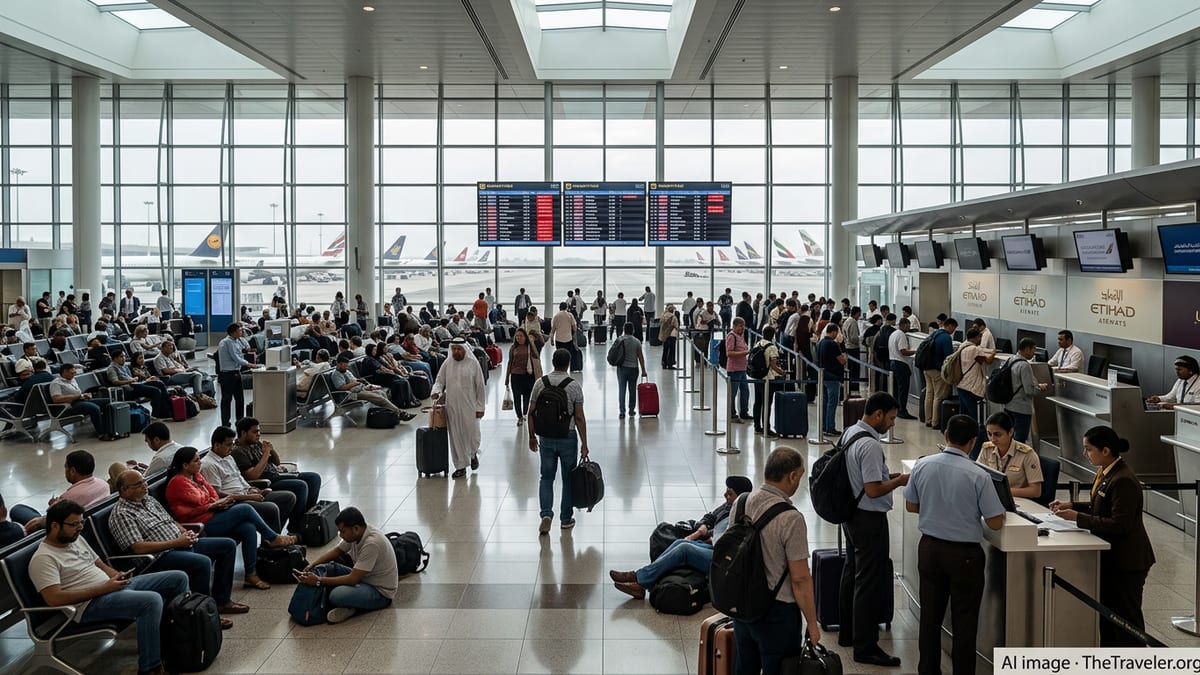
Route suspensions stretch into late summer
Published coverage from regional outlets and aviation trackers indicates that a number of foreign carriers serving Dubai have now pushed back their return to normal schedules into August and, in some cases, early autumn. These moves follow the joint US and Israeli strikes on Iran in late February and subsequent retaliatory attacks that led to temporary closures of airspace and damage at several Gulf airports.
Airlines that rely on Iranian and neighboring airspace for the most direct paths into the Gulf have either halted flights outright or are operating reduced schedules. Reports highlight that some European and Asian carriers have suspended Dubai services through at least the end of August, prioritizing passenger safety, insurance requirements and operational predictability while they await clearer guidance on overflight risk.
Other carriers have adopted a more limited approach, keeping Dubai on their networks but cutting frequencies or dropping specific city pairs where detours around closed airspace make operations commercially unattractive. Industry commentary suggests that, even as some restrictions ease, the combination of longer routings and elevated fuel costs is likely to keep certain suspensions in place for weeks to come.
Regional hubs under strain as conflict drags on
Dubai International Airport and other key hubs in the United Arab Emirates, Qatar and Kuwait continue to handle large volumes of traffic, but the pattern of operations has shifted sharply since late February. Chronologies of the 2026 Iran conflict compiled by aviation analysts describe thousands of cancellations in the immediate aftermath of the first strikes, followed by a patchwork recovery in which some airlines resumed limited service while others stayed away.
Publicly available summaries of the conflict’s economic impact note that a broad group of international carriers, including major European and Asian airlines, initially pulled back from the Middle East or suspended selected routes into the Gulf. At the same time, several Gulf-based airlines temporarily halted services to affected neighbors, particularly where airports or navigation infrastructure were reported damaged.
While domestic and regional flights within relatively unaffected parts of the Arabian Peninsula have stabilized, the broader network remains fragile. Industry briefings emphasize that any renewed escalation or further missile activity near key corridors, such as the Strait of Hormuz and the wider Gulf, could quickly trigger new rounds of cancellations and diversions.
Rerouting, longer flight times and higher costs
With swathes of Iranian and neighboring airspace periodically restricted, airlines still operating into Dubai and other Gulf hubs have been forced onto longer paths via Turkey, the Caucasus, Central Asia or southern routes over Saudi Arabia and Egypt. Analyses published by aviation consultancies describe these workarounds as technically feasible but significantly more expensive in terms of fuel burn and crew time.
For passengers, the result has been extended block times, missed connections and more complex itineraries. Travelers flying between Europe or Asia and the Middle East report schedules padded with additional hours and last minute changes as carriers react to evolving notices to air missions and insurance limitations on war risk zones.
Air cargo operations are facing similar challenges. Supply chain updates from logistics providers note that while Dubai and Abu Dhabi remain open, periodic congestion and rerouting have added unpredictability to transit times. Freight forwarders are advising shippers to allow extra lead time for consignments moving through Gulf hubs and to expect capacity constraints on certain lanes while passenger networks remain curtailed.
Passenger impact: refunds, rebookings and uncertainty
For travelers with tickets to or through Dubai, the most immediate issues center on cancellations, refunds and rebooking options. Airline advisories and traveler reports shared on public forums describe a mix of full refunds, fee free date changes and, in some cases, vouchers for future travel, depending on the carrier’s policy and the jurisdiction in which the ticket was purchased.
Some airlines have set explicit deadlines for affected passengers to request changes or refunds, particularly where suspensions have been extended through specific dates in August. Travel agents recommend that passengers check the status of their flight directly with the airline’s website or app rather than relying on third party listings, as schedules are being updated frequently in response to operational assessments.
Consumer advocates also highlight that passengers may have different levels of protection depending on where their journey originates. In regions with stronger air passenger rights frameworks, travelers may be entitled to cash refunds if a flight is cancelled by the airline, while in other markets compensation can be more limited when disruptions are linked to security events or armed conflict.
Outlook for Dubai and Middle East air travel
Forecasts from aviation industry groups suggest that Dubai and other Gulf hubs are likely to retain their central role in global connectivity, but with an adjustment period that could stretch well beyond the current northern hemisphere summer. Capacity on some long haul routes is expected to remain below pre conflict plans as carriers weigh operational risk and cost pressures.
Scenario planning documents circulated among airlines and investors describe several possible paths forward. A relatively rapid de escalation of hostilities and reopening of key airspace could allow for a phased restoration of suspended routes later in 2026, although the rebuilding of schedules would still take time. A more prolonged standoff, or further strikes affecting infrastructure, would likely cement longer rerouting and keep some airlines away from the region entirely.
For now, publicly available information points to a cautiously resilient picture. Dubai International remains operational and many Middle Eastern carriers continue to fly, but the network around them is thinner and more volatile. Travelers planning to use Dubai or neighboring hubs in the coming weeks are being advised by travel professionals to monitor developments closely, maintain flexible plans where possible and expect that disruption linked to the US Iran conflict may persist.