


More news on this day
Airlines operating to Dubai and across the Middle East are still contending with knock-on delays and schedule changes tied to regional airspace constraints, even as British Airways and other carriers outline phased plans to restart some routes after months of disruption.
Get the latest news straight to your inbox!
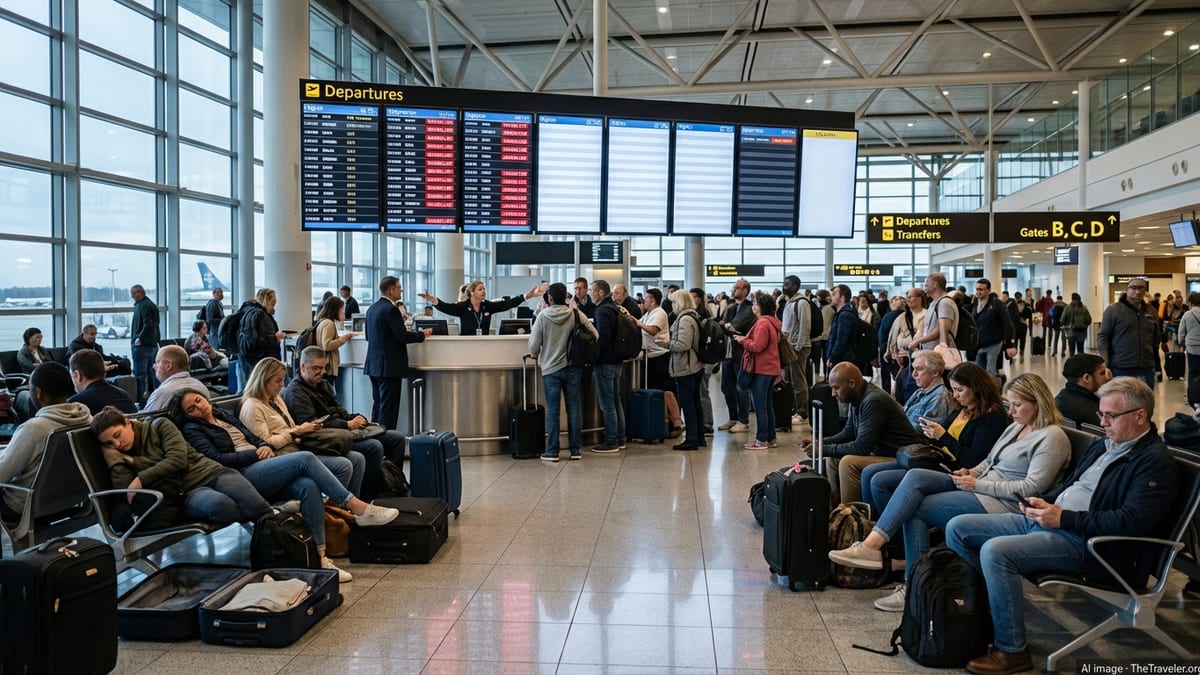
What’s driving delays for Dubai and the wider region
Published coverage and aviation network updates indicate that Middle East airspace disruptions earlier in 2026 forced many airlines to reroute flights, trim schedules, and add fuel stops, with lingering effects that can still show up as irregular operations: late arrivals, missed connections, and last-minute aircraft swaps.
Even where airports are operating normally, the underlying driver has often been longer routings and constrained flight planning options that ripple through airline networks. For travelers, that can translate into slower recovery when a flight goes out of position, because the same aircraft is needed for multiple legs across a day.
Separately from airspace constraints, Europe’s summer network has also faced heavy demand and air traffic management pressures. That combination matters for Dubai because a large share of passengers arrive on tightly timed connections from European hubs, and small delays in one part of the system can cascade into missed onward flights.
British Airways’ restart plans: Doha and Riyadh first, Dubai later
British Airways has kept several Middle East services suspended or reduced compared with pre-disruption schedules, while providing clearer restart targets for select routes. Published coverage and schedule filings have pointed to a phased approach rather than a full, immediate return to prior capacity.
Reporting in UK trade outlets has said British Airways is scheduled to resume London Heathrow flights to Doha on August 1, 2026 and to Riyadh on August 8, 2026, with both routes operating at reduced frequency compared with earlier schedules.
For Dubai, published reporting has said British Airways extended the suspension of the Heathrow–Dubai route through October 24, 2026, with service planned to resume on October 25, 2026. Additional schedule data filings have also pointed to a reduced timetable at the start of the northern winter season versus earlier plans.
Dubai International’s traffic hit and the recovery outlook
Dubai International Airport has signaled that 2026 has been shaped by an unusually difficult operating environment, with a traffic drop during the disruption period and a recovery dependent on overseas airlines restoring schedules.
Dubai Airports has reported 31.5 million guests at DXB in the first half of 2026, with month-by-month improvement through the second quarter as capacity returned. The airport operator has framed the second half of the year as a period of strengthening, even as regional constraints influenced traffic earlier in the year.
In published coverage in late August, reporting described a sharp decline in second-quarter passenger traffic linked to the disruption, while also noting expectations that more international airlines would return by late October. That timing aligns with the late-October restart plans cited for multiple European carriers’ Gulf services.
What travelers can do now: rechecking status, flexibility, and timing
With schedules still in flux, the most practical step for passengers is to recheck flight status frequently in the days before departure, then again on the day of travel. Airline operational updates continue to emphasize monitoring notifications for delays, cancellations, and retimings rather than relying only on older itineraries.
For Dubai-bound travelers, this is also a moment to confirm whether the itinerary relies on a carrier that has announced a restart date but is operating reduced frequencies at first, because fewer daily flights can mean fewer same-day rebooking options if a cancellation occurs.
Travel advice pages and security updates can shift quickly, and some travelers may also need to consider how advisory levels interact with travel insurance terms. When planning a trip that involves Gulf connections, building extra connection time and avoiding last tight same-day onward commitments can reduce the impact of unexpected schedule changes.
What to watch next: end-of-October capacity and winter schedules
Late October is emerging as a key inflection point for regional connectivity, partly because it coincides with the start of the northern winter scheduling season and because multiple airlines have aligned restarts and frequency increases around that window.
For British Airways, the practical question for travelers will be not only the return date for Dubai, but also how quickly capacity scales back toward earlier levels, since published schedule updates have indicated fewer flights than in past peak periods at the start of the winter season.
For Dubai as a hub, the near-term recovery story is likely to be measured in restored connectivity: more airlines returning, more frequencies, and fewer rerouted itineraries. Until then, the region’s flight disruption will remain less about widespread shutdowns and more about persistent, passenger-visible friction in timetables and connection reliability.