

More news on this day
Dubai’s tourism industry is positioning for a potential surge in British visitors after the United Kingdom removed its blanket “do not travel” advisory for the United Arab Emirates in the wake of an interim United States Iran peace deal, even as commercial links remain patchy and security analysts warn that the Gulf’s risk landscape is still highly unpredictable.
Get the latest news straight to your inbox!
UK Travel Advice Shifts as Peace Framework Changes Regional Mood
The United Kingdom’s Foreign, Commonwealth and Development Office recently softened its stance on travel to the United Arab Emirates, no longer advising against all but essential visits. Publicly available guidance now focuses on vigilance and route planning rather than blanket avoidance, reflecting a judgment that the immediate threat associated with the Iran conflict and the earlier closure of the Strait of Hormuz has eased.
The shift comes days after Washington and Tehran announced an initial peace framework that formally ends active hostilities and provides for the phased reopening of the vital Strait of Hormuz. Reports from international outlets indicate that the understanding extends an existing ceasefire, commits both sides to further nuclear and sanctions negotiations, and aims to normalize energy flows through one of the world’s most important maritime chokepoints.
For the UAE, and Dubai in particular, the UK advisory adjustment is politically and economically significant. The British market is one of Dubai’s largest and most resilient sources of international visitors, and changes in UK government guidance often filter quickly into airline scheduling, insurance underwriting and consumer confidence.
Travel risk consulting firms note that the removal of the “do not travel” label does not equate to a declaration of safety, but it does place more responsibility on individuals and companies to assess evolving risks. Insurers and corporate travel managers are expected to re-evaluate exclusions and restrictions that were imposed at the height of the crisis.
Flights Still Disrupted as Airlines Test the New Reality
Despite the more permissive travel advice and the symbolic weight of the US Iran understanding, air links between the UK and the wider Gulf have not yet fully normalized. While some carriers have begun restoring frequencies, others are maintaining reduced schedules or extended suspensions on selected routes pending a clearer picture of regional stability and overflight permissions.
In recent days, several Gulf-focused airlines have continued to adjust timetables, citing operational and security reviews. According to industry reporting, reroutings to avoid sensitive airspace, higher fuel costs linked to circuitous flight paths and crew safety considerations have all constrained capacity, even on flagship connections such as London to Dubai.
Analysts say that, for now, would-be British visitors face limited seat availability and potentially higher fares, particularly during peak summer travel weeks. Airlines are likely to phase capacity back in cautiously, watching for any renewed escalation around the Strait of Hormuz or spillover from tensions involving Israel and Lebanon that could again complicate regional aviation corridors.
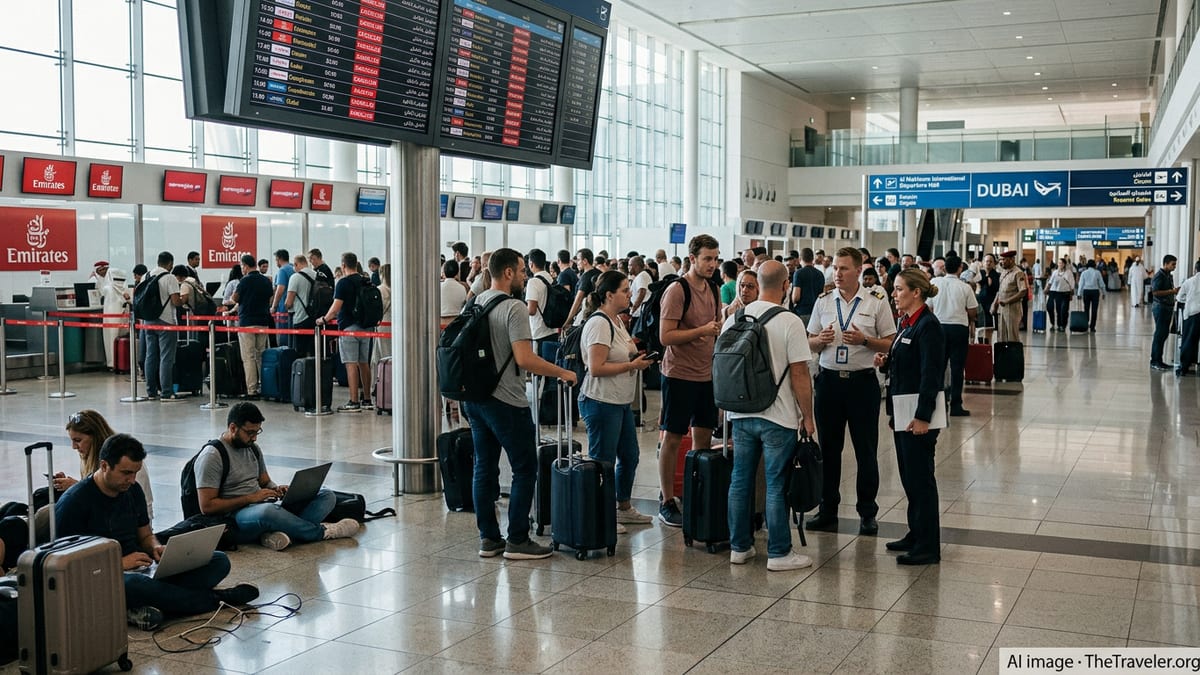
Airport operators and tourism businesses in Dubai are understood to be coordinating closely with carriers as schedules evolve. However, publicly available information suggests that travelers are being urged to check flight status frequently, avoid arriving at airports without confirmed bookings and expect short-notice changes if the security outlook deteriorates.
Tourism Industry Hopes for a Rebound, but With Caveats
Dubai hospitality groups and destination marketers are treating the UK advisory shift as an early sign that the worst phase of the downturn may be ending. Hotel booking platforms and industry trackers have already noted a modest uptick in search interest from the United Kingdom, particularly for late-summer and autumn stays, compared with the sharp declines seen at the peak of the Iran crisis.
Before the conflict, the UK ranked among Dubai’s top source markets, with British leisure travelers drawn by year-round sunshine, short-haul overnight flights and the emirate’s reputation for luxury experiences. The pandemic-era recovery had already demonstrated how quickly British demand could rebound once restrictions were eased, and sector analysts now see a similar pattern potentially playing out in response to the easing of geopolitical risk.
Yet executives and analysts are also warning that the current peace framework is temporary and fragile. The agreement between Washington and Tehran includes a defined period for further negotiations, during which political opposition, regional spoilers or implementation disputes could still derail the process. Any sign of renewed missile exchanges, maritime incidents near Hormuz or attacks by regional proxies would immediately feed back into consumer sentiment and corporate travel policies.
Tourism businesses are therefore planning for a staged recovery rather than a rapid snap-back. Many are prioritizing flexible booking policies, shorter lead times and diversified marketing that does not rely solely on British visitors, even as they court that market aggressively with discounts and new packages.
Security Concerns Linger Over a Volatile Gulf
Security assessments published since the signing of the US Iran agreement consistently describe the regional environment as improved but volatile. Analysts highlight the risk that hardline factions on both sides, as well as third-party actors, may seek to test or undermine the new framework through provocations at sea, cyber operations or attacks by aligned militias.
The Strait of Hormuz, which handles a significant share of the world’s seaborne oil and gas, has already seen repeated disruptions in recent months. While the peace deal envisions a reopening of the waterway and a relaxation of blockade conditions, recent statements from Iranian military and political figures have indicated that closure threats could re-emerge if they judge the agreement to be violated.
For travelers, the main practical implications relate to potential airspace closures, diversions and sudden advisories rather than direct physical targeting. Aviation safety regulators and flight tracking data show that carriers routinely adapt routings to stay clear of higher-risk zones, but sharp changes can still cause delays, cancellations and extended journey times on routes connecting Europe and Asia through the Gulf hubs.
Risk experts recommend that visitors to Dubai remain attentive to official alerts, local media coverage and airline communications, and avoid assuming that the easing of travel advisories guarantees a linear improvement. Standard precautions, such as registering travel details where possible and ensuring that insurance covers security-related disruptions, are being widely encouraged.
Is the Gulf’s Biggest Tourism Comeback Under Way?
With the UK softening its stance on travel to the UAE and a tentative peace framework in place between the United States and Iran, Dubai appears poised for a significant revival in international tourism, led once again by British visitors. Early indicators from online search trends, tour operator inquiries and forward hotel bookings point toward a gradual return of confidence, albeit from a low base.
However, the scale and speed of any comeback will depend heavily on factors beyond the control of travel and hospitality businesses. The trajectory of US Iran negotiations, the behavior of regional actors in hotspots such as Lebanon and Iraq, and the operational decisions of airlines and insurers will all shape whether Dubai’s recovery is smooth and sustained or uneven and vulnerable to shocks.
Industry observers suggest that if the peace framework holds and air capacity is restored over the coming months, Dubai could regain its status as the Gulf’s busiest international gateway more quickly than many expected. Its modern infrastructure, diversified visitor offering and established brand in key markets such as the UK provide a strong foundation for a rebound.
For now, Dubai stands at a crossroads between opportunity and uncertainty. The removal of the UK’s “do not travel” warning and the broader diplomatic opening in the Gulf mark an important psychological turning point, but the city’s tourism revival will ultimately be measured flight by flight, booking by booking, over a still-uncertain summer and autumn.