


Florence is both a world-class city break and one of Europe’s best bases for day trips. In practice, though, trying to "do it all" from one hotel can leave some travelers exhausted and underwhelmed. The right decision is not just about what is possible on paper, but about your travel style, interests, energy level, and how many days you actually have in Florence. This guide breaks down who should take day trips from Florence and who is usually happier staying in the city, with real-world examples of routes, costs, and typical experiences.
Get the latest updates straight to your inbox!
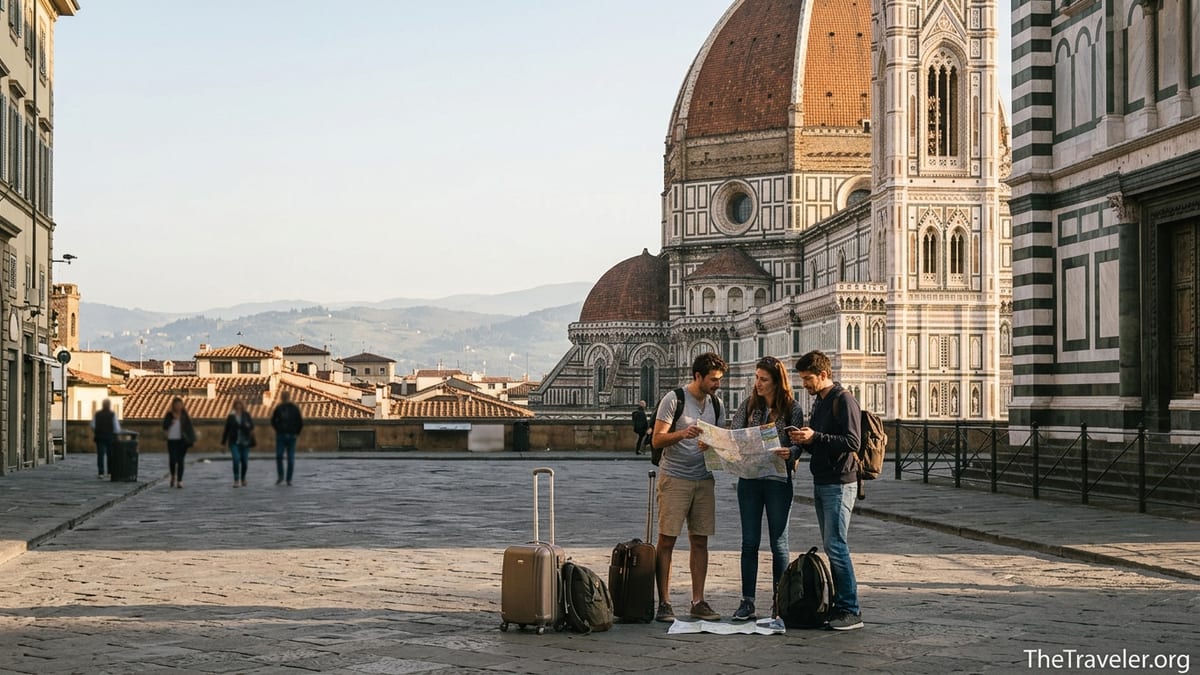
Understanding Florence as a Base
Florence sits roughly in the center of Tuscany, with Santa Maria Novella (SMN) station acting as a hub for regional and high-speed trains. In under an hour you can reach Pisa by regional train, and Bologna by high-speed service. A return ticket to Pisa often starts around 12 to 30 US dollars depending on how early you book and which train you choose, which makes it one of the most accessible day trips in Italy for independent travelers.
Buses and tours fill in the gaps that trains do not cover well. Siena, famous for its shell-shaped Piazza del Campo, is typically faster and more comfortable by bus than by train, with direct coach services from Florence taking about 75 to 90 minutes each way. Countryside areas such as Chianti and the Val d’Orcia, with wineries around Greve or Montalcino, are best reached either by rental car or as part of organized small-group tours leaving from central Florence early in the morning.
For many visitors, the appeal of using Florence as a base is financial and logistical. Staying in one hotel near the historic center means you unpack once and do not lose time checking in and out of different accommodations. A couple spending four nights in a mid-range Florence hotel might pay the equivalent of 180 to 250 US dollars per night and then add one or two day trips by train or bus, instead of splitting their stay across several smaller towns and paying for multiple transfers and check-in times.
However, Florence itself is dense with museums, churches, markets, viewpoints, and neighborhoods that reward slow exploration. Major sights such as the Uffizi Gallery and Galleria dell’Accademia now rely heavily on timed-entry tickets that can sell out, especially in peak months. If you only have two or three full days in the city, each half-day spent riding trains across Tuscany is time you are not wandering the Oltrarno, lingering over gelato on Piazza della Signoria, or climbing to San Miniato al Monte for sunset.
Travelers Who Benefit Most From Day Trips
Day trips tend to work best for energetic travelers with at least four or five nights in Florence, who are comfortable with early departures and structured days. For example, a couple staying five nights might devote three full days to Florence and then use one day for Pisa and Lucca and another for Siena or Bologna. On the Pisa and Lucca day, they could leave Florence around 8:00 a.m., be at the Leaning Tower by mid-morning, then continue 30 minutes by regional train to Lucca, rent bicycles to ride the Renaissance walls, and still be back in Florence in time for dinner.
Day trips also suit visitors who are especially focused on a single iconic sight. A common scenario is a traveler who has always wanted to stand beneath the Leaning Tower but does not want to change hotels. From Florence, they can buy a same-day regional ticket to Pisa, ride for about an hour, and walk 20 minutes or take a quick local bus or taxi from Pisa Centrale to Piazza dei Miracoli. Even with ticketed entry to climb the tower, this is an outing that can comfortably fit into a half day, leaving the rest of the day free for Florence.
Another group well suited to day trips are those who crave variety in landscapes but prefer cities as their base. A solo traveler working remotely from Florence for a week could plan two weekday afternoons in the Uffizi and Accademia, then use the weekend for a small-group wine tour into Chianti. Many Chianti tours include two family-run wineries, a traditional Tuscan lunch, and village stops for roughly 80 to 150 US dollars per person, depending on group size and season. These tours often depart near the main train station, so you can walk from your apartment, step into a minivan, and be tasting Sangiovese within an hour.
Finally, day trips can be ideal for budget-conscious visitors who want a taste of multiple towns without paying for multiple hotel nights. A pair of friends on a tight budget could book a simple guesthouse in Florence, then rely on regional trains for two or three excursions. A return to Lucca might be around 15 to 25 dollars per person, while buses to Siena can be even cheaper. This approach gives them the postcard views and variety of experiences without the cost and hassle of repeated hotel changes.
Who Should Probably Stay in Florence
Travelers with only two or three nights in Florence are usually better off staying in the city. A typical first-time visitor itinerary might already include the Duomo complex, a full morning in the Uffizi, an hour with Michelangelo’s David at the Accademia, strolls across Ponte Vecchio, and evenings in the Oltrarno or around Santa Croce. Trying to squeeze a full-day trip to Siena or Cinque Terre into such a short stay often means rushing through both Florence and the destination, with little time to actually absorb either place.
Those who are sensitive to long travel days or have mobility limitations might also prefer to avoid ambitious day trips. For example, a day trip to Cinque Terre from Florence can involve around two and a half hours of train travel each way, typically with at least one change at Pisa or La Spezia. Once you arrive, the villages have steep lanes, uneven steps, and crowded train platforms, particularly from May through September. For anyone who tires easily, this can quickly turn a scenic outing into a physically demanding ordeal.
Families with young children may find Florence itself has more than enough to fill their days without adding extra train journeys. Between climbing the Duomo’s dome or Giotto’s bell tower, exploring the Boboli Gardens, browsing the leather markets near San Lorenzo, and eating gelato in Piazza Santo Spirito, parents can keep kids engaged without subjecting them to multiple early wake-ups and tight train connections. If a family does want a change of pace, a short half-day trip to Fiesole on the city bus, with its Roman amphitheater and hilltop views, is often more manageable than a full-day countryside excursion.
Finally, serious art and history enthusiasts are often happiest when they give Florence itself top priority. Someone who has planned their entire trip around Renaissance painting and sculpture could easily spend an entire day in the Uffizi alone, especially with time for a coffee break on the museum terrace. Adding the Accademia, Bargello, Santa Croce, and the Medici Chapels can easily fill three or four days. For this type of traveler, day trips risk becoming a distracting obligation rather than a genuine highlight.
Matching Day Trips to Travel Styles
Different day trips from Florence suit different personalities. Independent travelers who enjoy figuring out train timetables tend to gravitate toward Pisa, Lucca, Bologna, and Arezzo, all of which are well connected by regional or high-speed trains. An example day might start with a 40-minute high-speed train ride to Bologna for a food market visit and a leisurely lunch of tagliatelle al ragù near Piazza Maggiore, followed by an evening return to Florence. With frequent departures throughout the day, there is built-in flexibility to linger over dessert or catch an earlier train home if you get tired.
Travelers who dislike logistics often do better on guided tours, especially for wine regions and hill towns. A small-group tour to Chianti or the Val d’Orcia usually includes round-trip transport, tastings, and at least one village stop in places like Panzano or Pienza. For example, a nine-hour Val d’Orcia tour might leave Florence at 8:00 a.m., stop for a mid-morning cappuccino in Montepulciano, include a two-course lunch at a vineyard near Montalcino, and finish with a sunset stroll through Pienza before returning to Florence around 7:00 p.m.
Adventurous travelers who like long days and are especially keen on sea views or hiking sometimes choose Cinque Terre as a day trip. They might catch an early train from Florence SMN a little after 7:00 a.m., arrive in Vernazza or Manarola around 10:00 a.m., then spend the day hopping between villages by local train or hiking one of the coastal paths before taking an evening train home. While a guided tour can simplify the route, independent travelers who are confident with Europe’s rail systems sometimes prefer to book their own tickets so they can stay longer in a favorite village if the mood strikes.
Shoppers and fashion-focused visitors might opt for a different kind of day trip: the outlets scattered outside Florence. Shuttle buses or private drivers can bring you to a designer outlet village where brands such as Prada, Gucci, and Armani offer discounted stock. A typical experience involves leaving Florence late morning, spending four to five hours at the outlets, and returning by early evening. Travelers who are already prioritizing Florence’s artisan workshops and boutiques, however, may decide these shopping-focused excursions are not worth sacrificing a full day in the city.
Time, Season, and Energy: Key Decision Factors
The number of nights you have in Florence is one of the strongest indicators of whether day trips make sense. With three nights, most visitors are best off keeping all their time within the city. With four or five nights, one or two day trips can work well if you still reserve at least two full days for Florence itself. With a week or more, you can comfortably combine three or four day trips with ample unstructured time to revisit favorite piazzas and cafés.
Season also matters. In peak months from late May through September, trains and major sights in both Florence and surrounding towns are noticeably busier. On a hot July afternoon, a 20-minute walk from Pisa Centrale to the Leaning Tower with minimal shade can feel far more grueling than it looks on a map. Likewise, trains to coastal spots such as Cinque Terre are often crowded in summer, which means more time standing, more queuing, and less of the relaxed countryside escape many travelers imagine.
Your own energy patterns should guide your decisions as much as any timetable. If you are a morning person, you might happily catch a 7:30 a.m. train, explore a new town for six or seven hours, and still have the stamina for dinner back in Florence. If you prefer slow starts, a long day trip may leave you struggling through both breakfast and evening plans. One common compromise is a half-day trip such as Fiesole or a short Chianti tour that returns by late afternoon, leaving time for a siesta and an unhurried evening in the city.
Finally, consider how you feel about structure versus spontaneity. Many guided tours lock you into fixed departure and return times and include preselected wineries, restaurants, and viewpoints. Some travelers appreciate the convenience, while others feel confined. Independent train trips offer more freedom to linger in Lucca’s cafés or climb Bologna’s Asinelli Tower at your own pace, but they also require you to keep an eye on schedules, platforms, and occasional strikes or delays. Being honest with yourself about which environment you find more relaxing will make it easier to decide whether day trips are likely to enhance or undermine your holiday.
Realistic Day Trip Scenarios From Florence
To understand what a day trip truly looks like, it helps to walk through a few sample days. Consider a classic Pisa and Lucca day. You leave your Florence hotel at 7:30 a.m. and walk 10 minutes to Santa Maria Novella station. After a quick coffee at the bar inside the station, you board a regional train a little after 8:00 a.m. and arrive in Pisa around 9:00 a.m. By 9:30 a.m. you are in Piazza dei Miracoli, taking photos of the Leaning Tower before the main tour groups arrive. After a late-morning climb or cathedral visit, you catch a midday train to Lucca, spend the afternoon cycling the city walls and enjoying a long lunch, then take an early evening train back to Florence, arriving around 7:00 p.m.
A Siena day looks different. You might take a mid-morning direct bus from near Florence’s main bus station and arrive just before lunch. The bus drops you a short walk from the city walls, and within minutes you are standing in Piazza del Campo, looking up at the Torre del Mangia. You might eat pici pasta with wild boar ragù at a trattoria steps from the square, visit the striped Duomo in the afternoon, and then roll your suitcase-friendly shoes back to the bus stop for a golden-hour journey through the Tuscan hills and a 90-minute ride back to Florence.
A countryside wine tour has its own rhythm. A small-group Chianti tour may pick you up near Piazza della Repubblica at 8:30 a.m. in a minivan holding eight guests. After a 45-minute drive, you arrive at the first winery, walk through the vines with the owner, and taste three or four wines with Tuscan bread and olive oil. A second stop might include a light lunch featuring local pecorino cheese and cured meats, followed by an hour to explore a small village such as Castellina in Chianti. By the time you roll back into Florence around 5:30 p.m., you are pleasantly tired, a bit sun-kissed, and ready to drop your wine purchases at the hotel before a simple dinner nearby.
In contrast, a Cinque Terre day from Florence is a genuine marathon. You may leave your hotel at 6:45 a.m., catch a train to La Spezia or Pisa, change to a local train, and arrive in your first coastal village close to 10:00 a.m. After visiting two or three villages, perhaps squeezing in a short hike or swim, you need to head back toward the station by mid to late afternoon to catch an evening train to Florence. Depending on connections, you may not reach your hotel until after 8:00 p.m. While many travelers declare the views worth the effort, others finish the day vowing to stay overnight in the area next time instead of attempting it as a day trip.
The Takeaway
The question of who should take day trips from Florence and who should stay in the city is less about what is possible and more about what kind of trip you want. If you have at least four or five nights in Florence, enjoy early starts, and are excited by the idea of seeing medieval hill towns, vineyards, or a leaning tower, then one or two well-chosen day trips can be some of the most memorable days of your journey.
On the other hand, if your time is short, your energy is limited, or your main passion is Renaissance art and architecture, you will likely be happier giving Florence your full attention. The city itself can easily fill several days with world-class museums, churches, markets, and sunset viewpoints, all within walking distance of each other.
The most successful itineraries usually strike a balance. Many travelers devote two or three full days to Florence, then add a single, carefully selected excursion that matches their interests, such as a relaxed Pisa and Lucca outing or a small-group Chianti tour. By aligning your choices with your own pace and priorities rather than trying to match someone else’s checklist, you give yourself the best chance of leaving both Florence and Tuscany feeling satisfied rather than rushed.
FAQ
Q1. Is a day trip from Florence to Cinque Terre really worth it?
Cinque Terre is stunning, but from Florence it involves long train journeys and early starts. It tends to suit energetic travelers with several days in Florence who accept that it will be a long, tiring day rather than a leisurely beach escape.
Q2. How many day trips can I realistically fit into a 5-night stay in Florence?
Most travelers are happiest with one or two full-day trips during a 5-night stay, leaving at least three full days for Florence itself. More than that often leads to fatigue and less enjoyment of both the city and the excursions.
Q3. Which day trip is easiest for first-time visitors using public transport?
Pisa and Lucca together form one of the easiest combinations. Both are on straightforward regional train routes, and you can visit the Leaning Tower in Pisa in the morning and spend the afternoon walking or cycling Lucca’s city walls.
Q4. Should I book a guided wine tour or rent a car from Florence?
If you are comfortable driving, a rental car offers flexibility but requires navigating unfamiliar roads and staying sober enough to drive after tastings. Guided small-group tours include transport, tastings, and often lunch, which many travelers find more relaxing and safer.
Q5. Is Siena better as a day trip or an overnight from Florence?
Siena works very well as a day trip, especially by direct bus. However, if you are fascinated by medieval history or want to experience the town in the quieter early morning and late evening, staying one night can be very rewarding.
Q6. Are there good short trips if I do not want to spend all day away from Florence?
Yes. Fiesole, reached by a city bus in about 25 minutes, offers hilltop views, Roman ruins, and a quieter atmosphere. Shorter Chianti tours that return by mid-afternoon are also an option if you want countryside scenery without committing to a full day.
Q7. What if I only want to see the Leaning Tower but have limited time in Florence?
If you have at least three nights in Florence, a half-day visit to Pisa can work well, especially if you take a morning train and return by late afternoon. With only one or two nights, though, it is usually better to focus on Florence and save Pisa for a future trip.
Q8. Are day trips from Florence suitable for families with young children?
Some are. Shorter excursions like Fiesole or a relaxed Pisa and Lucca day can work, especially if you plan playground stops and gelato breaks. Very long days, such as Cinque Terre in peak season, can be tough for younger children.
Q9. Do I need to buy train tickets in advance for day trips from Florence?
Regional trains to places like Pisa and Lucca usually have fixed prices and do not require advance booking, though you must validate paper tickets before boarding. High-speed trains to Bologna cost more closer to departure, so booking ahead can save money and secure seats.
Q10. How should I decide between staying in Florence and sleeping in smaller towns?
If you prefer nightlife, restaurant variety, and easy museum access, Florence makes an excellent base with a few targeted day trips. If you dream of quiet evenings in hill towns, early-morning walks through empty medieval streets, or sunsets over vineyards, consider splitting your stay between Florence and at least one smaller town.