


More news on this day
Commercial air travel between Iran and the United Arab Emirates took a significant step toward normalisation on June 29, as Dubai International Airport welcomed the first scheduled passenger flight from Tehran since services were halted by the recent Middle East conflict.
Get the latest news straight to your inbox!
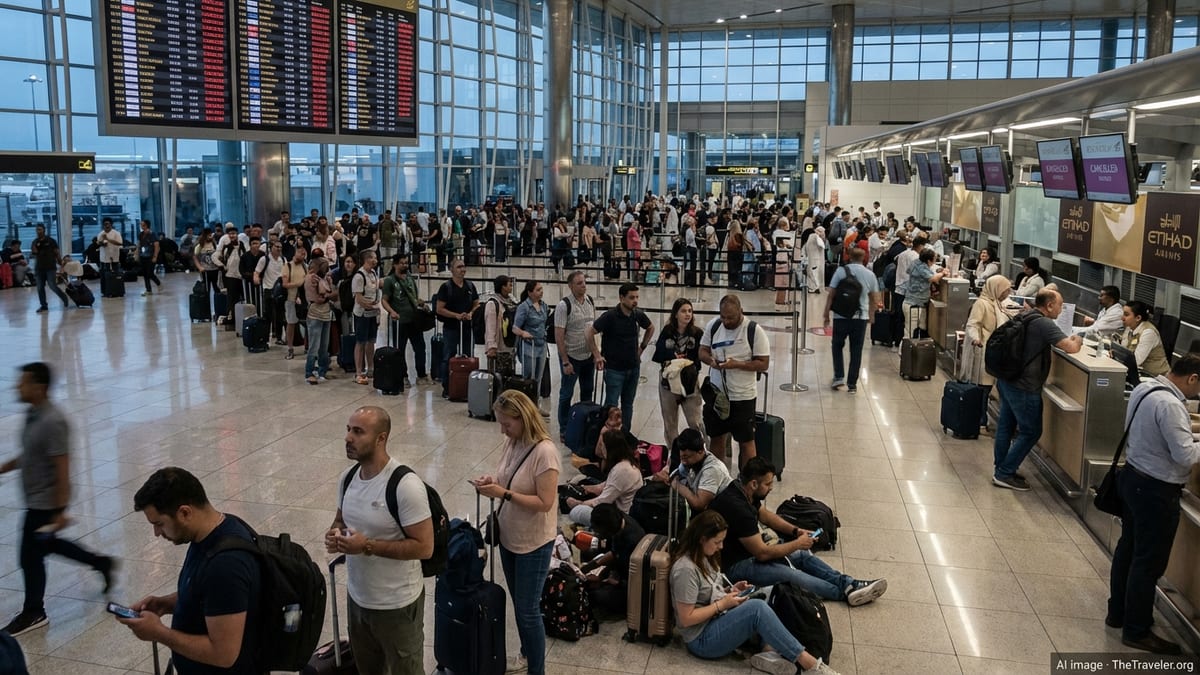
Route reopens after months of wartime disruption
Published reports indicate that a Sepehran Airlines service from Tehran’s Imam Khomeini International Airport landed in Dubai late Monday morning, restoring a high-demand corridor that had been suspended since late February when hostilities in the region escalated and Gulf states restricted airspace.
The Tehran to Dubai sector was among the busiest short haul links in the Gulf prior to the conflict, with dozens of weekly frequencies connecting Iranian cities to the UAE for business, medical travel and family visits. The shutdown that began on February 28, following strikes on Iran and subsequent retaliatory attacks on Gulf infrastructure, abruptly cut those links and forced travellers onto indirect and often more expensive routings.
The new flight operated under a limited schedule and within tighter routing parameters, reflecting the conflicted security environment that still prevails across parts of the region despite a fragile ceasefire. Aviation tracking data and ticketing information suggest that only a small number of seats were released for initial rotations while airlines and regulators assess demand and operational risk.
Industry coverage describes the restart as a controlled reopening rather than a full-scale restoration. Early rotations are expected to test revised safety procedures, crew scheduling and ground handling processes shaped by months of disruption and intermittent drone related security incidents around key Gulf hubs.
Ceasefire creates space for cautious aviation recovery
The first Tehran Dubai flight comes several weeks into a ceasefire arrangement that has largely halted large scale strikes and allowed airspace authorities to ease some restrictions introduced at the height of the war. During the peak of the conflict, Dubai International Airport experienced periodic suspensions of arrivals and departures as missiles and drones targeted infrastructure across the UAE, disrupting one of the world’s busiest hubs for international travel.
With direct hostilities reduced since April, regulators have gradually reopened corridors used by Iran bound and Gulf bound traffic, though many carriers continue to avoid certain airspace segments and fly longer diversionary routes. Regional observers note that United States and Iranian negotiators are in the midst of a time bound process to explore a more durable settlement, a factor that is shaping the risk calculations of airlines and insurers.
Safety advisories from aviation authorities in Europe and elsewhere remain in place, warning operators to carefully evaluate overflight risk in conflict adjacent zones. As a result, the resumption of Tehran Dubai operations is occurring under layered risk mitigation measures that include altitude restrictions, dynamic route planning and contingency airports prepared to accept diversions.
Analysts suggest that the restart of even a single daily service has symbolic weight beyond its modest seat capacity. It signals a belief among regulators and airport operators that the security environment has improved enough to justify limited commercial movements, while still acknowledging that conditions can change quickly if the ceasefire frays.
Passenger demand returns quickly on key Gulf corridor
Travel industry reporting points to strong latent demand on the Tehran Dubai route, particularly from business travellers, medical tourists and families who were separated when flights were suspended. Online booking platforms for the Iranian carrier’s services showed early dates selling out quickly, with the next available seats on some sectors pushed several days into the future.
UAE based travel agencies describe a backlog of passengers holding credits or postponed itineraries from the conflict period, many of whom were waiting specifically for nonstop options to return. Before the war, Dubai functioned as a primary transit gateway for Iranian travellers connecting to Europe, North America and Asia, with short transfer times and a wide range of onward destinations.
The interruption to this pattern over recent months sent some passengers through alternative hubs or onto circuitous multi stop journeys. The reintroduction of nonstop Tehran Dubai flights is expected to begin rebalancing those flows, though regional observers caution that capacity will remain constrained until additional carriers and frequencies are added.
Airlines are likely to ramp up services in phases, tracking booking trends, insurance costs and any adjustments to regional airspace advisories. For now, most schedules being published for the coming weeks suggest a slimmed down network compared with pre conflict levels, with some flights appearing only on select days and subject to late operational changes.
Airlines weigh operational risk against strategic importance
The decision to relaunch the Tehran Dubai route reflects a complex calculation for carriers and regulators, who must weigh ongoing security concerns against the strategic importance of maintaining connectivity between Iran and the UAE. Dubai International Airport remains a central node in global aviation networks, and restoring links to major regional capitals is viewed as essential to its role as a transfer hub.
According to public airport and industry data, Dubai was handling close to pre conflict traffic levels on many long haul routes even before the Tehran connection returned, supported by demand from Europe Asia itineraries that rely on Gulf hubs as bridges. Reopening suspended regional links fits into a broader strategy of gradually normalising operations while monitoring security developments.
For Iranian carriers, access to Dubai provides critical revenue and network connectivity at a time when broader economic pressures remain intense. The initial Tehran Dubai rotations are structured to feed both point to point demand and onward travel via Dubai to other markets, even if schedules remain pared back and subject to sudden change if tensions rise.
Regional analysts note that airlines have become more adept at operating in volatile security environments, drawing on lessons from previous crises. Dynamic risk assessments, flexible crew rostering and diversified fleet deployment allow carriers to pivot quickly if airspace restrictions tighten once more.
What the restart means for regional travel patterns
The arrival of Tehran’s first post war flight into Dubai is likely to have ripple effects across Gulf and wider Middle East travel patterns. Other suspended routes between Iran and neighbouring states may take cues from the controlled reopening, either accelerating their own restarts or adopting a wait and see approach depending on how the ceasefire holds.
For passengers, the resumption offers a measure of predictability after months in which flight schedules were highly volatile and cancellations frequent. Even a limited return of nonstop capacity can reduce journey times, lower costs and provide more options for those needing to travel for urgent family, medical or business reasons.
Travel trade observers expect that demand for Tehran Dubai services will remain strong through the summer, especially if additional frequencies are added and more carriers re enter the market. However, they also point to a lingering sense of caution among many travellers who remain acutely aware of how quickly regional security dynamics can shift.
As airlines, airports and regulators navigate this new phase, the first Tehran flight into Dubai serves as a visible marker of a region cautiously emerging from the acute phase of conflict. Whether it becomes the foundation for a broader return to normal travel patterns will depend heavily on the durability of the current pause in hostilities and the pace of diplomatic progress in the months ahead.