


More news on this day
Washington Dulles International Airport is grappling with a fresh wave of disruption as 10 flight cancellations and 151 delays strand hundreds of passengers and unsettle tourism flows on some of its most important long haul routes, including services to London, Frankfurt, Paris, Rome, Madrid, Lisbon, Zurich, Doha and Cairo.
Get the latest news straight to your inbox!
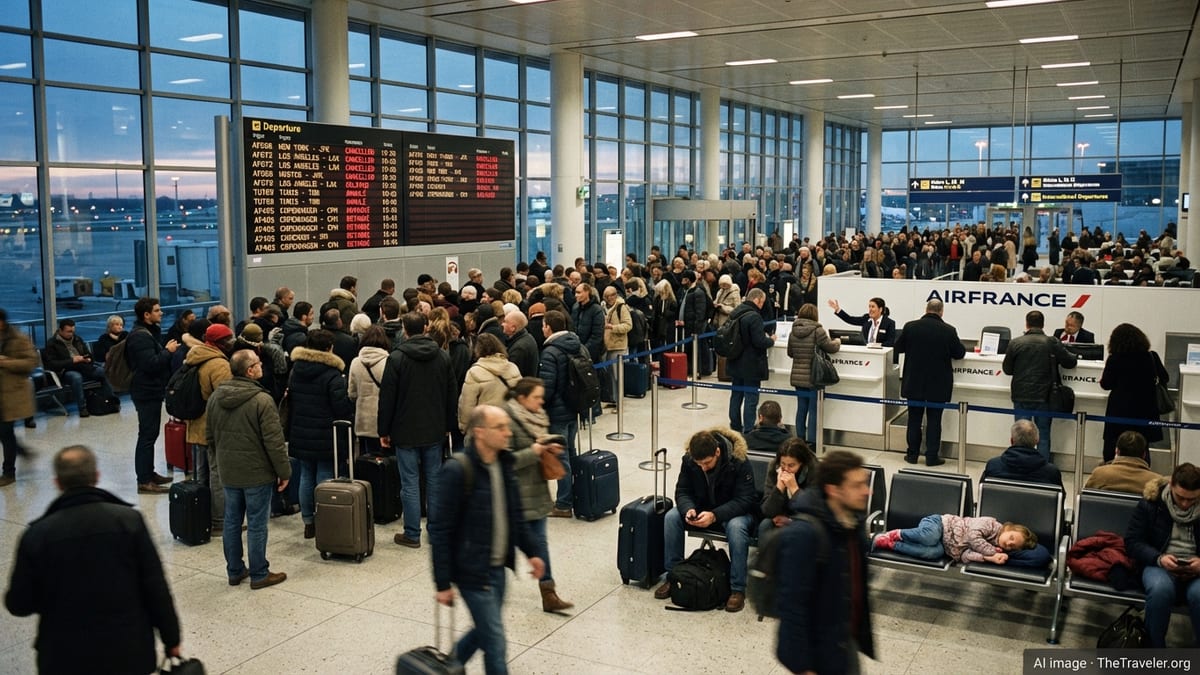
Heavy Operational Strain at a Key U.S. Gateway
Publicly available flight tracking and airport information show that Washington Dulles has entered another period of heavy operational strain, with a sharp cluster of cancellations and delays building across its daily schedule. The pattern follows several weeks of volatile performance at major East Coast hubs, where tight aircraft rotations and seasonal demand have left little room to absorb minor disruptions.
Data compiled from flight status platforms indicate that the latest disruption at Dulles involves 10 outright cancellations and 151 delayed departures or arrivals across a single operating period. The figures place additional stress on an airport that already handles dense international traffic and complex banked schedules connecting North America with Europe, the Middle East and Africa.
Recent coverage of similar events at Dulles has highlighted how even a relatively small number of cancellations, when concentrated on long haul departures, can cascade into missed connections, equipment shortages and crew timing issues. In the current episode, the imbalance between the higher number of delays and the smaller pool of cancellations suggests airlines are attempting to keep most services operating, albeit significantly off schedule.
The disruption comes at a time when Dulles is promoting record passenger volumes and expanding its global network. That growth, while positive for the region’s connectivity, has also increased sensitivity to day of operation shocks, particularly on days when weather, air traffic flow programs or overseas knock on effects converge.
Major Long Haul Routes Hit Across Europe and the Middle East
The impact is being felt most acutely on Dulles routes that underpin transatlantic and transcontinental tourism. Flight tracking boards for the airport list multiple services to London, Frankfurt, Paris, Rome, Madrid, Lisbon and Zurich among those experiencing significant disruption, alongside key Middle Eastern and North African links to Doha and Cairo.
According to route maps and published schedules, Dulles serves London and Frankfurt as primary European gateways, with onward connectivity across the continent and into secondary cities. Delays or cancellations on these flights can reverberate well beyond the immediate origin and destination pair, stranding travelers who rely on tight connections to onward leisure destinations such as the Mediterranean, Alpine regions or Northern European capitals.
Services to Paris, Rome, Madrid and Lisbon are also central to Dulles’ tourism portfolio, particularly during the peak spring and summer seasons when demand for city breaks and cruise departures typically rises. Disruption on these sectors can affect both U.S. outbound tourists heading to Europe and inbound visitors arriving to explore Washington, D.C., and surrounding states.
On the long haul front, the Doha and Cairo routes act as important bridges between the U.S. capital region and the Middle East and North Africa. Publicly available schedules show these flights feeding broader networks into the Gulf, the Levant and the African continent. When operations falter, passengers on multi segment itineraries often face complex rebookings, overnight stays and visa or document considerations, especially if their journeys span several jurisdictions.
Tourism and Business Travel Feel the Ripple Effects
Industry analyses of previous disruption days at Dulles suggest that tourism demand is particularly exposed to this kind of large scale delay profile. Leisure travelers are more likely to be on fixed itineraries that revolve around hotel check in dates, cruise departures, group tours or ticketed events, leaving less flexibility to absorb long delays or missed connections without financial or experiential loss.
Long haul visitors headed for Washington, D.C., are also affected when arrivals bunch up later in the day. Local tourism businesses near Dulles, including hotels, car rental firms and tour operators, can experience sudden surges of late night check ins, rearranged transfers and last minute cancellations when passengers opt to stay closer to the airport rather than proceed into the city.
On the outbound side, U.S. based tourists connecting through European hubs to secondary holiday markets face heightened uncertainty. Reports from travel forums and recent travel news coverage indicate that missed onward flights often lead to rerouting through alternative hubs, shortening vacations or forcing travelers to skip prepaid nights. For destinations that depend heavily on U.S. arrivals, such as Mediterranean resort areas accessed via Rome, Madrid or Lisbon, a series of disruption days can ultimately soften seasonal demand.
Business travel, while sometimes more flexible on dates, is not immune. Late arrivals for high level meetings, conferences or government engagements in London, Frankfurt, Paris or Zurich can carry reputational and financial consequences. Travel managers analyzing patterns over time may respond by adding buffer days, shifting travelers to alternative hubs or even reevaluating preferred carriers and departure points in the Washington region.
Airlines Balance Delays Against Cancellations
The ratio of 10 cancellations to 151 delays reflects an operational choice that has been observed at Dulles and other major hubs in recent months: airlines often prefer to delay flights rather than cancel them outright, particularly when long haul aircraft and high value itineraries are involved. Keeping flights in operation, even with significant delays, can reduce the need to compensate passengers, reposition aircraft or arrange extensive overnight accommodation at short notice.
However, large numbers of delayed flights can create a perception of chaos in terminal environments as departure boards fill with rolling time changes and gate assignments shift. For travelers, this can be just as stressful as a cancellation, especially when information changes repeatedly over the course of several hours.
Historical delay data for Dulles and other major international hubs point to a pattern in which weather events, air traffic control flow programs and overseas operational issues interact to produce surges of disruption on specific days. Once rotations fall out of sync, crews can time out, aircraft can miss planned maintenance windows and subsequent flights may inherit delays from earlier segments.
Analysts following Dulles operations note that peak travel seasons tend to amplify these sensitivities. High load factors on transatlantic and Middle Eastern routes mean there are fewer spare seats available on later departures, limiting airlines’ ability to rebook affected passengers quickly when a flight is significantly delayed or removed from the schedule.
Guidance for Affected Travelers and Outlook Ahead
Travel advisories and consumer guidance published in recent weeks have consistently urged passengers using Dulles and other busy East Coast hubs to monitor their flight status closely, arrive at the airport with additional time and consider the implications of tight connections on multi segment journeys. This latest wave of disruption underscores that advice, particularly for those traveling on once daily or overnight services to Europe, the Middle East and North Africa.
Travel industry reports recommend that passengers whose flights are delayed or canceled review airline policies on rebooking, meal vouchers and hotel accommodation, as these can vary depending on the cause of disruption and the jurisdiction under which a ticket was purchased. For itineraries involving European carriers or European points of departure or arrival, consumer groups often point travelers to established passenger rights frameworks that may apply in certain circumstances.
Looking ahead, capacity forecasts and airline schedule filings suggest that Dulles will remain a major growth market for long haul services, including additional frequencies to some of the very cities most affected in this disruption episode. That growth has the potential to improve connectivity and choice for travelers, but it may also require continued investment in resilience measures, from staffing levels and infrastructure to data driven planning around weather and air traffic constraints.
For now, the 10 cancellations and 151 delays recorded in the most recent reporting window offer a snapshot of how fragile global air connectivity can be, even at well established hubs. As passengers at Dulles wait out rolling departure times for London, Frankfurt, Paris, Rome, Madrid, Lisbon, Zurich, Doha and Cairo, the episode serves as a reminder that aviation networks remain highly interconnected, with local disruptions quickly rippling across continents and time zones.