


More news on this day
European regulators have widened conflict zone warnings across key Middle East air corridors, adding the United Arab Emirates to an extensive list that already includes Qatar, Saudi Arabia, Israel, Iran, Oman, Bahrain, Jordan and Lebanon, a shift that analysts say could deepen flight disruption, raise costs and weigh on tourism as the peak summer season approaches.
Get the latest news straight to your inbox!
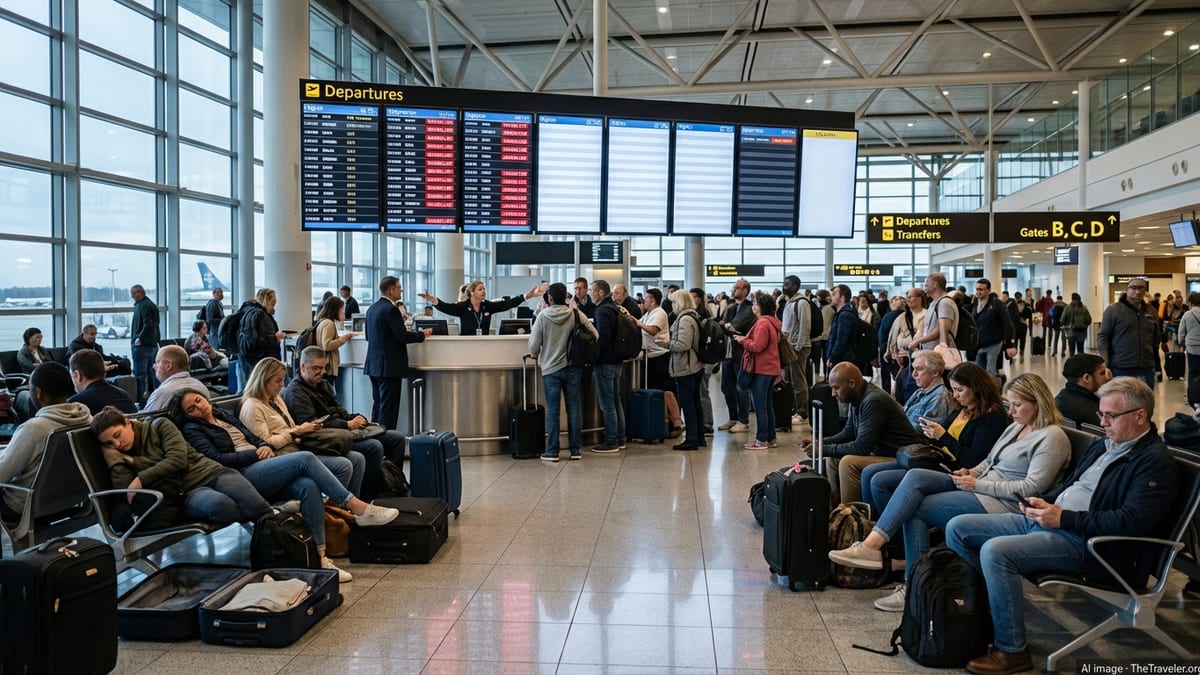
EASA Expands Conflict Zone Bulletins Across Gulf and Levant Skies
The European Union Aviation Safety Agency has extended and updated its Conflict Zone Information Bulletin for the Middle East and Persian Gulf, urging airlines to avoid or exercise heightened caution in the airspace of Bahrain, Iran, Iraq, Israel, Jordan, Kuwait, Lebanon, Oman, Qatar, Saudi Arabia and the United Arab Emirates. Public documents describe the entire belt from the eastern Mediterranean to the Strait of Hormuz as an area of high risk linked to military activity, missile operations and air defense systems.
The current bulletin, valid into early March 2026, builds on earlier advisories that were focused more narrowly on Iran, Iraq and the eastern Mediterranean. The latest revision highlights additional risks in the Persian Gulf region and explicitly references the Emirates, Doha and Riyadh flight information regions, underlining that even high altitude overflights can be exposed to potential misidentification or collateral damage during sudden escalations.
These notices do not constitute a blanket closure of airspace, and local civil aviation authorities across the region continue to keep major hubs such as Dubai, Abu Dhabi and Doha operating. However, the broadened scope of the conflict zone bulletins changes the risk calculus for European and Asian carriers planning summer schedules, particularly for long haul links between Europe, South and Southeast Asia and Australasia that traditionally depend on Gulf and Levant routings.
Risk assessments published by European regulators stress that operators are expected to continuously review route choices and be prepared for rapid changes in restrictions. That expectation is prompting some airlines to maintain wider buffers around sensitive airspace than strictly required, in an effort to avoid last minute diversions that can cascade into network wide disruption.
Rerouted Flight Paths Drive Fuel Burn, Delays and Higher Fares
Each additional conflict zone designation in the Middle East narrows the number of viable long haul corridors and pushes more traffic onto longer, more southerly or northerly tracks. Industry case studies on recent closure episodes show that a widebody flight forced to detour around Iran and Israel can add one to three hours to block time, depending on origin and destination, with direct consequences for fuel consumption, crew duty limits and aircraft utilization.
Following the missile and drone exchanges between Iran and Israel in April 2024, multiple countries in the region temporarily closed their airspace, compelling European, Gulf and Asian airlines to reroute or cancel services. Reports from that period describe aircraft turning back to departure airports mid flight and long haul services inserting additional fuel stops, illustrating the operational vulnerability created when several flight information regions in the Gulf and Levant become constrained at once.
Aviation and logistics outlets have documented how such rerouting raises per flight fuel bills by tens of thousands of dollars on some Europe Asia and Australia Europe sectors. Carriers then face a choice between absorbing part of those costs, passing them on through higher fares or trimming capacity to protect yields. In practice, many have opted for a combination of moderate price increases and selective capacity adjustments, contributing to higher average ticket prices on itineraries that rely on Middle East overflight.
For passengers, the immediate impact is often seen in longer journey times, missed connections and tighter aircraft availability when disruptions occur close to weekends or peak travel days. Even when hubs like Dubai and Doha remain open, extended routings around highlighted airspace can push aircraft and crews out of position, increasing the likelihood of rolling delays that spill into subsequent rotations.
Tourism Hubs Face Demand Uncertainty Ahead of Peak Season
The broader conflict zone posture is emerging just as tourism authorities across the Gulf and eastern Mediterranean promote the 2026 summer season with aggressive campaigns targeting European and Asian travelers. Dubai, Abu Dhabi, Doha, Muscat and coastal destinations in Saudi Arabia and Oman have invested heavily in new resorts, cruise terminals and entertainment districts that depend on seamless air connectivity.
IATA economic analysis published this year notes that the Middle East has become a central bridge for global air traffic, capturing a growing share of Europe Asia flows and seeing double digit growth in overflight volumes before the latest tensions. That growth model assumes relatively predictable access to regional airspace, minimal diversion around conflict zones and competitive connecting times at hub airports.
With conflict zone advisories now stretching across key states simultaneously, some tour operators report more cautious advance bookings for itineraries transiting the region, particularly from risk sensitive corporate clients and group series organizers. Publicly available booking and search data point to a modest but noticeable shift toward itineraries that route via Central Asia, Africa or southern Europe where comparable fares and schedules exist.
Destination marketing agencies in the Gulf continue to signal optimism, highlighting robust hotel pipelines and a track record of resilience through earlier crises. Yet the combination of geopolitical uncertainty and higher travel costs is introducing a degree of volatility into forward demand, leaving airlines and tourism boards more dependent on late bookings and tactical promotional campaigns to fill capacity.
Knock on Risks for Regional Carriers and Secondary Airports
The updated European bulletins carry particular weight for Gulf super connectors and regional point to point airlines whose business models rely on dense banks of connections through airports in the UAE, Qatar, Saudi Arabia, Bahrain and Oman. When a growing list of neighboring states appears on international risk maps, insurers may revisit premiums, lessors may reassess exposure and some code share partners may limit inventory on certain routings.
Industry specialists note that even when overflight remains technically permissible, perceived risk can prompt airlines based outside the region to reduce frequencies, downgrade aircraft or divert traffic through alternative hubs. That in turn can affect feeder traffic into secondary Middle East destinations that depend on connections through Dubai, Doha or Riyadh, from Red Sea resorts to emerging adventure and cultural tourism markets in Oman and Saudi Arabia.
Smaller gateways in Jordan and Lebanon, already exposed to disruptions from regional conflict and economic strains, face an additional layer of uncertainty when their flight information regions appear in overlapping advisories. Any perception of reduced reliability can push high yield passengers to reroute through larger hubs, potentially undermining efforts to sustain direct links from European cities.
Analysts also point out that cargo networks are sensitive to the same pattern of advisories. Freighter operators and the belly hold capacity on passenger jets traversing the region carry time sensitive goods between Asia, Europe and Africa. Longer routings and sporadic airspace restrictions raise shipping costs and transit times, with knock on effects for sectors such as fashion, electronics and perishables, which often share aircraft space with leisure travelers headed to Middle East destinations.
Travelers Face a New Era of Dynamic Routing and Risk Management
For travelers planning summer and autumn trips, the widening of conflict zone bulletins underscores the importance of flexibility and awareness rather than signaling an automatic halt to Middle East travel. Major airports in the UAE, Qatar, Saudi Arabia and neighboring states continue to handle large volumes of traffic, and airlines have refined contingency plans after repeated episodes of airspace disruption in recent years.
Public guidance from aviation safety bodies emphasizes that route choices are ultimately made by individual operators based on their own risk assessments, insurance conditions and national regulations. As a result, two airlines can take different decisions on the same city pair, with one continuing to use constrained corridors at specified altitudes while another opts for a longer but more comfortable alternative from a risk perspective.
Consumer advocates recommend that travelers watch for schedule changes, allow additional connection time where possible and pay close attention to airline communications in the days leading up to departure. Travel insurance products that explicitly cover delays or rerouting from airspace closures have attracted renewed interest, though coverage terms vary widely and often exclude purely precautionary changes.
With conflict zone bulletins for the Middle East now extended well into 2026, airlines, tourism boards and travelers are adjusting to a landscape in which routing decisions, fares and perceived safety can shift quickly in response to geopolitical developments. The inclusion of the UAE alongside Qatar, Saudi Arabia, Israel, Iran, Oman, Bahrain, Jordan and Lebanon in the latest advisories signals that these dynamics are likely to remain a central feature of the region’s aviation and tourism narrative through the coming peak seasons.