


More news on this day
Cambodia Airways has received its first ATR 72-600 turboprop aircraft, marking a significant step in the carrier’s strategy to strengthen short-haul and regional connectivity while supporting the fast-growing tourism market across Southeast Asia.
Get the latest news straight to your inbox!
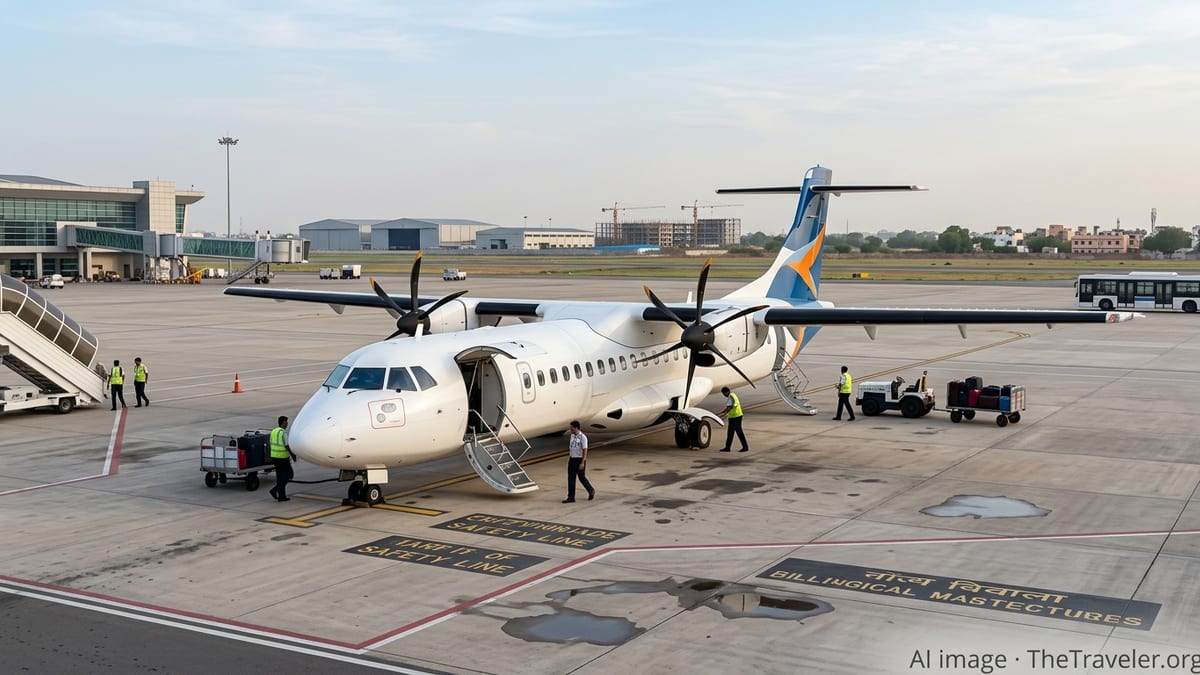
First ATR 72-600 Lands In Phnom Penh
Publicly available information from manufacturer and leasing company announcements shows that the aircraft was delivered on 5 June 2026 as part of a long-term leasing arrangement with Singapore-based lessor Avation PLC. The handover introduces the ATR 72-600 type to the Cambodia Airways fleet for the first time, adding a modern turboprop to an operation that has so far relied primarily on jet aircraft for its regional services.
The first aircraft is expected to enter commercial service later in June, with a second ATR 72-600 scheduled to join the fleet in the final quarter of 2026. The turboprops will be deployed on short-haul and secondary routes, complementing the airline’s existing narrowbody jet network that serves major markets in China and around Southeast Asia.
Industry coverage indicates that the aircraft delivered to Cambodia Airways is part of a broader multi-aircraft order placed by Avation with ATR between 2024 and 2026. The lessor has positioned the new turboprop as a key asset for airlines looking to expand in fast-growing regional markets while managing operating costs and emissions.
Boost For Short-Haul And Regional Connectivity
The arrival of the ATR 72-600 is set to reshape Cambodia Airways’ regional offering by enabling higher flight frequencies and new point-to-point connections on routes where demand is growing but may not yet support larger jets. The type’s economics and performance are widely regarded in the industry as well suited to sectors of around one hour, especially where airport infrastructure or runway length is constrained.
Reports suggest that Cambodia Airways plans to use the turboprop to reinforce domestic links from Phnom Penh and Siem Reap, while also exploring additional routes to neighboring countries such as Thailand, Vietnam and Laos. Such sectors are central to the tourism economy, enabling visitors to combine major gateways with coastal resorts, heritage sites and emerging destinations that have until now been harder to reach by air.
A stronger short-haul network is also expected to feed traffic into the airline’s longer routes to China and other key markets. By using the ATR 72-600 on thinner regional legs and reserving jets for higher-density services, Cambodia Airways can adjust capacity more precisely to demand and maintain year-round connectivity on routes that might otherwise see reduced frequencies.
Passenger Comfort And Cabin Experience
The ATR 72-600 is the latest-generation variant of ATR’s regional turboprop family and is marketed with a focus on cabin comfort as well as efficiency. Public materials from the manufacturer describe a quieter cabin and improved interior design compared with earlier models, with larger overhead bins, modern LED lighting and updated seating aimed at enhancing the overall travel experience on short flights.
While Cambodia Airways has not yet disclosed a detailed cabin layout, industry practice for ATR 72-600 operators in the region typically involves configurations of around 70 seats in a single-class arrangement. This density allows airlines to offer competitive fares on short-haul routes while keeping boarding and deplaning times relatively quick at smaller regional airports.
The aircraft’s lower cruising altitude compared with jets can also offer more scenic views on popular tourist sectors into coastal or heritage destinations. Combined with a calm, relatively low-noise cabin in the latest -600 series, the experience is positioned to appeal not only to cost-conscious travelers but also to visitors seeking convenient access to less-traveled parts of Cambodia and neighboring countries.
Lower Emissions And Operational Efficiency
According to technical data published by ATR, the 72-600 variant typically burns around 40 to 45 percent less fuel per flight than comparable regional jets on similar stage lengths, translating into meaningful reductions in both operating costs and carbon emissions. For an airline expanding its short-haul footprint, these savings can be significant over the life of a 12-year lease.
The type’s ability to operate from shorter runways and regional airports opens up markets where infrastructure is limited or where demand is currently too modest for larger aircraft. This flexibility can be particularly valuable in Cambodia and parts of mainland Southeast Asia, where tourism development strategies increasingly target secondary cities, island destinations and cross-border corridors beyond the main hubs.
For Cambodia Airways, deploying the ATR 72-600 on such routes creates opportunities to balance commercial expansion with environmental considerations. With regulators and travelers paying closer attention to aviation’s climate impact, the use of more fuel-efficient regional aircraft is likely to form part of broader sustainability narratives promoted by airlines and tourism stakeholders in the region.
Tourism Growth Across Southeast Asia
The timing of the ATR 72-600 delivery aligns with a wider rebound in travel across Southeast Asia, where visitor numbers are steadily recovering and in some cases surpassing pre-pandemic levels. Cambodia’s tourism sector, anchored by attractions such as Angkor Wat, Phnom Penh’s cultural landmarks and a growing portfolio of beach destinations, relies heavily on efficient regional air links to capture demand from neighboring markets.
By strengthening domestic and cross-border connectivity, Cambodia Airways’ new turboprop is expected to support national efforts to disperse visitor spending more evenly beyond the main gateways. Easier air access to secondary cities and emerging resort areas can stimulate investment in hotels, attractions and related services, creating additional employment and broadening the country’s tourism offering.
The development also fits into a broader regional pattern, with several Southeast Asian and Asia-Pacific carriers expanding or renewing their turboprop fleets to meet rising demand for short-haul travel. Within this context, Cambodia Airways’ move to introduce the ATR 72-600 positions the airline to compete more effectively for regional traffic flows, while offering passengers a more comfortable and efficient way to explore Cambodia and the wider neighborhood.