


More news on this day
Passengers booked on an EasyJet flight from Manchester to the Turkish resort city of Antalya have reported being left stranded in Milan after their original service was cancelled on the runway and a replacement aircraft diverted more than 1,200 miles from the intended destination.
Get the latest news straight to your inbox!
Runway cancellation followed by diversion to Italy
According to multiple published reports, the disruption began at Manchester Airport when an EasyJet service bound for Antalya was cancelled shortly before take-off, with travellers instructed to disembark even though they were already on the runway and expecting imminent departure. Coverage indicates the decision came within around ten minutes of the scheduled take-off time, abruptly halting the start of the holiday for those on board.
Subsequent reporting based on publicly available flight-tracking data shows that passengers were moved to a replacement EasyJet service, which then departed Manchester for Turkey. However, the second leg of the journey did not go as planned. Mid-route, the aircraft diverted from its scheduled path to Antalya and instead landed in Milan, leaving passengers roughly 1,200 to 1,290 miles away from their intended Mediterranean destination.
Accounts in UK regional outlets describe confusion as travellers tried to understand why the original service from Manchester had been cancelled on the runway and why the follow-up flight was unable to continue to Antalya. Initial coverage suggests the diversion to Milan was linked to crew duty-time limits reached after earlier delays, a scenario that can restrict further flying once maximum working hours are exceeded.
EasyJet’s general public statements in other recent disruption cases have typically highlighted that safety and regulatory compliance take precedence over schedule, and that crew duty-time rules can force short-notice changes if earlier operations overrun. While specific detailed reasoning for this Manchester to Antalya disruption has not been widely published, the pattern described in reports aligns with that type of operational constraint.
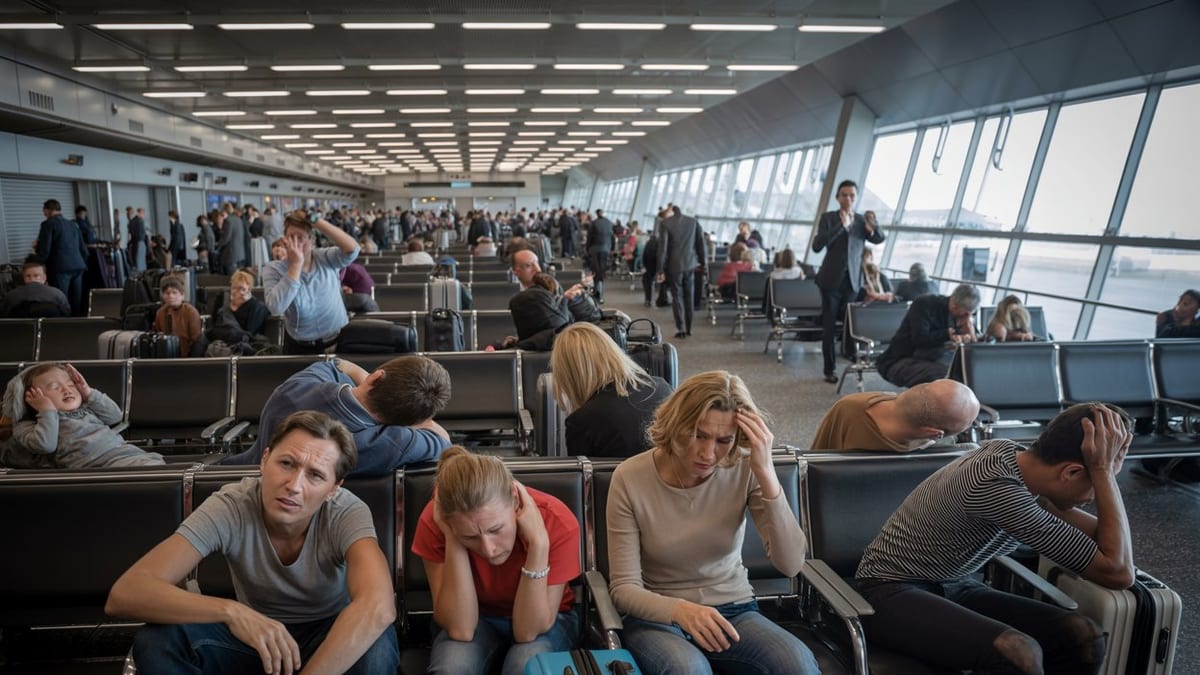
Passengers report being left stranded in Milan
Once on the ground in Italy, travellers expecting to be on the Turkish coast found themselves in a different country with no immediate onward flight. Reports indicate that passengers were advised they would need to wait at Milan Malpensa Airport while EasyJet arranged a fresh crew to operate a later service, leaving some to describe themselves as stranded hundreds of miles from their planned destination.
Coverage in regional news and travel-focused outlets notes that passengers were issued food vouchers valued at around 25 euros per person while they waited in the terminal. The delay was expected to last several hours as a replacement crew was transported from Manchester to Milan, with some reports indicating an estimated arrival time in the early evening local time.
For travellers, this meant an unexpected layover and the prospect of a significantly delayed arrival in Antalya. Holiday plans tied to hotel check-ins, transfers and excursions would likely have been disrupted, particularly for those booked on short package breaks or with limited flexibility at their destination.
Public posts and passenger accounts referenced in media coverage suggest that uncertainty over timings and onward arrangements compounded the stress of the situation, especially for families and those travelling with young children. While the airline provided basic subsistence support in the form of vouchers, many affected passengers still faced a lengthy, unscheduled wait far from home and far from their planned resort.
Context: EasyJet operations at Manchester and Antalya route demand
Manchester Airport is one of EasyJet’s key UK bases, with the carrier serving a wide range of leisure destinations across Europe and the Mediterranean. Antalya, on Turkey’s southern coast, is a particularly popular summer route for UK holidaymakers seeking resort packages and all-inclusive stays, meaning services can be heavily booked during peak travel periods.
Publicly available timetable and destination information shows EasyJet operates numerous seasonal flights between UK airports and Turkish resorts, including Antalya, to meet high demand from both package holiday customers and independent travellers. Disruptions on these services can therefore affect large numbers of passengers at once, particularly during school holidays or busy weekends.
In recent years, EasyJet and other European low-cost carriers have periodically faced operational pressures around crew availability, air traffic control restrictions and airport congestion. Published analyses by consumer advocates and aviation commentators note that such factors can interact, with an initial delay early in the day sometimes leading to subsequent flights being rescheduled, cancelled or diverted if they risk breaching tightly regulated duty-time limits for pilots and cabin crew.
Reports around the Manchester to Antalya incident suggest that delays earlier in the aircraft’s or crew’s schedule contributed to the last-minute cancellation at Manchester and later diversion to Milan. While each disruption has its own operational specifics, the episode highlights how cumulative delays across a busy daily roster can culminate in sudden changes that significantly impact passengers on later flights.
Passenger rights on cancellations and diversions
The experience of those on the Manchester to Antalya service has renewed interest in what protections exist for travellers when flights are cancelled shortly before departure or diverted to a different country. Under the UK’s post-Brexit air passenger rights framework, which broadly mirrors the former EU Regulation EC261, customers on flights departing from UK airports with UK or EU carriers can be entitled to assistance and, in some cases, financial compensation, depending on the circumstances.
Public guidance from consumer organisations explains that when a flight is cancelled, airlines are generally required to offer passengers a choice between a refund or re-routing to their final destination at the earliest opportunity, which may include flights on alternative dates. They must also provide care and assistance during the wait, typically including reasonable meals, refreshments and, if necessary, hotel accommodation and transport between the airport and lodging when overnight stays become unavoidable.
However, eligibility for fixed-sum compensation hinges on whether the disruption was within the airline’s control or triggered by what regulations term “extraordinary circumstances.” Published commentary on similar EasyJet cases notes that technical faults and some operational issues can count as the airline’s responsibility, whereas severe weather or air traffic control strikes may be treated differently. The precise cause of the Manchester runway cancellation and later diversion to Milan will likely determine the extent of compensation rights, beyond the subsistence support already reported.
Legal and consumer advice outlets often recommend that passengers keep boarding passes, booking confirmations and any written communication from airlines that refer to reasons for disruption, as this documentation can be important when submitting compensation or reimbursement claims. For those affected by this latest EasyJet incident, publicly available information suggests that many may now be weighing up possible claims alongside the practical task of re-aligning holiday plans that started with an unplanned detour to northern Italy.
Growing scrutiny of summer disruption for budget carriers
The Manchester to Antalya disruption comes against a backdrop of heightened scrutiny of summer travel reliability across Europe’s low-cost airline sector. In recent seasons, EasyJet, along with several competitors, has been the subject of media attention over short-notice cancellations, long queues and capacity constraints during peak holiday periods.
Past episodes reported at UK and European airports have shown how sudden schedule changes can leave passengers waiting for hours and, in some cases, facing overnight delays. Aviation analysts quoted in industry and consumer coverage have linked these issues to a combination of strong post-pandemic demand, staffing challenges at airlines and airports, and limited resilience in tightly scheduled low-cost operations.
Reports on the latest Manchester incident underline how disruptive it can be when a flight not only fails to reach its destination but ends the day in a different country. For passengers, the practical challenges go beyond delay, affecting onward transfers, hotel bookings and, in some cases, insurance coverage that may not fully anticipate such scenarios.
While EasyJet continues to emphasise its role as a major provider of affordable leisure travel from UK regional airports, the experience of passengers left temporarily stranded 1,200 to 1,290 miles from their intended resort is likely to feed into ongoing public debate about how airlines manage operational risk, communicate with customers during disruption and apply passenger rights rules in complex, multi-stage delays.
Brit Brief coverage of Manchester to Antalya EasyJet disruption