


More news on this day
An EasyJet holiday flight from Hurghada to London Luton diverted to Rome Fiumicino after crew were alerted to a power bank charging inside checked luggage, sharpening focus on how airlines and European airports enforce fast-evolving rules around lithium-ion batteries.
Get the latest news straight to your inbox!
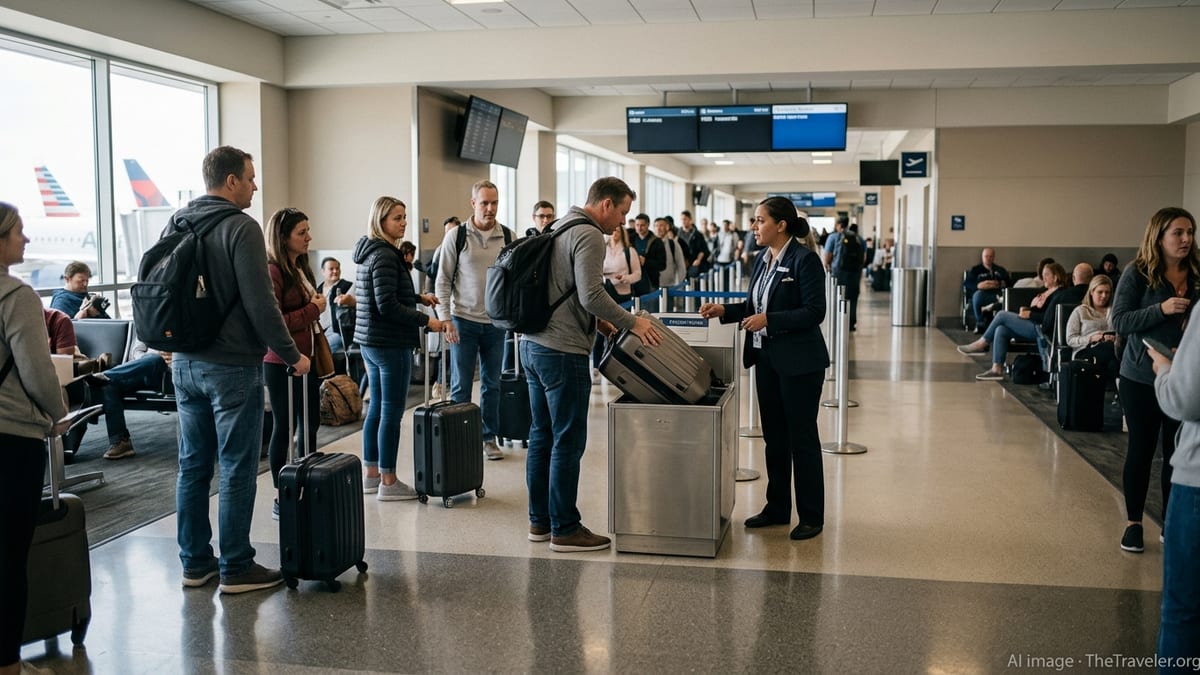
Midair Safety Alert on Flight EZY2618
According to published coverage, EasyJet flight EZY2618 departed Hurghada on the evening of 19 May 2026 bound for London Luton with around 180 passengers on board. Midway over the Mediterranean, a traveler informed cabin crew that a portable power bank in their checked suitcase was actively charging another device in the aircraft’s hold.
Publicly available incident reports describe how the Airbus A320neo, cruising at about 36,000 feet, made a sharp turn toward Rome Fiumicino after the information reached the cockpit. The situation did not involve smoke or fire, but the combination of a lithium-ion battery and a running charge cycle in the cargo compartment was treated as a serious hazard.
Tracking data and aviation incident summaries indicate that the aircraft landed safely in Rome roughly twenty minutes after the diversion decision. The flight was later rescheduled for the following morning, and passengers were provided overnight arrangements and refreshments where possible.
The episode underscores how even a single mispacked device can trigger costly operational disruptions. A routine leisure service between Egypt and the United Kingdom became an unplanned technical stop in Italy, with knock-on effects for crew duty times, aircraft rotation, and travelers’ onward connections.
Why Lithium-Ion Power Banks Are So Tightly Controlled
International guidance from aviation bodies classifies lithium-ion batteries, including those inside power banks, as hazardous goods because of the risk of thermal runaway, a chain reaction that can generate intense heat, fire, and toxic fumes. When such a reaction starts in the pressurized cabin, crews have access to fire-fighting equipment and can get to the device quickly. In a cargo hold, access is limited and response time is longer.
EasyJet’s publicly available dangerous goods policy specifies that power banks must be carried only in cabin baggage, with a limit on watt-hour rating and on the number of units per passenger. The airline also states that power banks must not be used to charge other devices during the flight and must be individually protected against short circuits.
Broader industry guidance from organizations such as IATA reinforces this approach, advising that any removable power unit designed to charge electronic devices should be treated as a power bank and kept in the cabin. Many carriers now require that smart luggage batteries be removable so that passengers can bring the battery into the aircraft cabin while the bag itself goes in the hold.
The EasyJet incident aligns with a pattern of precaution across the sector. Previous events involving overheating batteries, including those suspected in cargo compartment fires on other airlines, have led regulators to progressively tighten rules on how lithium-powered devices are packed, labeled, and handled throughout a journey.
London, Rome and European Hubs Step Up Checks
In the weeks following the diversion, airports linked to the route, including London Luton and Rome Fiumicino, have drawn renewed attention to lithium battery restrictions. According to published airport advisories, security screening teams are being reminded to pay particular attention to power banks, loose batteries, and smart luggage at checkpoints and bag-drop areas.
Airports in the wider London system, including Gatwick and Stansted, have already adopted enhanced messaging around lithium batteries over the past year, using digital departure boards, security lane signage, and pre-flight announcements to emphasize that power banks belong in cabin bags only. The EasyJet diversion is being cited in local media as an example of what can happen when a device slips into checked baggage.
Across continental Europe, several major hubs such as Rome, Milan, Madrid, Frankfurt, and Amsterdam have been rolling out similar initiatives. Publicly available information from airport operators points to more detailed website guidance, targeted social media campaigns ahead of peak holiday periods, and closer cooperation with airlines to ensure that check-in staff challenge bags that appear to contain electronics and cables inconsistent with standard hold luggage.
Security contractors and ground handlers are also adjusting standard operating procedures. Some are incorporating extra prompts in their systems that require agents to confirm lithium battery compliance at bag drop, particularly on leisure routes where passengers are more likely to travel with multiple personal devices.
Growing Patchwork of Airline and Airport Rules
While the underlying battery physics are the same worldwide, the specific rules passengers encounter can vary between carriers and jurisdictions. Some Gulf and Asian airlines introduced outright bans on using power banks in flight during 2025, allowing passengers to carry them only as switched-off spare batteries in hand luggage. Others in Europe and North America permit power banks on board but prohibit their use once the doors are closed.
According to publicly available airline policies, limits on capacity are also not fully uniform. Many carriers cap individual power banks at 100 watt-hours, with a small number allowing up to 160 watt-hours with restrictions on quantity and carriage as spares only. Airlines typically require that terminals be covered and that the device be protected from damage, for example by placing it in a pouch or dedicated compartment.
This patchwork can create confusion for travelers, particularly those connecting between airlines or regions with different enforcement practices. Travel forums and consumer reports highlight frequent cases of power banks being removed from checked luggage at security screening in one airport but being allowed through in carry-on form at another, or being permitted on one leg of a journey only to be confiscated on a subsequent leg.
The Hurghada to London diversion illustrates how misunderstandings about rules can have serious operational consequences. A device that would have been acceptable in the cabin became a reason for an unplanned landing when it was discovered in the hold and left running. Industry commentators argue that more consistent global standards and clearer passenger communication are needed to reduce such incidents.
What Travelers Can Expect This Summer
With the peak European holiday season approaching, travelers flying through London, Rome, and other major hubs can expect closer scrutiny of power banks and other lithium-powered devices. Passengers may encounter additional reminders at online check-in, prompts within airline mobile apps, and visual notices at self-service bag drops emphasising that portable chargers must be placed in cabin baggage, switched off, and not used during the flight.
Security lines are likely to place greater emphasis on separating electronics from bags, with some airports encouraging passengers to declare any spare batteries or power banks before screening. Where screening images raise questions, officers may ask travelers to repack belongings or remove devices from checked suitcases and carry them on board instead.
Consumer-facing travel advice from airlines, airports, and national aviation regulators is increasingly urging people to plan ahead: fully charge devices before leaving for the airport, allow them to cool before packing, store power banks in easily accessible cabin compartments, and check the fine print of each carrier’s dangerous goods policy. These small steps aim to keep batteries within sight of crew and passengers, where any abnormal heat, swelling, or smoke can be detected quickly.
The EasyJet diversion from Hurghada to London to an unscheduled stop in Rome has become a timely case study in what happens when lithium-ion rules are not followed to the letter. As European aviation braces for another record summer, the message from across the industry is clear: handle power banks carefully, keep them in the cabin, and never leave them charging out of reach.