


More news on this day
Concerns over Europe’s new Entry/Exit System are deepening after travellers reported missing flights at Athens International Airport, highlighting growing fears of wider disruption as the summer peak approaches.
Get the latest news straight to your inbox!
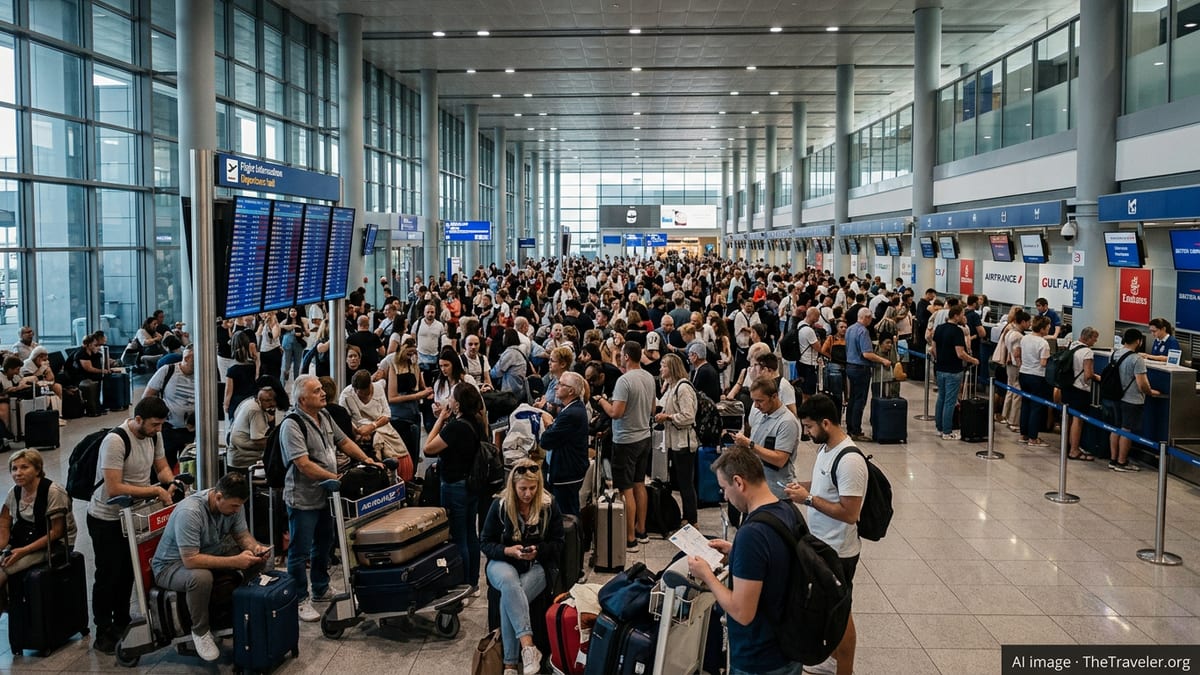
New border system collides with peak-season traffic
The European Union’s Entry/Exit System (EES), designed to digitise border checks for non-EU nationals, is rolling out just as airports prepare for their busiest months of the year. The scheme, which records biometric and travel data at Schengen borders, has already been linked in public reporting to long queues, missed flights and operational bottlenecks at several hubs.
Athens International Airport is among the locations drawing fresh scrutiny. Travellers transiting the Greek capital have shared accounts of near-misses and missed departures after being held up at passport control, particularly when connecting from islands or non-Schengen destinations. Some describe joining long lines immediately after check-in and watching departure times loom as processing crawls forward.
Publicly available information from airport and industry bodies indicates that the first EES registration can take several minutes per passenger, particularly when fingerprints and facial images are captured manually. While subsequent crossings are faster, initial congestion at major gateways is proving difficult to absorb when multiple wide-body flights arrive within short time frames.
These early experiences are fuelling frustration among travellers who planned connections under pre-EES assumptions, especially at airports like Athens that already manage heavy seasonal traffic and tight afternoon and evening departure waves.
Passenger accounts highlight missed flights in Athens
Recent traveller reports from Athens describe scenarios where queues at passport control stretched well beyond what passengers had anticipated. Some connecting passengers, arriving from Greek islands or long-haul routes, recount racing through the terminal after finally clearing checks only to find their flights already closed or pushing back from the gate.
In several accounts, travellers say they cleared security and reached the gate minutes after scheduled departure, emphasising that the primary delay occurred at departure passport control rather than airline check-in or security screening. Others describe being advised informally by airport staff or fellow passengers to prioritise passport control immediately on arrival at the terminal, before visiting check-in counters or shops.
These Athens stories are echoing experiences reported at other Schengen airports, where travellers have detailed missed connections and abandoned onward journeys during the first months of EES operation. In online travel forums, contributors who recently flew through Athens advise non-EU visitors to allow significantly longer connection times than in previous years, especially when moving from a Schengen domestic flight to a non-Schengen departure.
The pattern has raised particular concern for holidaymakers who booked separate tickets or tight layovers, as they may have fewer rebooking options and higher out-of-pocket costs when delays at border control cause them to miss flights.
Industry bodies warn of systemic strain
European aviation organisations have been flagging EES-related risks for months, warning that border processes could outpace existing airport capacity if additional staff and infrastructure are not in place. Joint communications from airport and airline associations describe “significant disruptions,” including missed flights and long waits at border checkpoints, as the system became mandatory for non-EU travellers across the Schengen area.
These groups have urged European and national authorities to allow temporary flexibility in applying the rules when queues grow unmanageable, including the option to suspend EES checks during peak periods at congested airports. They argue that without such measures, the combination of summer leisure travel, cruise arrivals and complex hub operations could produce sustained overcrowding at passport control.
Athens is frequently cited in broader analyses as an example of an airport facing structural pressure during the high season. Past punctuality reports already showed the Greek capital struggling with delays driven by air traffic control constraints and heavy summer schedules, even before EES was introduced. Against this backdrop, the added processing time for non-EU passengers is seen as a potential trigger for further knock-on disruption.
Industry assessments caution that, without targeted adjustments, queues of well over an hour for departing non-EU passengers may become a recurring feature at peak times in Athens and other popular Mediterranean hubs.
Extra time and longer connections now seen as essential
In response to the early wave of disruption, many airlines and airports across Europe are advising non-EU passengers to arrive much earlier for flights than they might have done before the rollout of EES. Guidance commonly suggests presenting at the airport at least three hours before departure, and in some cases even earlier for peak morning and evening waves.
For travellers using Athens as a gateway between Greek islands and long-haul flights, emerging advice from frequent flyers and travel advisers is to favour longer layovers and, where possible, to keep all segments on a single ticket. That approach gives passengers more protection if border-control delays cause a missed connection, as airlines have clearer obligations to reroute them on the next available service.
Several reports from recent visitors to Athens emphasise that the most vulnerable itineraries involve tight connections from domestic arrivals to non-Schengen departures, particularly when checked baggage must be reclaimed and rechecked. Under EES, any passenger leaving the Schengen area still needs to pass through passport control, even if they have already been screened by security and hold a boarding pass.
Travel specialists are increasingly suggesting that visitors planning trips for late summer and autumn build in “buffer time” both at the start and end of their journeys, especially if they are unfamiliar with Athens airport’s layout or travelling with children or elderly relatives who may need more time at border checks.
Summer outlook raises pressure for rapid adjustments
The mounting reports of missed flights linked to EES have sharpened the focus on how Athens and other major airports will cope with the main Mediterranean holiday season. Aviation groups have publicly warned that, without changes, July and August could bring particularly severe queues for non-EU travellers, as leisure demand peaks and many passengers unfamiliar with the new system arrive at once.
Airports and airlines are working within a complex framework in which EES is an EU-mandated border control tool, implemented nationally but experienced most directly by travellers at airport checkpoints. Publicly available information suggests that staffing and the reliability of the central IT system remain key variables that will determine how smoothly the system functions in Athens and other hubs.
For now, travellers heading to or through Greece are being encouraged by travel advisors and consumer advocates to monitor airline and airport guidance closely in the weeks before departure. Adjusting arrival times, choosing more generous connection windows and keeping documentation readily accessible at passport control are all being portrayed as practical steps that can reduce the risk of being stranded airside as flights depart.
With the busiest travel period of the year imminent, Athens International Airport’s experience is likely to serve as an important barometer of how well EES can be integrated into real-world operations without undermining the journeys it is intended to monitor.