


More news on this day
Rail regulators and infrastructure managers are facing mounting criticism after a man died in a head-on collision between a passenger train and an oncoming service, with investigators and campaigners arguing that long-standing safety failures turned a preventable incident into a deadly one.
Get the latest news straight to your inbox!
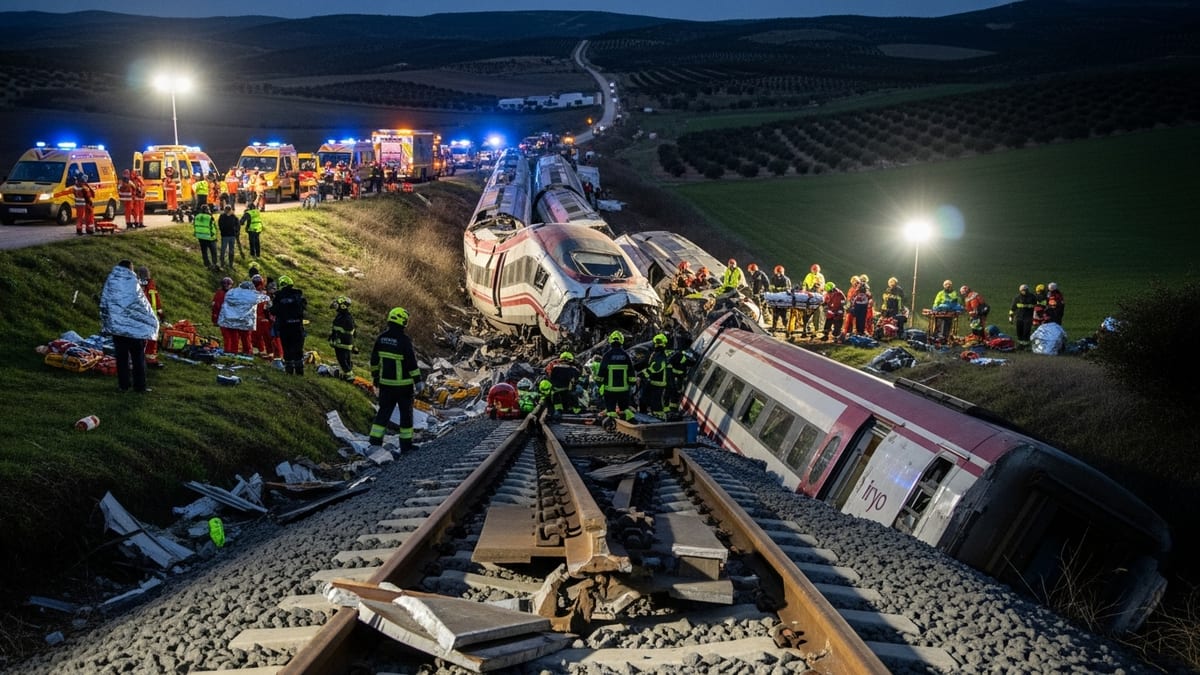
Fatal Impact Highlights Deep Safety Concerns
Published accounts of the crash describe a violent head-on impact between a passenger service and an opposing train on the same track, leaving one man dead and dozens of people injured. Initial findings indicate that the two trains were permitted to travel toward each other at significant speed, raising questions over how layers of protection designed to prevent such conflicts apparently failed at multiple points.
According to publicly available investigation summaries, control systems that should have kept the trains separated either were not fully installed, were working only in partial or manual modes, or were overridden by human decisions taken under pressure. Analysts note that modern signalling technology is intended to make head-on collisions all but impossible, particularly on busy intercity corridors where train density and speed are high.
Rail unions and passenger groups argue that the collision fits a pattern seen in recent years, where outdated infrastructure, staffing shortages and delays to digital safety systems have created vulnerabilities across national networks. They point to previous head-on impacts in Europe and elsewhere where inquiries highlighted similar weaknesses in route control, communication and automatic braking systems.
Specialists caution that full technical conclusions will take time, but say the circumstances already disclosed suggest that several safeguards either did not exist along the relevant stretch of line or were not operating as intended at the moment of impact.
Regulators Accused of Slow Progress on Modern Protection Systems
Rail safety bodies are under particular pressure over the pace at which advanced train protection systems are being rolled out and certified. Public documents show that, on several major corridors, work to install continuous automatic train control and interoperable signalling has slipped behind earlier timetables, often because of funding disputes, contract delays and technical integration challenges.
Critics argue that these delays left crews and dispatchers relying on legacy technology and procedural rules that are far more vulnerable to human error. In the latest case, route conflicts appear to have been managed using a combination of manual route setting and voice communication, rather than the type of digital interlocking and enforced braking that are standard on many high-speed lines.
Comparisons are being drawn with previous head-on collisions where inquiries concluded that functioning automatic protection would almost certainly have stopped the trains before impact. In some of those cases, rail companies and infrastructure managers were faulted for not ensuring that equipment already purchased was installed, commissioned and approved for operation in a timely manner.
Rail watchdogs now face questions about whether risk assessments adequately captured the dangers of running dense passenger services on sections of track that lacked fully operational protection technology, and whether interim controls were robust enough to justify continued high-speed operations.
Families and Campaigners Demand Accountability
The death of the passenger has galvanised families and campaign groups that have long argued that rail safety oversight is too fragmented and too deferential to budgetary and commercial pressures. Statements from advocacy organisations highlight a sense of déjà vu, with many noting that inquiries into earlier collisions produced detailed safety recommendations that have not always been implemented in full.
Campaigners emphasise that, in several historic head-on crashes, investigations cited a combination of systemic problems: underinvestment in signalling, insufficient training for front-line staff, inconsistent rules across operators and gaps in communication between infrastructure managers and private train companies. They argue that similar themes appear to be emerging again, suggesting that lessons from prior disasters were not firmly embedded.
Families of victims are calling for clearer timelines on infrastructure upgrades, greater transparency around risk assessments, and an independent review of how safety bodies prioritise projects. Legal specialists expect that any future court proceedings or public inquiries arising from the latest collision will examine not only the conduct of individuals on duty that day but also the strategic decisions taken by regulators and rail boards in recent years.
Public reaction has focused strongly on the idea that a modern passenger train should not be able to meet another head-on on the same track in normal operations. For many, the incident has become a test of whether national rail systems can reconcile financial constraints with the level of safety passengers reasonably expect.
Systemic Reform Pressures National Rail Networks
The collision is already being cited in broader debates about how national rail systems are governed and funded. Analysts say that fragmented responsibilities for infrastructure, operations and regulation can create blind spots where no single body feels fully accountable for closing safety gaps, particularly when these require large, multi-year capital investments.
Published coverage of earlier disasters shows that comprehensive safety reforms were often recommended, including the centralisation of traffic control, standardisation of staff training, independent safety audits and the accelerated deployment of automatic train protection. Implementation, however, has frequently been uneven, with momentum slowing once public attention faded.
Transport specialists argue that the latest fatality may renew political pressure for binding deadlines on critical safety projects, along with stronger enforcement powers for national safety agencies. Some proposals include tying operating licences and access rights to demonstrable progress on installing approved protection systems across all mainline routes where trains share tracks at speed.
There is also growing discussion about how data from near misses, signal overruns and equipment faults are collected and shared. Observers suggest that a more proactive, transparent approach to safety data, rather than relying on major crashes to trigger reform, could help identify and fix vulnerabilities before they result in another head-on collision.
Passengers Face Ongoing Disruption as Investigations Continue
In the short term, the route affected by the collision is expected to face significant disruption as investigators document the scene, retrieve data and oversee repairs. Rail operators have rerouted some services and introduced replacement buses on certain stretches, leading to longer journey times and crowding on alternative lines.
Publicly available timetables and operator notices indicate that speed restrictions, single-line working and additional manual checks are being used while damaged track, signalling equipment and rolling stock are replaced or examined. Industry analysts note that these temporary measures, although disruptive, are standard practice after serious incidents and are intended to reduce the risk of further accidents while technical inquiries are under way.
For regular passengers, the collision has added new anxiety to routine travel, particularly among those who use long-distance services that operate at high speed on mixed-traffic routes. Consumer groups report renewed interest in how safety information is communicated to passengers and whether rail companies provide clear explanations when routes are downgraded or temporarily altered for safety reasons.
As formal investigations progress, attention is likely to focus on whether the man’s death becomes a catalyst for structural change or is remembered as another case study in avoidable tragedy. Rail bodies now face the dual challenge of restoring public confidence in day-to-day operations while addressing deeper questions about how a modern network allowed two trains to meet head-on on the same line.