


More news on this day
Air travelers from the United States and Asia heading into Europe’s peak summer season are facing a growing patchwork of disruption, as Spain joins Portugal, Belgium, Ireland and Germany in contending with powerful storms, aging aviation infrastructure and persistent staffing shortfalls that are straining airports and air traffic control systems just as demand hits new highs.
Get the latest news straight to your inbox!
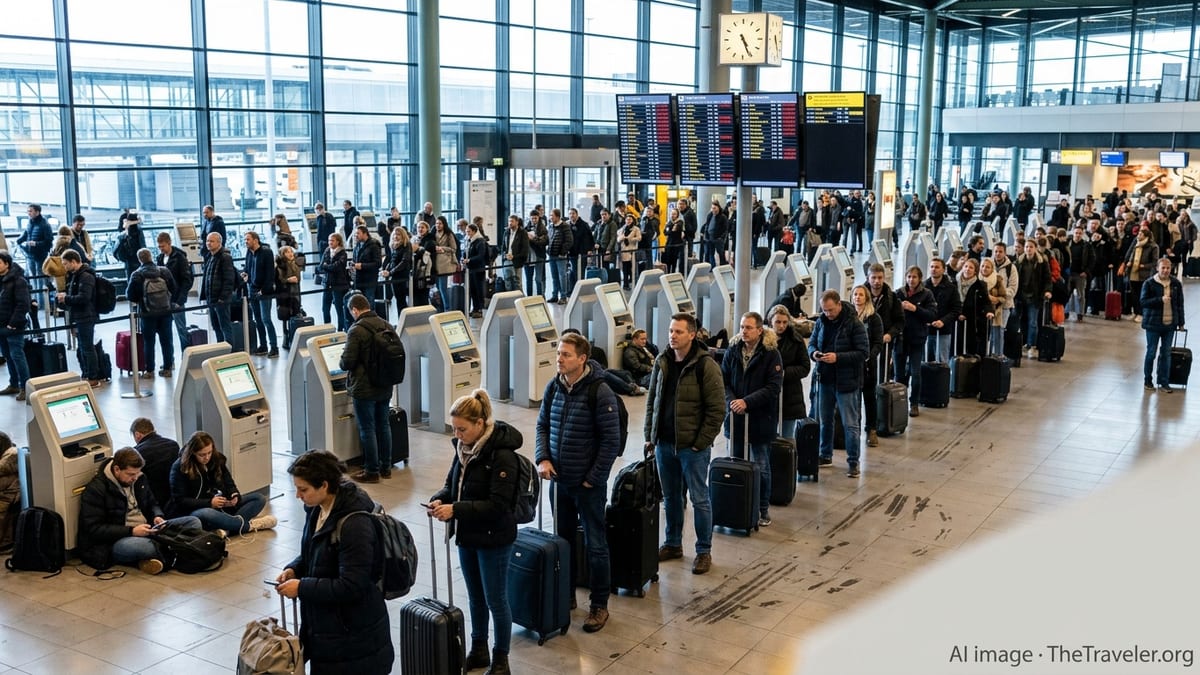
Spain Emerges as a New Hotspot for Network Delays
Recent briefings from European air traffic management bodies indicate that Spain has rapidly become one of the continent’s main delay hotspots as the 2026 summer schedule ramps up, with Madrid, Barcelona and Sevilla area control centers singled out for a sharp rise in en route congestion linked to capacity and staffing constraints. This comes as airlines add more transatlantic and long haul flights into Spanish hubs to accommodate surging demand from US and Asian markets.
Publicly available traffic data suggest that flights crossing Spanish airspace are spending more time in holding patterns or being rerouted around saturated sectors during stormy periods, amplifying knock on delays across the wider network. For travelers originating in New York, Atlanta, Los Angeles, Tokyo and Seoul, this can translate into missed connections in Madrid or Barcelona and extended onward disruptions to resort destinations around the Mediterranean.
Industry analyses highlight that Spain’s rapid traffic growth is colliding with a slower pace of modernization in some control centers, where new systems and procedures are still being phased in. While the country has invested in major airport terminals and runways over the past decade, air navigation capacity has tightened more quickly than anticipated, turning periods of bad weather into flashpoints for large scale delays.
Travel planners are already warning that peak July and August weekends could see sustained pressure if storms continue to track across the Iberian Peninsula and if staffing gaps in key control centers are not fully covered through overtime and temporary reallocations.
Portugal’s Strikes and Atlantic Weather Add to the Strain
Portugal is confronting a dual challenge, with nationwide strike action and volatile Atlantic weather both undermining schedule reliability. A general strike affecting aviation, rail and urban transport at the start of June has been flagged in multiple travel advisories as a major disruptor, with more than 500 flights across Lisbon, Porto, Faro and island gateways in Madeira and the Azores reported to be at risk of cancellation or significant delay.
On top of industrial action, strong crosswinds and stormy conditions have recently led to repeated interruptions at Madeira’s Cristiano Ronaldo International Airport, a notoriously weather sensitive facility where steep terrain and short approach paths often make diversions unavoidable. Local media coverage has documented waves of cancellations and go around maneuvers as pilots abandon landings during gusty periods, leaving inbound long haul passengers from North America and Asia facing last minute diversions to mainland Portugal or the Canary Islands.
These challenges follow the intense series of Atlantic storms that battered Portugal and neighboring Spain in late winter, damaging infrastructure and heightening concerns about the resilience of coastal airports and navigation assets. Although many repairs have been completed, airport operators and airlines remain on alert for further weather systems that could coincide with the busiest holiday weekends, stretching contingency plans and accommodation options for stranded travelers.
For US and Asian tourists connecting through Lisbon on popular triangle itineraries that combine city breaks with island stays, the combination of strikes, storms and limited spare capacity in regional airports is emerging as a key risk factor for summer travel.
Belgium and Ireland Expose Ground Handling and Capacity Fault Lines
In the heart of the European Union, Belgium’s main gateway has provided another reminder of how quickly localized labor disputes can ripple across continents. Recent industrial action by ground handling staff at Brussels Airport disrupted early morning check in and boarding processes at the very start of the busy summer period, with published reports describing long queues and departure delays, even as operators emphasized that outright cancellations were limited.
While operations have since largely normalized, the episode underlined how tight staffing levels remain in baggage handling, ramp operations and security screening following the pandemic era downturn. As more widebody services from the US and Asia relaunch or increase in frequency, any renewed strike action or absentee spikes could again slow throughput and place connecting passengers at risk of missed onward flights to southern Europe.
Across the Irish Sea, Dublin Airport has spent much of 2026 under scrutiny for its ability to keep pace with record passenger volumes. Publicly available information shows that more than half a million travelers were expected to pass through the airport over the June bank holiday weekend alone, while separate briefings highlight ongoing regulatory debates about future capacity limits and runway usage at the hub.
Recent maintenance related closures of Dublin’s south runway, combined with episodes of heavy rain earlier in the year, have periodically constrained operations and contributed to days of elevated delays and cancellations. Aviation tracking data and local media coverage have pointed to hundreds of disrupted flights on some days, with knock on effects spreading across airline networks that link Ireland to US cities and to long haul partners in the Middle East and Asia.
Germany’s Infrastructure Gaps Meet Staffing and Weather Pressures
Germany, long seen as a benchmark for aviation infrastructure, is also contending with its own convergence of structural and operational pressures. Publicly available analyses from European network managers regularly identify German airspace as one of the largest contributors to en route air traffic flow management delays, driven by capacity and staffing limitations in several area control centers.
Major hubs such as Frankfurt and Munich are dealing with a combination of aging terminal facilities in need of renewal, runway and taxiway works, and the aftereffects of staffing shortages in air traffic control and ground handling that have not fully recovered since the pandemic. Reports from previous summer seasons show that even modest thunderstorms over central Europe can quickly trigger widespread slot restrictions, forcing airlines to delay or reroute flights that link Germany to North America and East Asia.
Airlines and airports have introduced a range of mitigation measures, from schedule smoothing and off peak slot incentives to the use of remote stands and streamlined turnarounds. However, aviation commentators note that structural bottlenecks remain, especially at peak morning and evening banks when long haul arrivals and departures are most concentrated. With transatlantic demand running at or above pre pandemic levels, any return of large frontal storm systems over central Europe could see German hubs once again act as a focal point for continent wide disruption.
For passengers traveling from US or Asian gateways into Germany before connecting onwards to Spain, Portugal or Ireland, the compounding effect of upstream and downstream constraints is likely to be a central theme of this summer’s travel experience.
A Perfect Storm for US and Asian Tourists at Europe’s Gateways
Taken together, developments across Spain, Portugal, Belgium, Ireland and Germany point to a European aviation system entering the 2026 high season with little spare capacity to absorb shocks. Network wide assessments from regional air traffic bodies show traffic volumes climbing above last year’s levels, even as strong storms, infrastructure works and chronic staffing challenges persist in multiple control centers and airports.
For US and Asian travelers, the practical impact is already visible in longer average delays, tighter connection windows and a greater incidence of missed onward flights, especially where itineraries rely on multiple hubs within a single journey. Airline schedule planners have built additional block time and turnaround buffers into many routes, but analysts warn that this may not be sufficient during periods of overlapping storms and labor unrest.
Consumer advocacy groups and travel insurers are drawing attention to the heightened risk of cascading disruption when a storm system moves across Iberia at the same time that ground handling operations in Belgium or capacity constrained runways in Ireland and Germany are struggling to keep up. In such scenarios, even passengers departing from distant origins in Chicago, San Francisco, Singapore or Hong Kong can find themselves caught in rolling delays far from the weather event or staffing issue that initially triggered the problem.
While industry bodies emphasize that safety remains paramount and that new procedures and technologies are gradually improving network resilience, the immediate outlook for the 2026 summer season suggests that record demand will continue to collide with the limits of Europe’s existing aviation infrastructure, with Spain’s growing role in the delay statistics underscoring how quickly new pressure points can emerge for global travelers.