


More news on this day
Ek Phnom, a rural district just north of Battambang in northwestern Cambodia, is emerging as a compelling stop for travelers seeking Angkor-era ruins, village life and riverside scenery away from the country’s busier tourist hubs.
Get the latest news straight to your inbox!
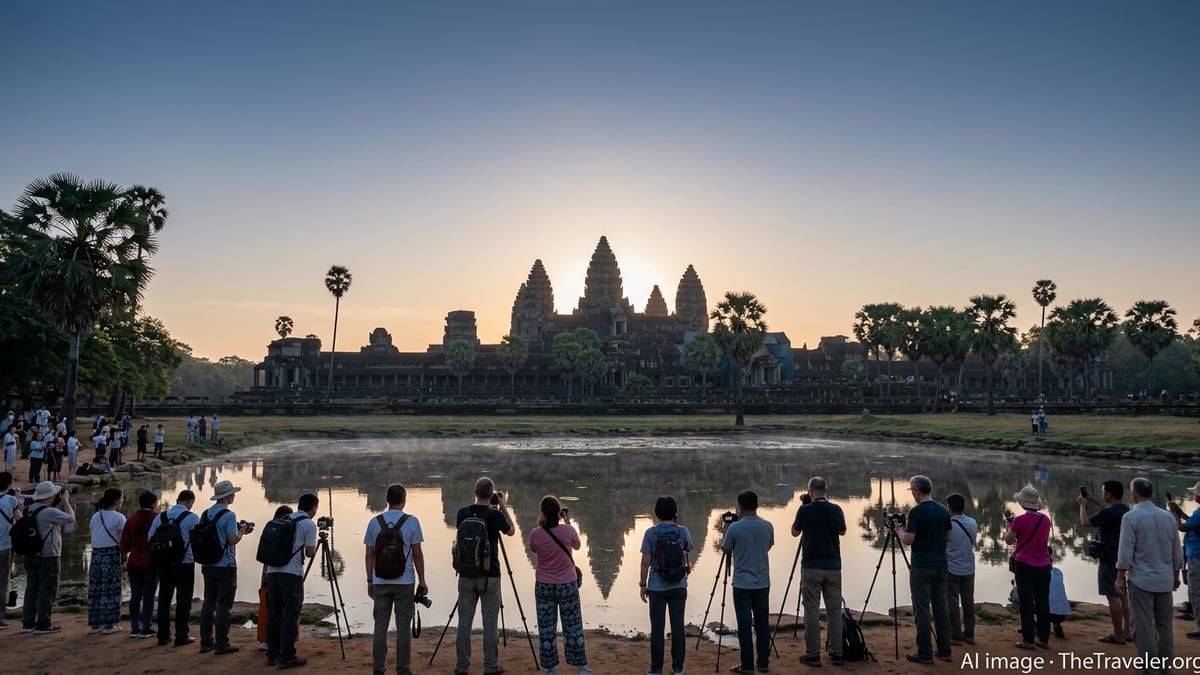
Ancient Temple Ruins Reveal Angkor-Era Heritage
At the heart of Ek Phnom’s appeal is its namesake temple complex, an 11th century structure attributed in published histories to the reign of King Suryavarman I. The sandstone shrine, enclosed by remnants of a laterite wall and an ancient reservoir, offers a compact but evocative glimpse of the architecture that anticipated the grand designs later realized at Angkor. Visitors today find a partially collapsed central sanctuary ringed by towers, bas-relief blocks and toppled lintels scattered across a raised platform.
Recent travel reports describe Wat Ek Phnom as quiet compared with Cambodia’s flagship sites, with relatively few tour groups and a modest entrance area shared with a contemporary Buddhist pagoda. The ruins, shaded by old trees and edged by ponds, reward slow exploration rather than rapid sightseeing, giving travelers time to study carvings, observe restoration work where it is underway and appreciate how the stones have weathered more than nine centuries of monsoon seasons.
The wider temple grounds reflect the layering of eras that characterizes much of Battambang’s heritage landscape. Behind the older ruins, a large seated Buddha statue and modern ceremonial structures serve local worshippers, while the crumbling Angkorian sanctuary continues to attract visitors interested in early Khmer religious art. Heritage studies focused on Battambang note that Ek Phnom, though smaller than Phnom Banan or Angkor’s central temples, plays an important role in regional narratives about Hindu and Buddhist worship and the spread of monumental architecture along the Sangkae River corridor.
Guidebook material and destination profiles indicate that travelers typically combine Ek Phnom with other provincial sites, including nearby pagodas and war memorials, creating a day-long circuit that links historical interpretation with contemporary religious practice. This positioning as part of a broader heritage route has helped raise Ek Phnom’s profile among visitors who might otherwise pass through Battambang en route to Thailand or the coastal provinces.
Living Buddhism at Pagodas Old and New
Ek Phnom’s cultural landscape extends beyond the temple ruins to a network of working pagodas that continue to anchor spiritual and community life. The modern Wat Ek Phnom compound, adjacent to the Angkorian structure, draws local residents for ceremonies, festivals and daily offerings, especially on Buddhist holy days. Travelers arriving from Battambang often encounter a mix of saffron-robed monks, families bringing food for merit-making and children using the grounds as an informal gathering place.
Elsewhere in the district and wider province, historic pagodas such as Samraong Knong are highlighted in heritage research and travel guides for their long histories and memorial sites connected to Cambodia’s more recent past. While Samraong Knong lies outside the immediate temple zone, it is commonly featured in itineraries that start or end at Ek Phnom, reinforcing the district’s role as a gateway to understanding how temples and monasteries have adapted through colonial rule, conflict and postwar recovery.
Publicly available information suggests that religious tourism in Battambang, including visits to pagodas and shrines, forms a growing component of provincial travel promotion. Ek Phnom benefits from this trend by offering an experience where visitors can observe everyday rituals rather than staged performances. Morning and late afternoon are particularly active times, when monks chant in assembly halls, incense smoke drifts across courtyards and villagers pause to pray before continuing to rice fields or markets.
For travelers, this blend of antiquity and living faith provides context that pure archaeological sites sometimes lack. Seeing the old temple framed by new stupas and prayer flags underscores how sacred places in Cambodia evolve, with conservation and devotion operating side by side. It also encourages longer stays, as visitors often return at different times of day to see how the atmosphere shifts from quiet midday heat to lantern-lit evenings.
Rural Landscapes and Slow Travel Experiences
Ek Phnom’s countryside setting is another key part of its draw. The district sits along the Sangkae River to the north of Battambang city, in an area widely described in travel literature as one of Cambodia’s most productive rice-growing regions. Approaches to the temple complex typically pass wooden houses on stilts, small orchards and roadside shrines, with ox carts and scooters sharing narrow roads that trace the riverbanks and irrigation channels.
Recent destination coverage highlights cycling and tuk-tuk excursions as popular ways to experience the area. Visitors rent bicycles in Battambang or join organized rides that follow quiet backroads to Ek Phnom, stopping at handmade rice paper workshops, fish paste producers and small family-run temples. The relatively flat terrain and light traffic, compared with major highways, support the district’s image as a place suited to slow travel, where the journey to the temple can be as engaging as the site itself.
Boat trips on the Sangkae River are also promoted as an alternative route between Battambang and Ek Phnom, depending on seasonal water levels. These journeys typically pass floating houses, fishermen at work and children playing along the banks, providing a perspective on how closely the river shapes daily life. Travelers who choose this option often visit the temple in the cooler morning or late afternoon, then return to the city by road as dusk falls over the fields.
Environmental conditions and infrastructure remain a consideration. Road quality around Battambang has drawn mixed assessments from recent traveler discussions, with some noting patchy surfaces and construction zones. However, tourism operators and guidebooks continue to list the route to Ek Phnom as accessible by standard tuk-tuk or motorcycle taxi, especially during the dry season. Visitors are advised to factor in extra time for slower segments and to carry sun protection and water for journeys through exposed rural stretches.
Tourism Trends and Visitor Safety Context
Ek Phnom’s rise in visibility comes at a complex moment for Cambodian tourism. Industry analyses released in early 2026 report that the country experienced a significant downturn in international arrivals in 2025, citing regional border tensions and broader economic pressures. National marketing campaigns have responded by shifting attention to secondary destinations and cultural routes that encourage travelers to stay longer and spend more in rural provinces.
Within this context, Battambang and its surrounding districts, including Ek Phnom, are frequently cited as examples of under-visited areas with strong potential for heritage and community-based tourism. Travel advisories and specialist tour bulletins published in recent months generally note that major tourist centers such as Siem Reap, Phnom Penh and Battambang remain calm, with everyday life and sightseeing operating largely as normal. Some government and third-party advisories, however, continue to recommend caution in zones close to the Thai border, particularly in remote northern stretches of Battambang province and neighboring regions.
Traveler forums and guide updates from late 2025 and early 2026 describe Battambang city and nearby attractions, including Ek Phnom, as quiet but functioning, with guesthouses, restaurants and transport services open, albeit serving fewer international visitors than before. Contributors typically characterize the security environment in central Battambang as stable, while drawing attention to broader economic strains and the impact of reduced tourism on local livelihoods.
For prospective visitors to Ek Phnom, this means that planning now often involves cross-checking national travel advisories with on-the-ground updates from operators and recent travelers. While the temple complex itself sits well south of the more sensitive border zones, route choices from Thailand and timing of overland crossings may be affected by evolving regulations or temporary closures. Many travelers currently opt to approach Battambang via Phnom Penh or Siem Reap, using domestic flights or long-distance buses before continuing by road to the countryside.
Ek Phnom’s Role in Battambang’s Cultural Future
Academic work on Battambang’s heritage economy points to Ek Phnom as one of several anchor sites that could underpin more sustainable tourism growth in the province. Researchers emphasize the importance of balancing visitor access with conservation, improving signage and interpretation, and ensuring that income from entrance fees and tours benefits nearby communities. Suggestions in recent planning documents include better pathways around fragile structures, additional shade and rest areas, and clearer information on appropriate behavior at active religious sites.
Local initiatives, often supported by provincial authorities and cultural organizations, are gradually shaping how Ek Phnom is presented to visitors. These include small-scale guided tours focusing on iconography and history, informal craft demonstrations in villages along the access road and seasonal events that tie temple visits to traditional festivals. While these efforts are still developing, they reflect a broader ambition to position Ek Phnom not only as a photo stop, but as a place where travelers engage more deeply with Battambang’s stories.
As Cambodia looks to diversify beyond its most famous landmarks, Ek Phnom illustrates how lesser-known districts can offer a different rhythm of travel. The combination of early Angkorian ruins, living pagodas and rice-field scenery gives visitors a chance to see how history, religion and agriculture intersect in everyday life. For many, a day among the stones and villages of Ek Phnom becomes a highlight of a longer journey through the country, and a reminder that some of Cambodia’s most memorable experiences unfold far from its busiest sites.