


More news on this day
Aviation markets are bracing for a turbulent northern summer as jet fuel prices surge to multi‑year highs and supply tightens in key hubs, forcing airlines across regions to trim capacity, add surcharges, and quietly push more of their costs onto travelers.
Get the latest news straight to your inbox!
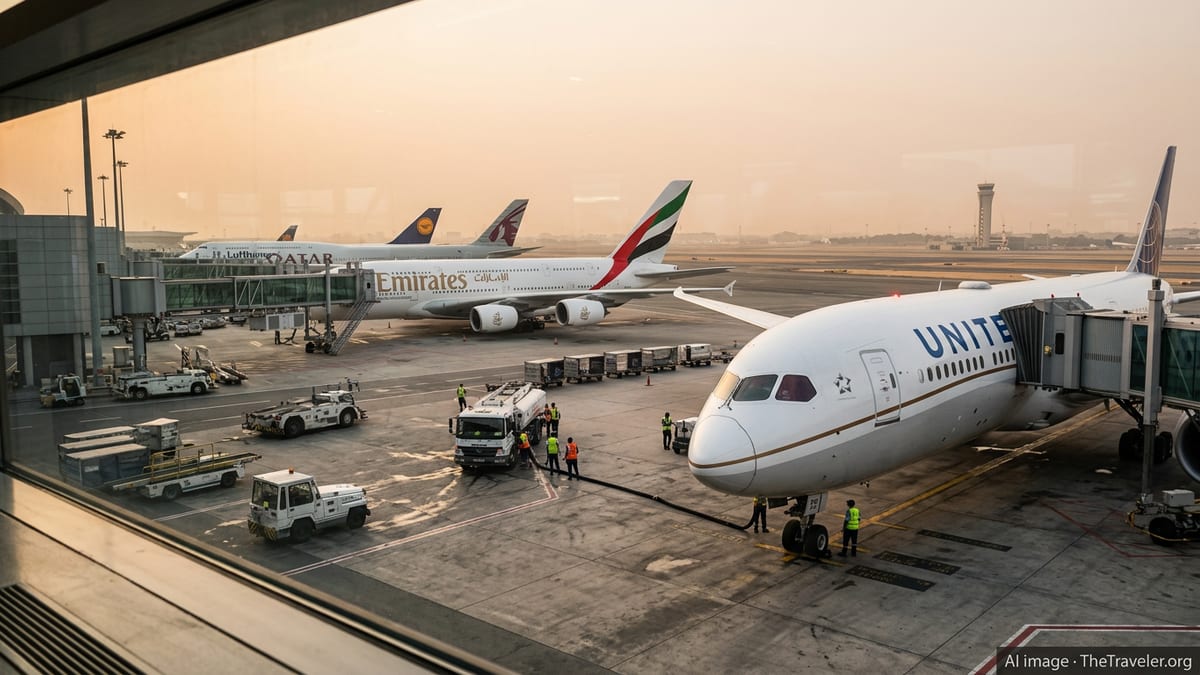
A Supply Shock Ripples Through Global Aviation
The latest spike in jet fuel costs is unfolding against the backdrop of war in the Middle East, which has disrupted crude exports and shipping through the Strait of Hormuz, a critical artery for global oil flows. Published coverage indicates that regional refinery outages and rerouted tankers have pushed up the cost of refined aviation kerosene far faster than crude benchmarks, creating a sharp squeeze for airlines that rely on spot-market fuel.
Industry tracking services report that jet fuel prices in some markets have effectively doubled since late February, with spot levels in the United States approaching 4 dollars a gallon, territory not seen since the 2008 energy shock. In Asia, assessments show Jet A‑1 prices in certain hubs climbing above 200 dollars a barrel, more than twice recent global averages and well beyond what many carriers had factored into 2026 budgets.
Airline regulators and transport agencies add a further perspective. Recent data from United States authorities show that while total aviation fuel consumption dipped in February, average cost per gallon still rose compared with January, underlining how supply constraints rather than demand are now driving the market. Regional air traffic monitors in Europe similarly note that fuel prices in late February reached the highest levels in more than a year, reversing the relatively stable conditions of 2025.
These dynamics are intensifying concerns that an already fragile post‑pandemic recovery in air travel could face renewed strain just as demand typically builds toward the northern hemisphere summer peak.
Shortages Hit Asia Hardest as Routes Are Cut
The tightest pinch is currently visible across parts of Asia, where several governments and aviation authorities have warned of jet fuel shortages at key airports. Publicly available information from regional trade publications indicates that carriers in Vietnam, Thailand, Sri Lanka, Myanmar, and the Philippines are among those facing intermittent supply constraints, prompting last‑minute schedule changes and targeted route suspensions.
Specialist travel and aviation outlets report that airlines in the region have already grounded select domestic rotations and trimmed long‑haul flying, particularly on routes requiring fuel‑intensive detours to avoid Middle East airspace. One major Southeast Asian flag carrier plans to suspend dozens of weekly domestic flights from April, citing limited Jet A‑1 availability and the need to prioritize more profitable international services.
Network planners face a difficult trade‑off. To conserve fuel, some airlines are consolidating frequencies, upgauging aircraft to move more passengers per flight, and routing more traffic through hubs with more secure fuel supplies, such as Tokyo and Seoul. At the same time, reports indicate that services via Middle East hubs have been sharply reduced, both because of airspace restrictions and limited local fuel stocks as regional capacity drops by more than half compared with last year.
For travelers, this translates into thinner options on popular Asia–Europe and Asia–North America corridors, especially for itineraries that previously relied on one‑stop connections via Gulf or Southeast Asian hubs. Fewer seats, combined with higher costs, are translating quickly into higher fares.
Fares, Fees, and Fuel Surcharges Climb
As their largest variable cost surges, airlines are turning to familiar tools to protect margins. In Asia and the Middle East, many full‑service carriers are leaning heavily on fuel surcharges, openly adding percentage‑based or flat‑rate supplements to tickets. Trade press coverage lists new surcharges ranging from around 10 to more than 30 percent of the base fare on some regional routes, and fixed fees of up to the equivalent of 75 dollars each way on certain long‑haul itineraries.
Some European and Asia‑Pacific airlines have published detailed tables of updated surcharges by region, with higher bands applied to flights linking Asia to North America, Europe, and Oceania. Recent notices from carriers in Japan and India, for example, show long‑haul surcharges stepping up again for tickets issued from February and April, signaling expectations that elevated jet fuel prices will persist for several months.
In the United States, where fuel surcharges are less commonly used on domestic tickets, airlines are increasingly relying on ancillary revenue instead. Over the past two weeks, several major carriers, including United, Delta, Southwest, and JetBlue, have all announced higher checked baggage fees, citing rising operating costs and elevated fuel prices identified in company statements and reported by news agencies. Travelers on many domestic routes now face first‑bag fees nearing or surpassing the mid‑40‑dollar mark, with second‑bag and peak‑season charges even higher.
Analysts quoted in financial and aviation trade coverage suggest that more subtle fare increases are also filtering through. While headline ticket prices may not jump overnight, average yields per seat are expected to rise as airlines adjust inventory, reduce discounted fare buckets, and introduce higher‑priced branded fares or premium tiers to capitalize on strong demand.
Why Supply Is So Tight Despite Adequate Crude
The current crunch is not simply a story of higher oil prices. Refining capacity and logistics are playing an outsized role in turning a geopolitical shock into a specific jet fuel shortage. Market commentary from energy agencies and aviation bodies notes that refinery maintenance, earlier under‑investment, and the geographic concentration of aviation fuel production in and around the Middle East have left the system with limited slack.
With shipping through the Strait of Hormuz disrupted and several regional refineries affected by conflict‑related outages, many buyers are scrambling to replace lost supplies. Export restrictions by some Asian fuel producers, aimed at protecting domestic markets, are further constraining availability for net importers across Southeast Asia and Oceania. This combination of factors has widened the premium that jet fuel commands over crude and other oil products, particularly in Asia.
Airlines with active fuel hedging programs are somewhat insulated in the short term, but not immune. Data from recent airline financial updates show that even carriers that locked in a portion of their fuel needs at lower prices are now exposed to sharply higher costs for the unhedged remainder, as well as to the practical challenge of securing physical supply at congested or capacity‑limited airports.
The broader energy system is also under strain. Government and industry reports from countries such as Bangladesh and the Philippines describe wider fuel and electricity shortages linked to the same supply disruptions that are now rippling through aviation. These parallel crises underscore how dependent air travel remains on a finely balanced global fuel network.
What Travelers Should Expect in the Months Ahead
For passengers planning trips over the next six months, the practical implications of the jet fuel crunch are already appearing in search results and booking flows. Published travel industry commentary suggests that average economy fares on some long‑haul routes between Asia, Europe, and North America are up by double‑digit percentages compared with early in the year, with business‑class and premium‑economy cabins seeing even steeper increases.
Schedule reliability is likely to vary by region. Markets served primarily by North American and European network carriers, which have more diversified fuel sourcing and less direct exposure to Middle East airspace, are expected to see fewer outright cancellations, though passengers may still encounter higher prices and occasional aircraft swaps or retimings. Routes that depend heavily on Southeast Asian, Gulf, or South Asian hubs are more exposed to short‑notice changes if local fuel shipments are delayed.
Travel risk consultants and consumer advocates are advising passengers to monitor itineraries closely, particularly when connecting through airports flagged in recent coverage as facing intermittent supply constraints. Flexibility in dates, willingness to accept alternative routings, and attention to fare rules and refund policies can help mitigate disruption if airlines are forced into further capacity cuts.
While a recent ceasefire announcement in the Middle East has eased some immediate fears in energy markets, energy analysts and international organizations caution that damage to regional infrastructure and ongoing refinery bottlenecks mean jet fuel prices are unlikely to return quickly to pre‑crisis levels. For the aviation industry and its customers, that points to a prolonged period in which capacity remains tight, fares elevated, and fuel at the center of every strategic decision.