


More news on this day
New operational turbulence at Hartsfield-Jackson Atlanta International Airport has triggered 254 flight delays and 32 cancellations, disrupting schedules across Delta Air Lines, Frontier, Endeavor, British and Korean carriers and other operators, and putting fresh pressure on long-haul routes linking the United States with South Korea, Japan, Argentina and key European gateways.
Get the latest news straight to your inbox!
Fresh Disruptions at the World’s Busiest Hub
Tracking data and airport monitoring platforms on May 29 indicate that Atlanta’s primary hub again ranked among the most heavily disrupted airports in the country, with delays affecting a broad mix of domestic and international traffic. Publicly available information shows that more than two hundred flights were running behind schedule, while several dozen were canceled outright, compressing capacity in an already tight late-spring travel period.
Delta, the dominant carrier at Hartsfield-Jackson, appeared to shoulder much of the impact, with partner operations on Endeavor and codeshares with international airlines also affected. Frontier, which uses Atlanta as a key low cost base, registered additional timetable strain as turn times lengthened and aircraft were held on the ground. Route databases show that Atlanta handles thousands of weekly departures, so concentrated disruption at the hub can rapidly cascade across the national network.
The latest wave follows a turbulent several months for Atlanta operations. Earlier in 2026, winter weather, thunderstorms, federal staffing issues and construction activity around the airfield combined to produce repeated ground stops and extended queues, according to regional media coverage and airport advisories. The current disruption appears smaller than the worst of those events, but it has struck at a time when international schedules are ramping up for peak summer demand.
International Links to Asia, Europe and South America Squeezed
Because Hartsfield-Jackson is a primary connecting point between North America and multiple global regions, even modest percentages of disrupted flights can affect high value long haul routes. Timetables and flight status boards on Friday showed knock on delays on services connecting Atlanta with major hubs in South Korea and Japan, including itineraries routed via partner networks that rely on punctual transits through the Georgia gateway.
One example involves the daily Delta service from Atlanta to Seoul Incheon, which operates in cooperation with Korean Air. Flight tracking data around the latest disruption window showed departure and arrival times slipping by several minutes as aircraft were sequenced through congested departure banks. Even small delays on a fifteen hour transpacific sector can cause missed onward connections to domestic Korean and regional Asian destinations, which in turn magnifies the impact for travelers bound for secondary cities.
Europe facing flights were not spared. Services from Atlanta to London Heathrow, Paris Charles de Gaulle, Amsterdam and other major European hubs form part of dense joint venture networks for transatlantic travel. Schedule data indicate that banks of departures to Europe typically leave Atlanta in concentrated evening waves, making them particularly vulnerable when afternoon domestic feeders from across the United States run late. Delays on these connecting flights can force missed transatlantic departures, placing additional strain on already full later departures.
South America has also felt the effects. Published schedules show that Atlanta supports long haul links to Buenos Aires and other key markets in the Southern Cone. Travelers on those routes often rely on tight connection windows from smaller U.S. cities. When 254 flights at the hub are delayed in a single day, these carefully calibrated handoffs become harder to sustain, increasing the risk that passengers misconnect and must be rebooked on less frequent services to Argentina and neighboring countries.
Underlying Pressures: Weather, Staffing and Construction
Analysts following Atlanta’s recent pattern of disruption point to a combination of structural and short term factors. Hartsfield-Jackson has long been recognized by federal aviation data as one of the busiest passenger hubs in the world, with several thousand weekly departures concentrated across a relatively compact airfield. That volume leaves the operation particularly sensitive to any constraint in runway, taxiway or gate capacity.
In early 2026, local coverage documented how a partial federal government shutdown and high absenteeism among security screening staff contributed to long lines and processing delays at checkpoints. Reports describe single day absentee rates at Atlanta that were higher than at other large U.S. airports, forcing contingency measures and adding friction to the passenger flow through the terminal. Although checkpoint operations have remained in place, the episode underlined how labor availability can quickly translate into wider schedule disruption.
Weather has layered on additional complexity. Winter ice earlier in the year, followed by severe thunderstorms in the Southeast, prompted ground stops and temporary runway closures, reducing the rate at which aircraft could land or depart. More recently, traffic management programs tied to storms in the Atlanta region have resulted in holding patterns and flow restrictions into the hub, according to air traffic advisories referenced in public forums and regional news outlets.
Construction projects around Atlanta’s runways, taxiways and terminal roadways are another factor. Federal infrastructure reports list multi year pavement replacement and safety improvement works at the airport, while local bulletins have outlined temporary changes to terminal access patterns. Even when these projects do not directly close a runway, they can create bottlenecks in aircraft movements and passenger circulation that compound existing schedule pressure.
Airlines Juggle Recovery Plans and Passenger Rebooking
When a hub experiences more than two hundred delays and several dozen cancellations in a single day, airlines are often forced into rapid recovery operations. Publicly available guidance from carriers shows that they typically prioritize restarting bank structures, repositioning aircraft and flight crews, and protecting long haul departures where feasible. In practice, this can mean canceling shorter, less profitable domestic segments to free aircraft for international rotations.
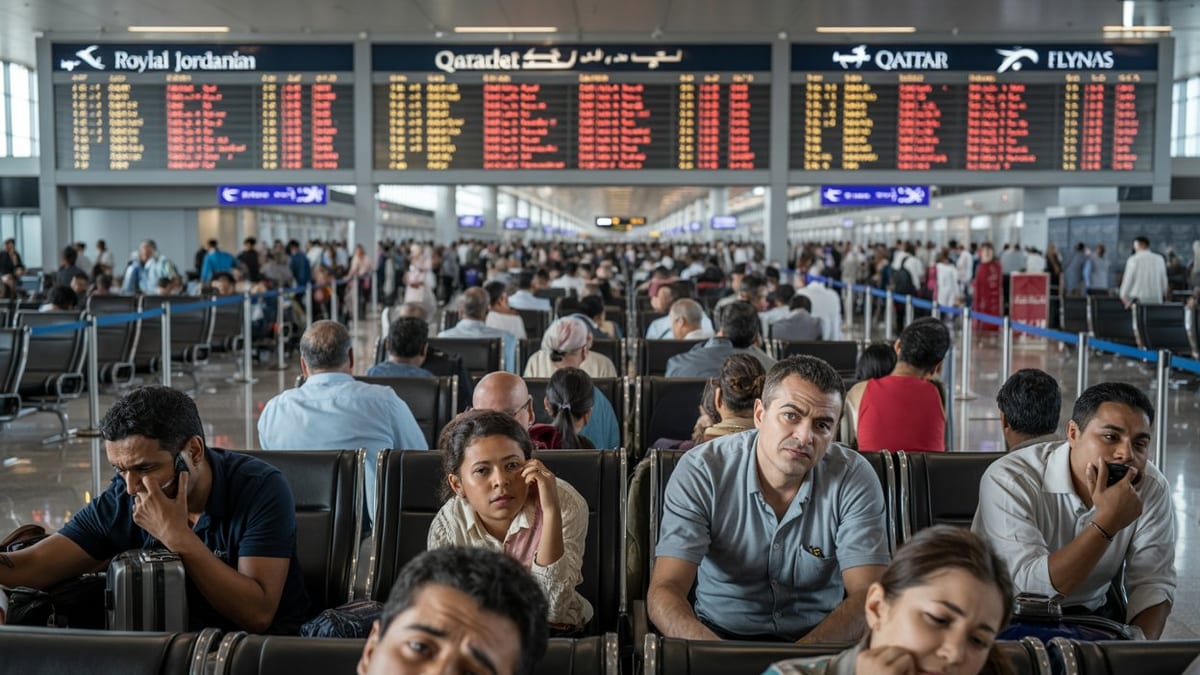
For passengers, the latest Atlanta disruption has translated into lengthy rebooking lines, extended call center wait times and overnight stays as they wait for open seats on subsequent flights. Social media posts and traveler accounts from previous disruption waves at Hartsfield-Jackson describe situations in which individuals spent many hours at the airport as departure times were repeatedly pushed back before flights were finally canceled late in the evening.
Industry guidance emphasizes that once delays begin to accumulate at a banked hub like Atlanta, it can take many hours for carriers to restore normal operations. Aircraft and crews are often out of position, and duty time limits for pilots and flight attendants can trigger additional cancellations if the recovery stretches into late night or early morning hours. The presence of numerous partner airlines and codeshare services at the hub adds further layers of coordination, especially on international joint venture routes.
Airlines serving Atlanta have encouraged travelers to monitor flight status tools closely and to consider longer connection times when routing through the city during periods of unsettled weather or heavy construction. As the northern summer schedule ramps up, the combination of high load factors and constrained slack in the system means that even a disruption involving 254 delays and 32 cancellations can leave few easy options for same day rebooking on popular routes to Asia, Europe and South America.
What the Chaos Signals for Peak Summer Travel
The latest operational difficulties at Hartsfield-Jackson serve as an early warning for the coming peak travel season. Federal aviation statistics show that cancellations and delays across the U.S. system tend to rise during the summer period, when convective weather is more frequent and schedules are running at or near maximum capacity. As the busiest single hub in that system, Atlanta sits at the center of this seasonal stress test.
Internationally, the stakes are particularly high on routes linking the United States with South Korea, Japan, Argentina and major European markets. Many of these itineraries are structured around tight, overnight long haul patterns that leave little room for adjustment when a feeder flight from a regional U.S. city arrives late. Even when the headline number of cancellations is relatively modest, missed connections can strand travelers far from home or force lengthy detours through alternate hubs.
Travel experts monitoring the situation suggest that passengers with upcoming itineraries through Atlanta build in additional time, especially if they are connecting to transpacific or transatlantic flights. They also note that while individual days of severe disruption capture attention, the more persistent concern is the pattern of repeated strain seen at the hub in early 2026, driven by weather, staffing and infrastructure constraints that may reappear as the year progresses.
For now, the 254 delays and 32 cancellations logged in the latest episode highlight how quickly turbulence at a single, heavily banked hub can reverberate across global networks. As schedules tighten into the summer peak, the resilience of Atlanta’s operation will remain a critical factor for travelers moving between the United States and key destinations across Asia, South America and Europe.