


More news on this day
Emergency crews rushed to a suburban train station after a telegraph-style pole collapsed and struck two women on the platform, leaving one with serious injuries and disrupting rail services for several hours.
Get the latest news straight to your inbox!
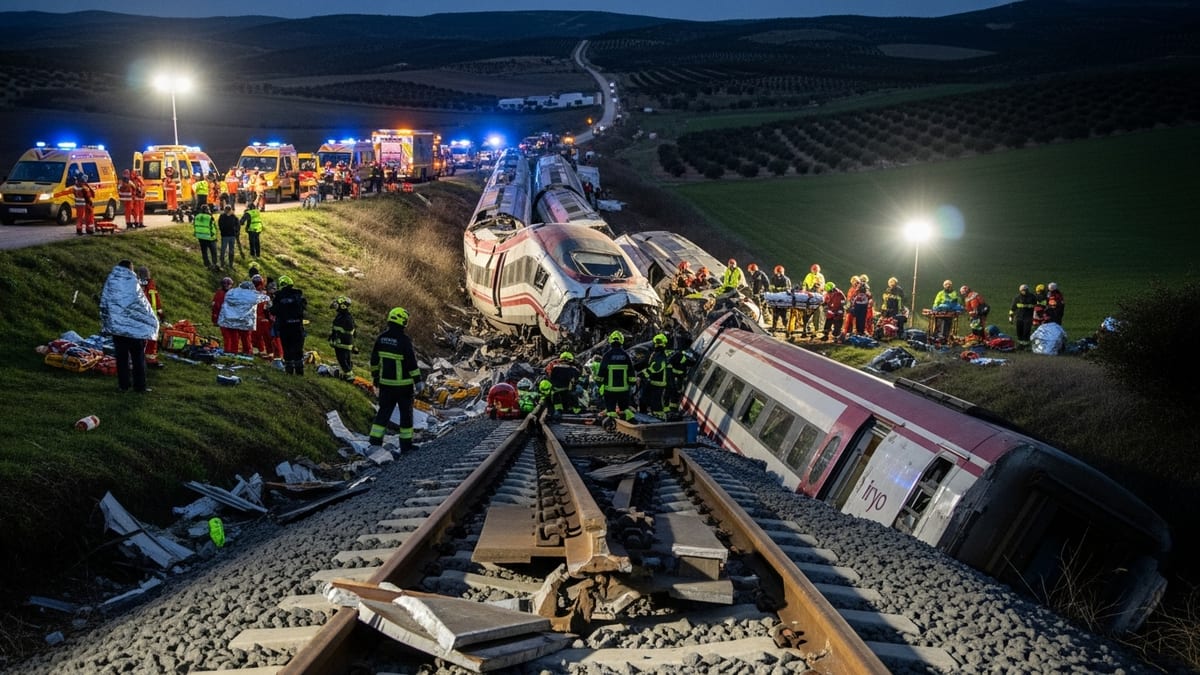
Incident at busy commuter hub
Early reports indicate the incident occurred at a busy commuter station during daylight hours, when a metal pole carrying cabling toppled without warning toward the platform edge. Witness accounts shared on social media describe a loud crack followed by shouting as bystanders rushed to help the injured women before emergency services arrived.
According to published coverage, the structure appeared to be a slim, telegraph-style pole supporting electrical or communication lines connected to the station environment, rather than a heavy concrete mast. Images circulating online show the fallen pole resting across part of the platform surface, with caution tape later erected around the area.
Rail staff halted services through the station while paramedics assessed the victims and firefighters worked to stabilize the scene. Trains were either held outside the station or rerouted, leaving passengers facing delays and crowding as operations were gradually restored.
Local rail operators acknowledged the disruption and indicated that normal service would resume only after the damaged pole and its associated cabling were made safe and removed from passenger areas.
Injuries and medical response
Publicly available information shows that at least two women were caught by the falling pole. One is understood to have sustained significant upper-body and head injuries, while the second suffered more minor trauma but was also transported to hospital for observation.
Paramedic teams treated the women at the scene before taking them to a nearby medical facility. Witnesses described a large emergency presence at the station, including ambulances and fire vehicles positioned along the adjacent street, as rail staff escorted passengers away from the cordoned zone.
Medical details have not been fully disclosed, but regional media reports suggest the more seriously injured woman remained in stable condition after initial treatment. There were no immediate indications of life-threatening injuries among other station users, despite the potential for a much larger casualty toll on a crowded platform.
Psychological support may be offered to those who saw the incident, in line with standard practice following traumatic events in public transport settings, although this has not yet been formally described in local statements.
Service disruption and commuter impact
The sudden closure of at least one platform led to cancellations, short-turn services and replacement connections as rail controllers worked to clear congestion along the line. Commuters shared images of packed carriages and departure boards showing delays that extended beyond the immediate station as the knock-on effects spread.
Railway disruption of this kind typically triggers a cascade of timetable adjustments while infrastructure teams work on site. In this case, crews needed to isolate any affected electrical cabling, cut and remove the damaged pole, and inspect adjacent structures before giving clearance for normal operation.
Travel information channels urged passengers to allow extra time for journeys and consider alternative routes. Some services were reported to be running through the station without stopping while inspections continued, a common measure when platforms remain partially restricted but mainline track is safe.
By later in the day, services had largely returned to regular frequency, although commuters were advised that residual delays and altered stopping patterns could persist during the evening peak period.
Questions over infrastructure maintenance
The incident has quickly raised questions about infrastructure maintenance and inspection regimes at older suburban stations. Images linked to the collapse appear to show corrosion at the base of the fallen pole, prompting public debate about how frequently such assets are checked and renewed.
Comparable cases in other rail networks, documented in past transport safety reports, have linked structural failures of poles or canopies to long-term corrosion, water ingress and inadequate anchoring. In those investigations, experts have highlighted the particular vulnerability of slender steel supports located near platforms, where de-icing salts, vibration and changing ground conditions can accelerate deterioration.
According to published coverage, local transport administrators have ordered an internal safety review focusing on similar poles and ancillary structures at nearby stations. This kind of targeted inspection sweep often follows a high-profile failure, with engineers instructed to prioritize assets of the same age, design or installation period as the one involved in the incident.
Passenger groups are also drawing attention to the role of transparent reporting, arguing that regular publication of inspection findings and renewal schedules can help rebuild confidence in station safety after a sudden infrastructure collapse.
Next steps for investigation and safety
A formal investigation is expected to examine the condition of the pole before the collapse, any previous repair records, and whether visible warning signs were present in the days or weeks leading up to the incident. Investigators typically review maintenance logs, contractor documentation and historical photographs to determine whether the failure was sudden or the result of progressive degradation.
Specialists are also likely to consider environmental factors such as recent weather patterns, ground movement and vibration from passing trains, which can all contribute to foundation instability. In some past rail cases, a combination of corrosion and minor subsidence has been identified as a critical trigger for structural failure.
Depending on the findings, the incident could lead to updated design standards for small utility poles on station premises, including requirements for more robust foundations, corrosion-resistant materials, and clearer inspection criteria. Recommendations may also address how quickly worn or rusted components must be replaced once they are identified in routine checks.
For passengers, the visible outcome of such inquiries often includes fresh signage, temporary barriers around aging infrastructure and an increased presence of engineering teams during off-peak hours. While the fallen pole incident caused serious concern and injury, transport advocates suggest that a thorough and transparent review offers an opportunity to strengthen safety and prevent similar events at other stations.