


More news on this day
Most travel to Turkey remains possible for UK visitors despite recent turbulence in the wider Middle East, with official guidance still permitting trips to the country while keeping tight restrictions in place along the border with Syria.
Get the latest news straight to your inbox!
UK Foreign Office Maintains Cautious but Open Stance
Publicly available UK government guidance continues to distinguish between most of Turkey and the areas closest to Syria. The latest Foreign, Commonwealth and Development Office travel advice reiterates long standing warnings against all travel within 10 kilometres of the Turkey Syria border, but does not discourage holidays or business trips to the country’s main coastal and urban centres. The broad tone of the advisory continues to be one of heightened awareness rather than wholesale avoidance.
The advice was most recently updated in mid June 2026, with the key change focusing on clarifying language around the frontier with Syria. That update again highlighted the elevated risk of terrorism and armed conflict in the immediate border region, while leaving the rest of the country under the usual guidance to “check advice” and exercise increased caution. This means that trips to destinations such as Istanbul, Ankara, Antalya, Izmir and Cappadocia remain in line with what many UK based travellers would recognise as a standard, if vigilant, risk environment.
The continuing distinction between Turkey’s border provinces and its core tourism belt is reflected in assessments by other governments. Current advisories from the United States, Canada and other partners also urge travellers to stay well away from the frontier with Syria and Iraq, but stop short of advising against travel to the country as a whole. The overall picture for Turkey is of an important regional hub that remains open, but with a clearly defined red zone along its southern edge.
Flights Largely Operating Despite Regional Disruption
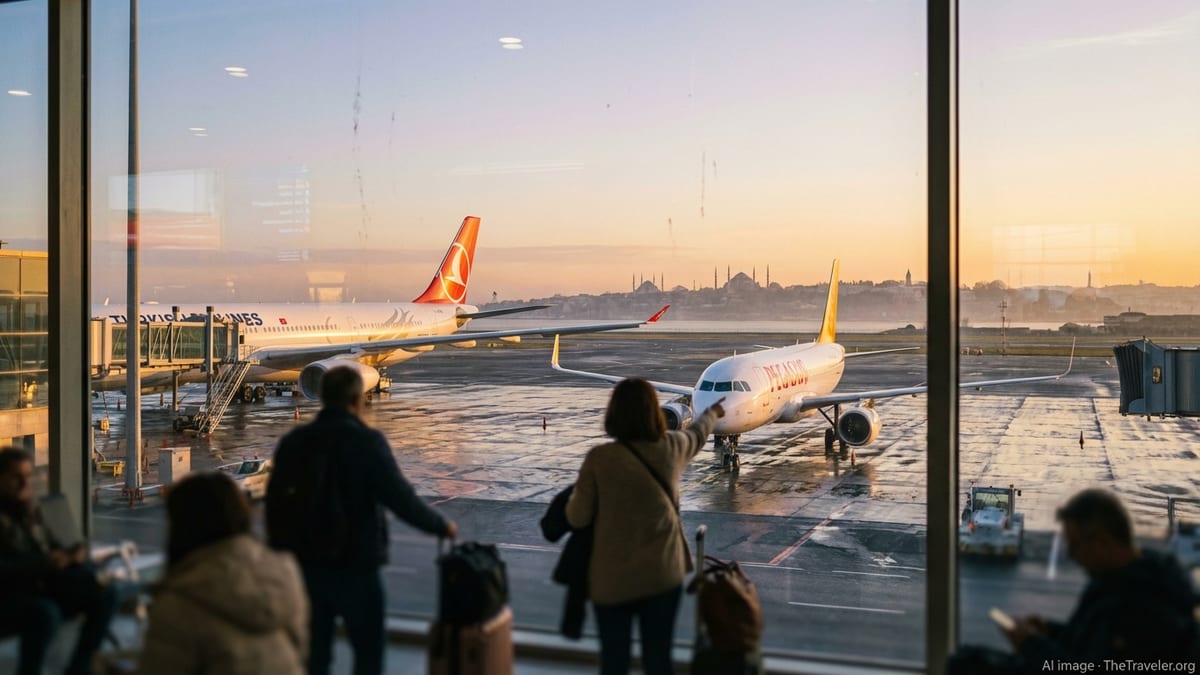
Commercial air links to Turkey have remained resilient in the wake of the latest ceasefire arrangements affecting the wider Middle East. Data and industry notices show that Istanbul Airport continues to function as one of Europe’s busiest hubs, handling a high volume of European, Asian and transatlantic services even as airlines adjust schedules on some Middle Eastern routes. Most flights from major UK and European cities to Istanbul and to popular Turkish coastal airports are operating, although travellers are being advised to monitor bookings closely for timetable changes.
Turkey’s flag carrier and other airlines serving the country have implemented selective route reductions in response to jet fuel costs and earlier conflict related airspace restrictions, particularly on services deeper into the Gulf and Levant. Reports indicate that some connections to neighbouring conflict affected markets remain suspended or are being restructured. However, these network decisions have not translated into a general shutdown of flights into Turkey; rather, they have reshaped how carriers use Istanbul and other Turkish airports as connectors between Europe, the Middle East and Asia.
Separate logistics and aviation updates note that, following the most recent ceasefire understandings in the region, several regulators have begun to soften the strictest warnings on certain air corridors while leaving specific operational cautions in place. For passengers, this has meant gradually improving connectivity through Turkey while airlines retain flexibility to cancel or reroute individual services at short notice if security assessments change.
Syria Border Restrictions Remain Strict
Despite the easing of tensions implied by a regional ceasefire agreement, the land border between Turkey and Syria remains one of the most tightly controlled frontiers in the region. The UK Foreign Office advice continues to warn against all travel within a 10 kilometre band of the border, citing a combination of terrorism risk, the presence of armed groups and the potential for rapid shifts on the ground. Similar language appears in the latest travel advisories from the United States and other Western governments, which classify Syria itself at their highest warning level.
Overland crossings between the two countries are subject to complex and frequently changing rules, with some gates open only for limited humanitarian or commercial traffic and others fully closed. Public documentation from international agencies describes temporary closures and highly restricted access at multiple points along the frontier as authorities on both sides respond to security assessments and population movements. These conditions significantly limit options for tourists or casual travellers seeking to move between Turkey and Syria by road.
For prospective visitors, this means that Turkey remains accessible in its own right, but should not be viewed as a straightforward launch point for overland trips into Syria. Travel specialists and government advisories alike emphasise that anyone contemplating such journeys would be entering an environment with active conflict histories, severe restrictions and little or no consular support. The standing recommendations remain to avoid the immediate border zone entirely.
Impact of the Middle East Ceasefire on Travel Perceptions
The recent ceasefire framework involving key actors in the Middle East has eased some of the most acute concerns about an escalating regional conflict, particularly around vital air and maritime corridors. Industry bulletins describe a tentative stabilisation in flight routings and cargo flows following agreements that include provisions on airspace use and shipping lanes. This has reduced the likelihood of sudden, widespread disruption for travellers transiting via major hubs such as Istanbul.
However, official travel advisories have not shifted as quickly as headlines about ceasefires. Government guidance typically moves cautiously, adjusting only once a pattern of sustained calm is evident. In Turkey’s case, the latest updates show refined wording around known risk areas rather than a major downgrading of concerns. Reports continue to highlight the persistent terrorism threat and the unpredictable security situation in neighbouring Syria, even as broader conflict indicators moderate.
Tourism and aviation analysts suggest that the ceasefire has more immediate effect on traveller sentiment and booking behaviour than on formal advice levels. Early signals from airlines and tour operators point to a gradual return of confidence in Turkey as a convenient gateway between Europe and the Middle East, although demand to destinations directly affected by recent clashes remains subdued. Travellers appear increasingly willing to fly through or holiday in Turkey while remaining cautious about onward travel into more volatile neighbouring states.
Practical Considerations for UK Travellers Heading to Turkey
For UK residents planning trips to Turkey in the coming weeks, the core message from publicly available information is to proceed with care rather than cancel by default. The Foreign Office continues to allow travel to most of the country, including its main holiday regions, while clearly defining areas near the Syrian border that should be avoided altogether. Travel insurance policies often rely on this official guidance, so respecting the exclusion zones is important both for safety and for maintaining cover.
Air links remain broadly open, but passengers should expect a less predictable operating environment than in previous years. Changing fuel prices, evolving airspace guidance and the residual ripple effects of recent conflict mean that airlines may revise timetables or aircraft types at relatively short notice. Travellers are being encouraged by industry notices to leave extra time for connections, register contact details with their carrier and check flight status repeatedly in the days before departure.
On the ground in Turkey’s main cities and resorts, daily life and tourism activity continue, even as security forces remain visible and authorities maintain a close watch on developments across the region. Visitors are advised to stay informed through official travel advice pages, monitor local news during their stay and avoid demonstrations or large political gatherings. Within those parameters, current evidence indicates that Turkey remains open to international tourism in the aftermath of the Middle East ceasefire, with clear geographic limits placed around its most sensitive frontier.