


More news on this day
Emergency repair work at a busy rail crossing has brought local traffic to a standstill after a sudden safety concern forced rail operators to shut the intersection at short notice, disrupting both road access and regional train movements.
Get the latest news straight to your inbox!
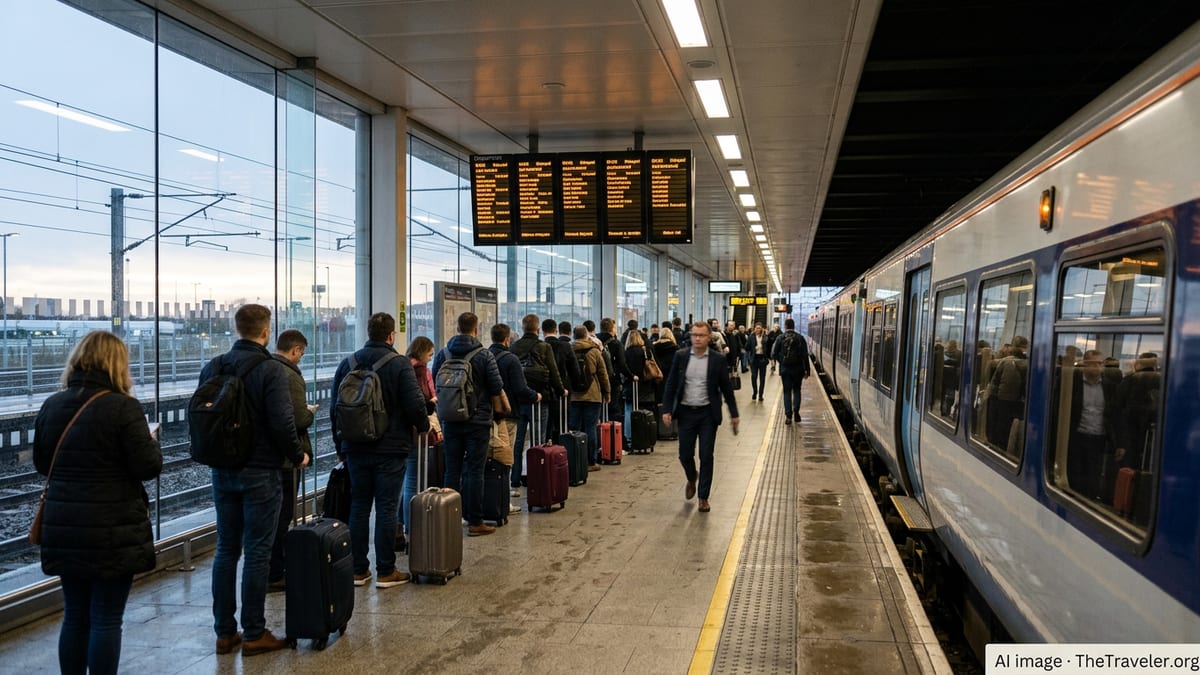
Safety fears prompt sudden closure
According to local broadcast coverage and municipal updates, the crossing was taken out of service after rail inspectors identified a defect judged to present an immediate safety risk. The shutdown, ordered in the early morning, affects a multi-lane arterial road that carries commuters, freight and visitors toward nearby tourist routes and regional highways.
Publicly available information indicates that the issue is linked to track infrastructure at the crossing itself, with concerns that continued operation could endanger both road users and rail traffic. In response, rail maintenance crews and contracted engineers were dispatched to begin emergency repairs, with heavy machinery brought in to lift sections of rail and expose underlying components.
Initial assessments suggest that wear to track components and the concrete or timber panels that form the drivable surface across the rails may have developed more quickly than expected. While routine inspections are designed to catch such problems before they become critical, recent high-profile rail incidents worldwide have heightened sensitivity to any sign that a crossing may not perform as intended.
Authorities have not publicly detailed the exact fault, but traffic advisories describe the closure as necessary to “protect public safety” while crews make urgent structural repairs and carry out fresh safety testing.
Travel disruption for drivers and rail passengers
The closure has immediate consequences for mobility in the surrounding area. Detours have been set up to divert vehicles away from the crossing, lengthening journey times for commuters and commercial traffic. Drivers heading toward regional attractions and nearby parks are being advised to allow extra time, particularly during the morning and evening peaks.
Rail operations through the area have also been adjusted, with some services slowed or temporarily suspended while work is underway on the track and crossing equipment. Based on similar recent incidents in Europe and the United States, temporary speed restrictions and altered timetables are common during such repairs, as rail operators balance the need to keep passengers moving with strict safety margins.
Public transport planners note that even localised issues at a single rail crossing can ripple across a wider network. When trains are held or rerouted, crews and rolling stock may end up in the wrong place, leading to knock-on delays for services far beyond the immediate work site. For travellers making flight connections or onward international journeys, that uncertainty can complicate itineraries and increase the risk of missed connections.
Local businesses near the crossing are also affected. Some report reduced passing trade as drivers avoid the area, while others face challenges receiving deliveries on schedule due to the rerouted traffic and longer journey times for freight vehicles.
Why rail crossings are under growing scrutiny
Highway rail crossings remain one of the most sensitive points in any rail network, where road vehicles, pedestrians and trains intersect. Federal transportation data in the United States and national safety statistics in Europe consistently show that a large share of rail-related fatalities occur at or near level crossings, prompting regulators to call for more aggressive maintenance regimes and infrastructure upgrades.
In recent months, published government reports have highlighted the scale of investment now being directed at crossing safety, from upgraded barriers and warning lights to full grade-separation projects that remove conflict points entirely. Funding programs launched for the 2025 to 2026 period in North America and new resilience strategies in Europe both emphasise faster detection of defects and more decisive action when potential hazards are identified.
Rail-network operators increasingly rely on a mix of scheduled inspections, trackside sensors and community reports to identify problems. When defects arise at the interface between road surfaces and rails, they can escalate quickly if water ingress, freeze-thaw cycles or heavy vehicle traffic accelerate deterioration. That reality is driving a shift toward more conservative thresholds, with crossings shut sooner and for longer while engineers complete detailed checks.
Safety advocates argue that such inconvenience is a necessary trade-off. Recent collisions and infrastructure failures abroad, some of which occurred after warning systems or barriers did not operate as expected, have led to renewed calls for a “safety first” culture, even when that entails abrupt closures and disruptive emergency works.
Engineering challenges and repair timeline
Emergency repair operations at rail crossings are complex because engineers must work within tight spatial constraints while protecting buried utilities and maintaining the structural integrity of the track. Once the crossing is closed, crews typically remove surface panels and ballast, inspect rails, fastenings and sleepers, and test signalling equipment and warning systems.
Depending on what is found, the job can range from replacing worn components and re-tamping ballast to more extensive reconstruction of the track bed and road deck. If deeper issues, such as voids below the crossing or damage caused by heavy vehicles, are discovered, the work can extend well beyond initial expectations and require additional materials and specialist contractors.
Publicly available travel updates often begin with cautious estimates, with early indications for this crossing suggesting that repairs may last at least several days. However, rail-industry case studies show that timelines can change as new information emerges on site. Once physical repairs are complete, further time is needed for quality checks, testing of warning signals, and staged reopening of both tracks and road lanes at reduced speeds.
Weather can also play a role. High temperatures, heavy rain or strong winds may slow progress or necessitate additional inspections, a concern that has been particularly acute this summer as heatwaves and storms test rail infrastructure across multiple regions.
What travelers should do now
For now, road users are being encouraged to treat the affected crossing as completely unavailable and to follow marked detour routes rather than attempting to find unofficial shortcuts through residential streets. Local police and traffic management agencies often adjust signal timings on parallel routes during such closures, but congestion is still likely at peak periods.
Rail passengers planning trips through the broader corridor are advised, based on published operator guidance from similar disruptions, to check the latest timetables on the day of travel and to allow generous connection times. Travelers with time-sensitive journeys, such as airport transfers or cruise departures, may wish to consider earlier departures or alternative routes, even if that involves additional changes.
Tourism bodies and visitor centers in affected regions often respond by updating their own travel advisories to reflect rail disruptions, ensuring that visitors are aware of potential delays before starting multi-leg trips. With summer travel volumes rising and networks already stretched by heat-related speed restrictions and other maintenance works, flexibility and contingency planning are increasingly important for both domestic and international travelers.
Once the crossing reopens, engineers are expected to conduct follow-up inspections and monitoring to confirm that the repairs are performing as intended. For nearby communities and travelers who rely on the route, the episode serves as another reminder that seemingly minor pieces of rail infrastructure can have outsized impacts when safety concerns require swift and decisive intervention.