


More news on this day
British holidaymakers heading for Europe this summer are encountering a more complex border landscape as the European Union’s new biometric Entry-Exit System beds in across major destinations including France, Spain, Italy, Greece, Portugal, Germany and the Netherlands, with reports of airport queues, sporadic technical glitches and fresh uncertainty over how smoothly trips will run at the busiest times.
Get the latest news straight to your inbox!
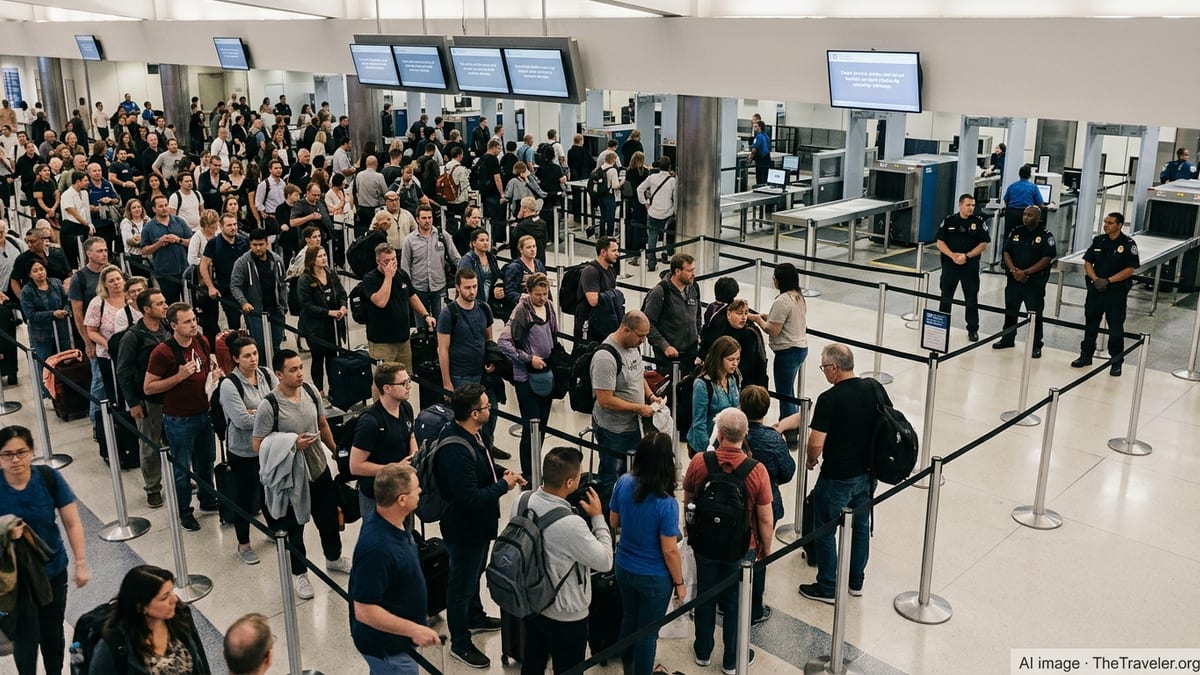
Digital border shift brings new reality for UK visitors
The Entry-Exit System, widely known as EES, is a new EU-wide database that records the movements of non-EU nationals entering and leaving the Schengen area. Instead of relying on manual passport stamps, border officers capture travellers’ fingerprints, facial image and passport details, creating a digital record of each stay of up to 90 days within any 180-day period. For UK citizens, who became third-country nationals for EU travel after Brexit, this is now a central part of crossing many European borders.
According to publicly available explanations of the scheme, the system is designed to tighten security, automate compliance with the 90/180-day rule and reduce opportunities for overstays by replacing fragmented paper records with a single digital file for each traveller. Supporters argue that once the initial registration has been completed, future crossings should in theory be faster and more predictable than queuing for manual stamps at busy airport booths.
The first full summer with EES in operation, however, is revealing the practical challenges of turning that ambition into reality. Travel reports from Spain, Portugal, France, Italy and other Schengen countries describe a patchwork experience in which some airports clear British passengers in under half an hour, while others see lines stretching deep into the terminal at peak times as staff and infrastructure struggle to keep up with arrivals.
Industry-focused coverage notes that the European Commission has already adjusted the implementation timetable, giving member states more flexibility until September 2026 to manage the rollout after early feedback about processing times rising sharply in some locations. This has effectively created a transition period in which countries can calibrate how strictly and how quickly they apply full biometric checks to large volumes of leisure travellers.
Queues, delays and technical snags across major holiday hubs
On the ground, UK holidaymakers are encountering the effects most visibly in airport queues. Reports from travel outlets and consumer media highlight long lines at certain gateways in Spain and Portugal, including resort-focused airports popular with British tourists, where biometric kiosks, manual booths and mixed passenger flows are still being fine-tuned.
Coverage of operations in Italy has pointed to bottlenecks at mid-sized airports such as Pisa and Florence, where high seasonal demand from UK city-break and Tuscany-bound travellers has collided with the need to capture fingerprints and facial images for many passengers for the first time. Similar accounts have emerged from some regional airports in France and Germany during busy morning and evening peaks.
Technical issues have added to the pressure. Specialist travel news sites and passenger accounts describe cases in which biometric data apparently failed to register correctly, forcing travellers to repeat the entire process on subsequent trips. In some instances, this has reportedly led to waits of several hours when multiple flights arrive in quick succession and a significant share of passengers must complete first-time EES enrolment from scratch.
Airlines have begun to adapt their messaging in response. Low-cost carriers with large UK-to-Europe networks are advising customers to build in more time at departure and arrival airports, particularly over school holidays and bank holiday weekends, amid concerns that knock-on effects from border queues could lead to missed flights, delayed baggage delivery and wider disruption across the day’s schedule.
Greece, Portugal and others test different approaches
While the EU has created a single overarching framework, implementation on the ground varies country by country. Greece has attracted particular attention for a decision, confirmed in public statements this spring, to temporarily exclude British passport holders from full biometric registration at its border crossing points. The measure, presented as a way to avoid congestion during the critical summer tourism season, means many UK visitors are currently being processed under simplified checks.
Travel industry analysis suggests this policy has become part of Greece’s competitive positioning, especially on its islands, where airports can see thousands of UK arrivals in a single day at the height of summer. Tour operators have reported strong demand for Greek packages, with some commentators linking this to perceptions of smoother entry compared with destinations where full EES checks are being applied more rigorously.
By contrast, public information from Brussels and national governments indicates that Portugal and Italy have chosen not to follow Greece in suspending or bypassing biometric requirements for British travellers. In both countries, the focus has instead been on expanding staffing, refining passenger flows and, where possible, making greater use of automated e-gates to absorb the extra processing time.
France, Germany and the Netherlands are seen as further test cases because of their role as major hubs for both point-to-point UK traffic and onward connections. At key airports such as Paris Charles de Gaulle, Amsterdam Schiphol and Frankfurt, border agencies and airport operators are working through a complex mix of transit passengers, Schengen internal flights and non-EU arrivals while embedding the new checks.
UK alignment and cross-Channel pinch points
The latest developments come as the UK and its European partners refine their own border cooperation. Policy trackers monitoring UK-EU relations note that London has gradually aligned with aspects of continental practice in areas such as the treatment of biometric data, use of digital travel authorisations and reciprocal access to automated border gates, even as the two sides remain formally separate regulatory regimes.
Germany, for example, has previously announced plans to open up its e-gates to UK nationals as it upgrades its systems for EES. Similar arrangements already operate to varying degrees in Portugal and other countries, allowing British travellers who meet certain criteria to use automated lanes that can speed up processing when they function smoothly.
The situation around shared border points is more complex. At locations where French exit checks take place on UK soil, such as the Port of Dover and London’s St Pancras International rail terminal, the interface between British systems and the EU’s digital border regime is under close scrutiny. Analysis by travel and policy specialists suggests that any increase in per-passenger processing time at these bottlenecks could quickly translate into tailbacks for cars, coaches and rail passengers, particularly on peak getaway days.
Research published by tourism bodies and think tanks underscores the stakes for the UK market. Tens of millions of British leisure trips to Europe take place each year, with France, Spain, Italy, Greece, Portugal, Germany and the Netherlands consistently among the top destinations. Even modest delays at border control, multiplied across this volume of travellers, have the potential to reshape perceptions of convenience and value.
What British holidaymakers can expect this summer
For now, the picture that emerges from publicly available information is one of gradual adjustment rather than uniform crisis. Some major hubs report manageable waiting times and relatively smooth flows outside the busiest periods, especially where additional staff and clear passenger communications are in place. Elsewhere, however, holidaymakers continue to report lengthy queues, uncertainty over procedures and concerns about missing connections.
Experts following the rollout emphasise that this is only the first full summer of the new regime. The coming months are likely to act as a live stress test for EES ahead of later stages of Europe’s wider digital border overhaul, including the long-planned ETIAS pre-travel authorisation system for visa-exempt visitors. Performance during the July and August peak will be closely watched by both European institutions and the travel industry.
For British travellers, the practical implications are clear. Early arrival at departure points, careful attention to airline and airport guidance, and an expectation of additional formalities at passport control are increasingly part of the European holiday equation. At the same time, differences in how individual countries approach the system mean that destination choice, time of travel and route selection may all play a larger role in how seamless a summer getaway feels.
As Europe’s new entry-exit architecture settles into place, the relationship between the UK and its closest neighbours is being subtly renegotiated at the border. For now, that process is most visible in the form of fingerprint scanners, facial cameras and airport queues, as British holidaymakers adapt to a more data-driven era of cross-Channel travel.