


More news on this day
Emirates is implementing significant schedule reductions across key international routes, with services linking the United Arab Emirates to the United Kingdom, Kuwait, Australia and several other destinations scaled back as the airline responds to constrained airspace, shifting demand and ongoing regional instability.
Get the latest news straight to your inbox!
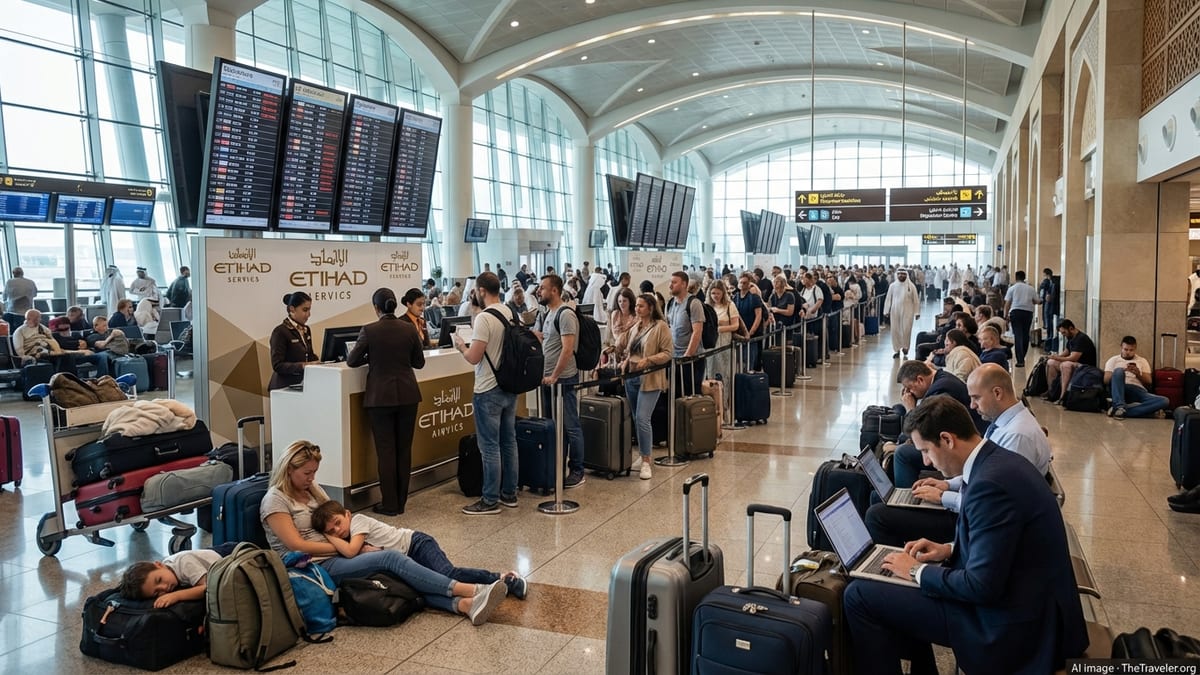
Data Shows Deep June Capacity Cuts Across the Network
Published schedule data for June 2026 indicates that Emirates has removed nearly one in six planned flights across its global network, a sharp pullback for a carrier that typically operates one of the world’s most extensive long haul schedules. Analysis of June timetables highlights 47 routes experiencing above average reductions, affecting connections between Dubai and destinations in Europe, the Gulf, Asia Pacific and North America.
Publicly available breakdowns of these adjustments point to a mix of outright cancellations, reduced weekly frequencies and aircraft downgrades on previously high capacity routes. While Emirates continues to serve the vast majority of cities on its pre crisis map, the number of weekly flights and available seats is materially lower than schedules filed earlier in the year, particularly on routes most exposed to disrupted Gulf airspace and softer connecting demand.
The airline’s own flight schedule pages and recent travel advisories reiterate that it is operating a reduced number of flights until further notice. Passengers are being encouraged by travel industry reports to check bookings regularly, as some flights that appeared in earlier searches for late spring and early summer have since disappeared or been re timed as the carrier fine tunes its operations.
United Kingdom Routes See Frequency Reductions and Aircraft Changes
Services between Dubai and major UK airports have been particularly affected as Emirates recalibrates capacity on some of its busiest long haul corridors. Reporting by aviation focused outlets and travel advisories aimed at UK based passengers describe a pattern of schedule thinning at London Heathrow, Gatwick, Manchester, Birmingham, Glasgow and regional gateways such as Newcastle.
In practical terms, the changes translate into fewer daily flights on certain city pairs, as well as the replacement of Airbus A380 aircraft with smaller Boeing 777s on selected rotations. Industry trackers note that for some secondary airports, specific flight numbers have been removed from May and June schedules, leaving only a single daily service where two or three departures previously operated. Travelers in online communities have shared examples of outbound or return segments from regional UK cities being cancelled or shifted to alternate days as the updated timetables take effect.
At the same time, Emirates is maintaining a strong presence on core UK trunk routes, with London in particular retaining a high number of daily connections to Dubai even as individual flights are retimed or down gauged. Analysts suggest the strategy reflects a desire to concentrate limited capacity on the most resilient demand flows, while trimming less profitable frequencies to free aircraft and crews for redeployment elsewhere in the network.
Kuwait Experiences Some of the Sharpest Capacity Pullbacks
The most dramatic single route adjustment identified in recent schedule analysis concerns Kuwait, where capacity reductions for June stand out as among the steepest anywhere in the Emirates network. Data compiled by aviation intelligence platforms shows that planned flights between Dubai and Kuwait City for that month have been cut by more than three quarters compared with earlier timetable filings.
Context is important. Emirates resumed Kuwait services on 1 May 2026 following the reopening of Kuwaiti airspace, initially ramping up to multiple daily flights as operational conditions improved. Industry coverage indicates that the airline had briefly published schedules showing up to four or five daily rotations on the route, but later rolled back those plans as part of the broader capacity reset, choosing instead to concentrate operations into a single daily service for June.
Travel trackers and regional aviation reports note that this leaves Kuwait still connected to Dubai, but with substantially fewer seats than many travelers may have expected based on schedules available earlier in the spring. For passengers, this can mean limited date and time options and a higher likelihood of rebooking if original flights are among those removed in the latest wave of adjustments.
Australia and Wider Asia Pacific See Mixed Reductions and Realignments
Across Australia and the wider Southwest Pacific region, Emirates has combined selective cuts with continued investment on certain high performing routes. Prior to the most recent schedule changes, the carrier had been rebuilding its presence with double daily services to Sydney and Melbourne, a daily flight to Perth and strong frequencies into New Zealand, according to aviation industry coverage focused on the region.
The eruption of the Iran related conflict and resulting airspace detours, however, have prompted a reevaluation of aircraft deployment, particularly for the fuel intensive A380. Specialist analysis of Emirates’ fleet plan for 2026 shows that A380 operations have been withdrawn from several routes, including Perth, which now sees smaller widebody types instead of the superjumbo. These aircraft changes typically reduce overall seat capacity even where the number of weekly flights remains stable.
Asia Pacific adjustments are not limited to Australia. Reports aggregating schedule data list a group of routes across East and Southeast Asia where A380s have been removed in favor of Boeing 777s, alongside occasional frequency cuts designed to better match demand. While core markets such as Sydney and Melbourne remain well served, the combined impact of aircraft down gauges and selective cancellations means fewer total seats between Dubai and the region than earlier timetables suggested for the northern summer.
Passengers Confront Rolling Disruptions and Changing Itineraries
For travelers, the cumulative effect of these network changes is showing up as rolling disruptions rather than a single, clear cut wave of cancellations. Publicly shared experiences from passengers in the UK, Europe, the Gulf and Asia indicate that some bookings have undergone multiple schedule updates in recent weeks, with layovers shortened, departure times shifted or entire segments removed as Emirates continually revises its plans.
Travel forums and consumer focused coverage describe cases in which flights flagged as operating in March or April were later cancelled closer to departure, replaced by alternative routings via Dubai or, in some cases, by services on partner airlines. In the UK and Europe, passengers booked via regional airports report being moved onto flights from major hubs when local frequencies are trimmed, while travelers in Asia and Australia sometimes see overnight layovers introduced where previous itineraries had same day connections.
Consumer advice pieces responding to the situation broadly urge Emirates customers to monitor their reservations on a regular basis, use the airline’s official channels and flight status tools to verify operations, and anticipate that further schedule refinements are likely as airspace conditions and demand forecasts evolve. With the airline itself acknowledging that it is still operating a reduced number of flights until further notice, industry observers expect capacity to remain constrained on several international routes into at least early summer 2026.