


More news on this day
Travelers across the United States faced cascading disruption after the Federal Aviation Administration temporarily halted flights at Hartsfield-Jackson Atlanta International Airport, with the nation’s primary hub once again emerging as the country’s top source of delays and cancellations.
Get the latest news straight to your inbox!
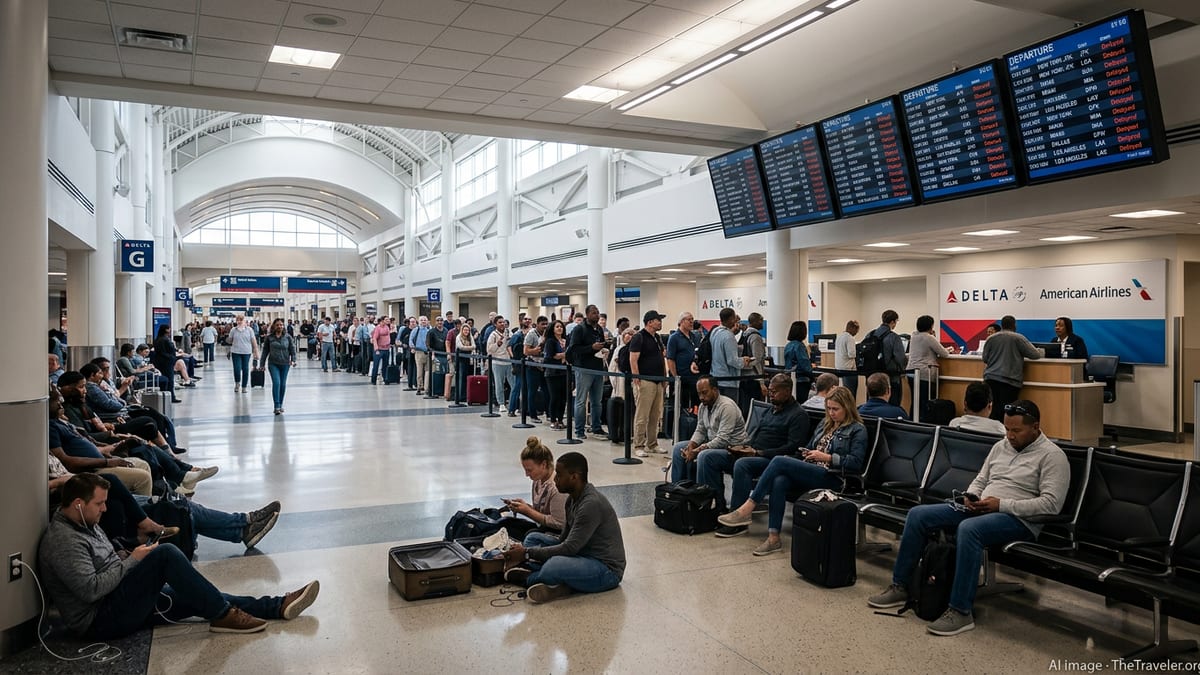
Ground Stop Freezes Operations at the Nation’s Busiest Hub
Publicly available FAA traffic management advisories show that departures to and from Hartsfield-Jackson Atlanta International Airport were placed under a ground stop, temporarily halting flights at the country’s busiest passenger hub. The measure, applied when air traffic control or safety constraints leave too little capacity to handle scheduled traffic, effectively paused takeoffs and sharply restricted arrivals while the system absorbed the disruption.
Atlanta, which consistently ranks as the world’s busiest airport by total passengers, is particularly sensitive to such interventions. A short ground stop can quickly translate into dozens of delayed departures and diversions as aircraft and crews fall out of sync with tightly timed schedules. Data from recent events indicate that when Atlanta slows, the ripple is felt almost immediately at major domestic hubs and regional airports across the Southeast, Northeast, and Midwest.
Advisory language used in recent FAA operations plans and status pages points to a mix of contributing factors that frequently trigger ground stops in Atlanta, including convective thunderstorms, low visibility, and staffing or flow-management constraints. Even when the formal ground stop is lifted within hours, the resulting congestion often takes much of the day to unwind, particularly during peak travel periods.
Atlanta Again Tops National Cancellation and Delay Tables
Flight-tracking data compiled during the stoppage period indicate that Hartsfield-Jackson once more led the United States in both delays and cancellations, underscoring the outsized influence of the Atlanta hub on the broader network. In comparable recent disruptions, hundreds of flights operating through the airport have been canceled in a single day, with many more delayed by an hour or longer.
Because Atlanta serves as the primary connecting hub for one of the nation’s largest airlines and a key transfer point for several others, the impact extends well beyond the city itself. Travelers departing from smaller regional airports often experience cancellations even when local weather remains clear, as aircraft and crews scheduled to pass through Atlanta are unable to reposition on time.
Historical data from winter storms and severe weather outbreaks over the last two years show a recurring pattern: once Atlanta enters the top tier of U.S. airports for cancellations, major hubs in New York, Chicago, Dallas, and Charlotte often follow. When the busiest airport in the system slows, airline recovery efforts can take several days, affecting transcontinental and transatlantic routes as disrupted aircraft rotate through long-haul schedules.
Causes Range From Weather to System Strain and IT Issues
Reports from recent ground stops in Atlanta point to a combination of short-term weather hazards and broader system vulnerabilities. Thunderstorms and rapidly developing convective cells in the Southeast routinely force air traffic managers to reduce arrival and departure rates, while episodes of hail, lightning, and low visibility can bring operations to a near standstill. In rare cases, severe weather has temporarily forced the evacuation of the control tower, halting all movements until staff can safely return.
Beyond weather, modern airline operations depend heavily on complex digital infrastructure. Coverage of the July 2024 CrowdStrike-related IT failure, which triggered a global ground stop for several U.S. carriers and stranded thousands of travelers at Atlanta, highlighted how software outages can cripple even clear-sky operations. In that episode, more than a thousand flights linked to the hub were canceled in a single day, and published analyses indicated that it took multiple days to rebalance aircraft and crews worldwide.
These incidents have renewed attention on the resilience of critical systems, from airline crew-management platforms to airport fueling and baggage networks. Even localized faults, such as a fueling glitch or a gate-management system failure, can rapidly amplify at an airport that handles hundreds of departures in narrow time windows. When such issues coincide with weather or traffic-management restrictions, the result can be an abrupt spike in cancellations.
Nationwide Ripple for Summer and Holiday Travelers
The timing of a ground stop in Atlanta has significant implications for leisure and business travelers alike. When disruptions occur during summer peaks, major holiday periods, or Monday-morning business banks, passengers often encounter limited options to rebook, as many flights are already operating near capacity. In past episodes around long weekends, travel advisories have described overnight crowds filling concourses as hotels around the airport quickly sold out.
Travel patterns analyzed in federal transportation statistics and aviation research show that Atlanta’s central role in connecting the Eastern and Southern United States means disruptions can cascade into missed connections in cities as far-flung as Boston, Los Angeles, and international gateways in Europe and Latin America. A single missed connection in Atlanta can strand passengers far from home cities, with onward flights already full for several days.
For travelers holding tickets during or immediately after a major disruption, recent events suggest that flexibility is essential. Published airline policy summaries indicate that carriers commonly offer travel waivers, allowing passengers to move trips forward or backward within a narrow window, or to reroute through alternate hubs if seats are available. However, these options can disappear quickly as rebooking demand surges.
What Travelers Can Expect in the Coming Days
Based on patterns from prior ground stops at Hartsfield-Jackson, travelers can expect lingering operational challenges even after FAA restrictions ease. Airlines typically prioritize restoring core trunk routes and repositioning aircraft to rebuild their schedules, which can leave some smaller markets with limited service until the network stabilizes. Flight-status data from recent disruptions suggest that rolling delays and scattered cancellations may persist for a day or more.
Publicly available guidance from airlines and the FAA consistently emphasizes that passengers should monitor flight status frequently, arrive at the airport with extra time, and be prepared for last-minute gate or schedule changes. For those with tight connections through Atlanta, recent disruption patterns imply that selecting longer layovers or earlier departures, where possible, can provide a buffer against cascading delays.
For the aviation system, the latest halt at America’s busiest airport reinforces a broader challenge: as traffic volumes continue to grow and weather extremes and technology dependencies intensify, even brief interruptions at key hubs can send shockwaves through national and international travel. Atlanta’s experience once again illustrates how a single airport can become the focal point of a much larger story about capacity, resilience, and the fragility of tightly optimized air networks.